


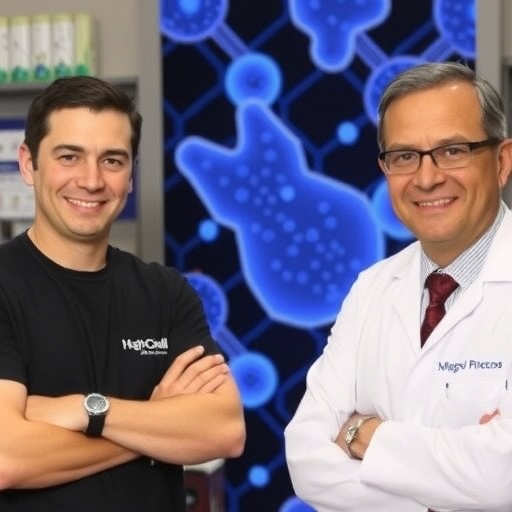
A groundbreaking discovery by researchers at the Hackensack Meridian Center for Discovery and Innovation (CDI) has uncovered a vital molecular mechanism that could revolutionize cancer treatment, particularly for patients undergoing allogeneic hematopoietic stem cell transplantation (allo-HSCT) and chimeric antigen receptor T-cell (CAR-T) therapy. These findings, recently published in the esteemed journal Cellular and Molecular Immunology, reveal a complex, interdependent relationship between the enzyme EZH2 and intracellular calcium (Ca2+) signaling pathways within T lymphocytes, offering a new blueprint for enhancing immune responses against tumors while mitigating harmful side effects such as graft-versus-host disease (GVHD).
EZH2, a histone methyltransferase, plays a critical regulatory role in gene expression through epigenetic modifications, but as this study highlights, its function extends deeply into modulating intracellular signaling events crucial for the survival and efficacy of activated T cells. By acting as a molecular brake on the Ca2+ signaling cascade in these immune cells, EZH2 effectively prevents premature T cell apoptosis—a phenomenon that can otherwise undermine the persistence and potency of therapeutic CAR-T cells in eliminating cancer. This protective role is vital for sustaining T cell activity during intense immune responses.
Intracellular calcium ions serve as ubiquitous secondary messengers in numerous cellular processes, including T cell activation, proliferation, and cytokine production. The study’s key revelation lies in the bidirectional regulatory feedback between EZH2 and Ca2+ signaling: while EZH2 tempers Ca2+ flux to prevent cellular exhaustion and death, the intracellular calcium levels reciprocally influence EZH2 activity. Specifically, experimental evidence indicates that pharmacological inhibition of Ca2+ signaling enhances EZH2 function within CAR-T cells, leading to improved tumor control outcomes in preclinical models. This intricate balance ensures T cells maintain an optimum activation state, avoiding both functional exhaustion and unnecessary death.
The research team employed sophisticated murine models replicating both GVHD and CAR-T therapeutic contexts to decipher this molecular crosstalk. Their data suggest that tuning the EZH2-Ca2+ axis could serve as a precision intervention to delicately manage T cell responses. Such modulation is paramount in allo-HSCT scenarios, where donor-derived T cells may elicit GVHD by attacking host tissues. Harnessing the dualistic relationship between EZH2 and calcium signaling may allow clinicians to quell alloreactive T cell aggression without compromising their anti-tumor efficacy, a feat that has long eluded transplant immunology.
Remarkably, the study proposes that the dynamic interplay between EZH2 and Ca2+ signals does not function in isolation but orchestrates a fine-tuned gene regulatory network essential for productive immune responses. This epigenetic and signaling synergy ensures a homeostatic equilibrium, preventing T cells from succumbing to exhaustion, a dysfunctional state characterized by diminished effector functions and proliferative capacity prevalent in chronic infections and cancer. Sustaining this balance could thereby prolong CAR-T cell persistence and enhance the durability of cancer remission.
These insights open avenues for novel therapeutic strategies. By pharmacologically targeting calcium flux through existing or newly developed inhibitors, it may be possible to boost EZH2 activity strategically, amplifying the anti-tumor properties of CAR-T cells while restraining pathogenic alloreactivity. Such dual-action therapeutics could dramatically improve patient outcomes by reducing treatment-associated morbidity and increasing the longevity of remission phases.
The clinical implications of this study reach beyond cancer immunotherapy alone, extending to autoimmune disorders and chronic infectious diseases where dysregulated T cell responses contribute to pathology. Understanding and manipulating the EZH2-Ca2+ axis could thus transform therapeutic approaches across a spectrum of immune-mediated conditions, enhancing the precision and safety of immunomodulatory interventions.
Professor Yi Zhang, leading the investigative team, emphasizes the translational potential of these findings. His laboratory’s ongoing research focuses on elucidating how specific epigenetic regulators govern T cell fate decisions, aiming to exploit these mechanisms for enhanced immunotherapeutic designs. Their work represents an ambitious push to integrate molecular biology with clinical oncology, aspiring to develop drugs that augment immune cell function while minimizing collateral tissue damage.
The study’s innovative approach combining genetic, biochemical, and in vivo experimental methodologies exemplifies the cutting-edge strategies needed to tackle the complexities of immune regulation. The comprehensive analysis demonstrated that modulating intracellular signaling pathways in concert with epigenetic regulators like EZH2 yields synergistic benefits far superior to targeting either factor alone, highlighting the necessity of integrated molecular targeting in future therapies.
As the global oncology community seeks to enhance CAR-T therapies and allo-HSCT success rates, these findings underscore the critical importance of understanding intracellular communication networks within immune cells. By unveiling the nuanced interdependence between calcium signaling and epigenetic control mechanisms, the research contributes a pivotal piece to the puzzle of immune regulation, paving the way for more effective and safer immunotherapies in the near future.
In summary, the research conducted by the Hackensack Meridian CDI team reveals that the interplay between EZH2 enzyme activity and intracellular Ca2+ signals is not only foundational for T cell survival and function but also represents a strategic target for therapeutic interventions. Their discovery provides a molecular framework that balances the contrasting needs of preventing transplant rejection and enhancing cancer cell eradication, significantly advancing the landscape of cellular immunotherapy.
Cite Scienmag News
Nathaniel Bowman. (April 28, 2026). CDI Scientists Discover Crucial Mechanism to Enhance Cancer Therapies and Minimize Stem Cell Transplant Rejection. Scienmag. https://scienmag.com/cdi-scientists-discover-crucial-mechanism-to-enhance-cancer-therapies-and-minimize-stem-cell-transplant-rejection/
Nathaniel Bowman. "CDI Scientists Discover Crucial Mechanism to Enhance Cancer Therapies and Minimize Stem Cell Transplant Rejection." Scienmag, 28 April 2026, https://scienmag.com/cdi-scientists-discover-crucial-mechanism-to-enhance-cancer-therapies-and-minimize-stem-cell-transplant-rejection/. Accessed 1 September 2026.
Nathaniel Bowman. "CDI Scientists Discover Crucial Mechanism to Enhance Cancer Therapies and Minimize Stem Cell Transplant Rejection." Scienmag. April 28, 2026. https://scienmag.com/cdi-scientists-discover-crucial-mechanism-to-enhance-cancer-therapies-and-minimize-stem-cell-transplant-rejection/


