


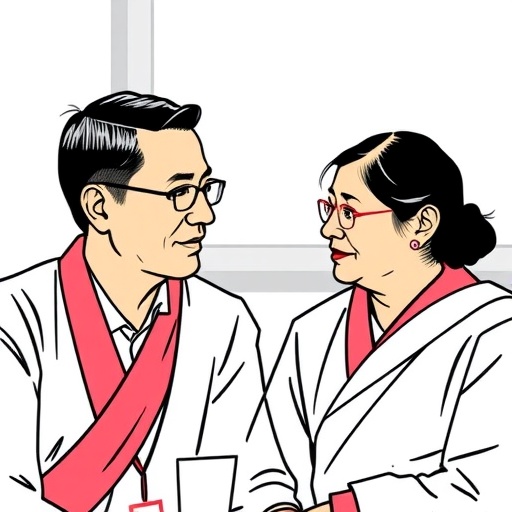
In the intricate landscape of cancer care, financial concerns often remain overshadowed by the clinical urgency of disease management. Yet, a groundbreaking study has illuminated how the financial burdens entangle with the emotional and cultural dimensions of health, particularly among Chinese and Asian Indian patients and their caregivers. This qualitative exploration dives deep into the perceptions and lived experiences surrounding the costs associated with cancer care, revealing how economic challenges shape the journey of treatment and survival within these communities.
Cancer, a disease already taxing the human spirit and body, becomes a profound challenge when compounded by economic strain. In the context of Chinese and Asian Indian populations—two significant and culturally distinct groups—the financial implications of care introduce a labyrinth of stressors that extend beyond hospital bills. These patients and their families often navigate a complex social fabric where cultural values, expectations, and financial realities intersect, creating unique cost-related hardships that have been largely underrepresented in medical research until now.
The study draws attention to the nuanced ways in which cultural identity influences the perception and management of financial toxicity—a term gaining traction to describe the economic distress associated with cancer treatment. Among Chinese and Asian Indian patients, the interplay between traditional values around family responsibility, social stigmas relating to illness, and economic resilience dictates how costs are perceived, managed, and communicated. This research highlights the need to consider these cultural underpinnings when addressing financial hardships in oncological care.
One of the most striking revelations from the qualitative interviews is the dual role patients and caregivers assume in managing not just medical treatment but also the economic aftermath. Financial sacrifice is often portrayed as a collective family endeavor, where the wellbeing of the patient is inseparable from the financial stability of the entire household. Participants expressed profound concerns over indirect costs—such as lost income, transportation, and caregiving time—that exacerbate the burden beyond direct medical expenses.
Importantly, the study uncovers that for many patients, financial concerns are a source of silent suffering. The fear of burdening family members, particularly in tightly-knit cultures valuing filial piety and intergenerational support, leads to underreporting of financial distress to healthcare providers. This concealment can hinder the delivery of holistic care, as economic hardship remains invisible within medical consultations, unaddressed and festering in the background.
This qualitative research utilized in-depth interviews with both patients and caregivers, allowing an intimate view into the lived experiences that statistics alone often fail to capture. The richness of this methodology brings to life stories that blend the medical with the emotional, illustrating how a cancer diagnosis ripples through the financial and social fabric of families. It underscores the importance of narrative medicine as a tool to comprehend and mitigate financial toxicity in culturally sensitive ways.
Moreover, the investigation highlights systemic issues within healthcare financing, including gaps in insurance coverage and the exorbitant costs associated with cancer therapies. These barriers become more pronounced for immigrant populations who may face language barriers, limited access to financial counseling, or unfamiliarity with healthcare resources. The research calls for targeted policy reforms to ensure equitable access and financial protection for these vulnerable groups.
Caregivers emerge as pivotal figures, often absorbing the brunt of economic pressure while managing complex medical regimens. The emotional toll of juggling caregiving duties alongside financial planning is immense, yet their voices are seldom captured in research focused solely on patients. By integrating caregiver perspectives, the study presents a comprehensive picture of the cancer cost burden, emphasizing that effective support systems must address the needs of both patients and their families.
The cultural context also influences how patients and caregivers prioritize expenditures, sometimes leading to difficult trade-offs between health needs and other essential life expenses. The research details instances where families delayed or forewent treatment-related purchases, such as medications or supportive therapies, in favor of maintaining household stability. These decisions have profound implications for health outcomes and quality of life, revealing the urgent need for supportive interventions.
Equally compelling is the phenomenon of stigma surrounding financial hardship. Participants reported feelings of shame and embarrassment, which discouraged open dialogue about money worries. This stigma is particularly significant in collectivist cultures, where financial success and social status are closely tied to individual and family identity. Recognizing and addressing this stigma is critical for healthcare providers aiming to foster trust and encourage candid conversations about treatment affordability.
The study’s findings advocate for culturally tailored financial counseling embedded within cancer care pathways. By integrating culturally competent staff and interpreters, healthcare systems can better identify financial distress signals and offer timely assistance. Furthermore, community-based outreach programs tailored to these populations can educate patients and caregivers about available resources, empowering them to navigate the financial complexities more confidently.
Policy implications stemming from this research are considerable. They suggest a multi-layered approach to cancer care financing that encompasses insurer reforms, improved health literacy, and legal protections against catastrophic financial loss. The study argues that addressing financial toxicity is not merely about alleviating economic strain but fundamentally about ensuring dignity and quality of life for patients and families battling cancer.
Clinicians also have a vital role to play. Incorporating routine financial screening and discussions about cost alongside clinical care plans can destigmatize money-related concerns and foster shared decision-making. The study emphasizes training healthcare professionals in cultural competence to understand the diverse experiences of Chinese and Asian Indian patients, ensuring that treatment recommendations are both medically sound and financially feasible.
This research contributes to the growing body of evidence demonstrating that cancer care is as much a social and economic challenge as it is a medical one. It underscores the imperative for health systems and policymakers to broaden their focus beyond clinical outcomes to include financial wellbeing, particularly for populations at risk of disproportionate burden. By doing so, it marks an important step toward a more equitable and compassionate model of cancer care.
In conclusion, the perspectives and experiences unearthed in this study are vital for reimagining cancer care delivery through a culturally sensitive and economically aware lens. They remind us that behind every cancer diagnosis lies a complex interplay of medical, cultural, and financial narratives that shape patient and caregiver realities. Addressing these intertwined challenges holistically promises to improve not only survival but the lived experience of those confronting cancer.
Cite Scienmag News
Nathaniel Bowman. (April 28, 2026). Cancer Care Costs: Views of Chinese, Asian Indian Patients. Scienmag. https://scienmag.com/cancer-care-costs-views-of-chinese-asian-indian-patients/
Nathaniel Bowman. "Cancer Care Costs: Views of Chinese, Asian Indian Patients." Scienmag, 28 April 2026, https://scienmag.com/cancer-care-costs-views-of-chinese-asian-indian-patients/. Accessed 4 September 2026.
Nathaniel Bowman. "Cancer Care Costs: Views of Chinese, Asian Indian Patients." Scienmag. April 28, 2026. https://scienmag.com/cancer-care-costs-views-of-chinese-asian-indian-patients/


