


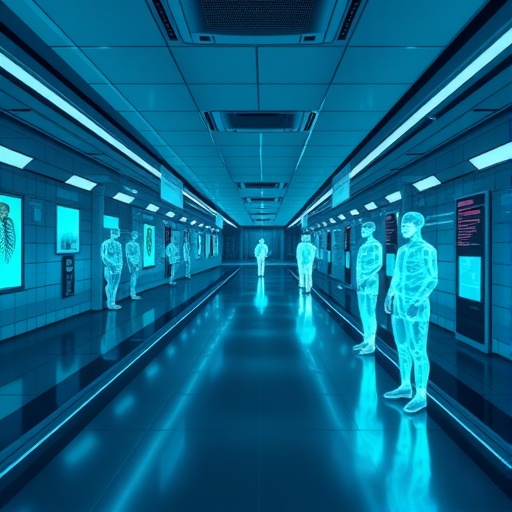
In a groundbreaking development for healthcare management, Digital Twin (DT) technology has swiftly transcended its aerospace origins to become a pivotal tool in transforming hospital operations worldwide. Initially developed by NASA for simulating spacecraft environments, Digital Twins have evolved into complex, AI-driven virtual replicas of entire hospital systems. These real-time, dynamic digital models are redefining how healthcare administrators optimize workflows, anticipate operational bottlenecks, and proactively manage resource allocation to enhance patient care.
Unlike static simulation models, Digital Twins function as continuously updated “living” systems, reflecting real-time data streams from their physical counterparts. This seamless integration is enabled by advanced sensors, electronic health records, IoT devices, and machine learning algorithms that collectively feed vast amounts of operational data into the virtual environment. By maintaining this continuous data exchange, DT platforms provide an unparalleled capacity for predictive analytics, offering hospitals a sophisticated decision-support mechanism that can simulate potential changes and forecast their impacts across the entire system.
One of the most notable transformations has been observed within Emergency Departments (EDs), where DT technology has driven remarkable improvements in patient flow and resource utilization. By modeling patient triage, staffing patterns, and bed availability dynamically, hospitals reported reductions in emergency wait times by 20% to 40%, alongside patient throughput increases approaching 20%. These improvements stem from the DT’s ability to simulate high-risk operational changes in a safe, virtual space, ensuring robustness without compromising patient safety or quality of care.
Surgical departments, particularly orthopedic services, have also embraced DT technology to optimize complex scheduling and staffing challenges. Through digital simulations, administrators can assess the trade-offs between different block scheduling approaches and resource distribution ahead of time. This strategy allows for maximizing surgical throughput while meticulously safeguarding patient care standards, thus reducing incidences of overbooking or underutilizing expensive surgical facilities.
Perhaps the most striking example of DT’s predictive power emerged from Children’s Mercy Hospital in Kansas City. Leveraging its digital replica, the hospital accurately forecasted the timing of a winter viral surge, including influenza and RSV spikes, within just one week of the actual event. This foresight enabled precision capacity planning, ensuring that resources such as isolation rooms, ventilators, and specialized staff availability were optimized for peak demand periods, mitigating the risk of overwhelming the facility during critical times.
The implications of these operational efficiencies extend beyond individual hospitals to a global health ecosystem undergoing a massive paradigm shift. Market analysts project the digital twin healthcare sector to balloon to $60 billion by 2030, highlighting a transition from traditional reactive crisis management to a forward-looking, proactive design of healthcare delivery. As industry leaders from companies like GE HealthCare, Siemens Healthineers, and AnyLogic emphasize, the holistic capture of system-wide interactions is the true strength of DTs, ensuring localized fixes do not inadvertently propagate bottlenecks elsewhere within interconnected departments.
Despite the promise, the deployment of Digital Twins in healthcare is not without challenges. Data integrity stands as a paramount concern; if foundational data is flawed or outdated, DT insights can be misleading and potentially detrimental. Establishing a “shared definition of reality” within healthcare organizations — where administrators, clinicians, and frontline staff align on consistent, accurate data inputs — is critical for translating virtual insights into actionable, real-world measures. Achieving this consensus requires fostering communication across hierarchies and ensuring transparency of data provenance.
Moreover, the technological architecture underpinning DTs demands robust cybersecurity protocols, given the sensitivity of health data and the critical nature of operational decisions based on simulations. Edge computing combined with cloud-based analytics facilitates scalable and secure data flows, while sophisticated encryption techniques safeguard patient privacy. Integrating AI algorithms capable of continuous learning further enhances model fidelity by adapting to emergent patterns, policy changes, or unforeseen scenarios such as pandemics.
The transformative potential of DTs extends into emergent areas of personalized medicine and health system resilience. By integrating patient-specific data streams with institutional operational metrics, Digital Twins could one day enable the simulation of individualized care pathways alongside hospital system capacity, optimizing not only throughput but also clinical outcomes. Early research in this domain suggests possibilities for tailoring interventions while balancing system-wide resource constraints.
In essence, Digital Twins represent a convergence of cutting-edge computing, systems engineering, and healthcare management, fostering an unprecedented visibility into the complex interplay of processes that sustain modern hospitals. Their utility transcends fixed models by evolving continuously, supporting evidence-based, data-driven decisions that reimagine operational efficiency and patient safety. As the technology matures, the vision emerges of hospitals not merely reacting to crises but foreseeing and averting them through intelligent, proactive system design.
The rise of AI-enabled Digital Twin platforms signals a pivotal moment in digital health evolution, merging futuristic modeling with pragmatic, everyday utility. Healthcare leaders adopting these technologies are positioned at the forefront of innovation, leveraging live operational models that function as real-time decision support systems. This capability ushers in a transformational step forward, redefining the ethos of healthcare delivery for the 21st century.
Industry experts advocate for continued investment not only in technology development but also in organizational change management to unlock the full benefits of DTs. Successful implementations demonstrate the importance of multidisciplinary collaboration, combining technical expertise with clinical and administrative insights. As hospitals navigate the complexities of this digital revolution, the promise of Digital Twins lies in their capacity to enhance agility, efficiency, and resilience across health systems globally.
With the healthcare landscape continually challenged by dynamic patient demands, resource limitations, and the unpredictability of public health emergencies, Digital Twin technology emerges as a beacon of innovation. By bridging the virtual and physical realms, these digital mirrors empower healthcare systems to anticipate, adapt, and optimize, ultimately fostering a future where operational bottlenecks are the exception rather than the norm.
News Publication Date: 24-Apr-2026
Web References:
References:
- Crawford M. How Digital Twins Can Improve Health System Operations. J Med Internet Res 2026;28:e98113
Keywords
Hospitals, Medical facilities, Patient monitoring, Emergency rooms, Systems analysis, Systems engineering, Technology, Health and medicine
Cite Scienmag News
Florence R. (April 27, 2026). Can Digital Twins Solve Hospital Patient Flow Bottlenecks? Scienmag. https://scienmag.com/can-digital-twins-solve-hospital-patient-flow-bottlenecks/
Florence R. "Can Digital Twins Solve Hospital Patient Flow Bottlenecks?" Scienmag, 27 April 2026, https://scienmag.com/can-digital-twins-solve-hospital-patient-flow-bottlenecks/. Accessed 28 August 2026.
Florence R. "Can Digital Twins Solve Hospital Patient Flow Bottlenecks?" Scienmag. April 27, 2026. https://scienmag.com/can-digital-twins-solve-hospital-patient-flow-bottlenecks/


