


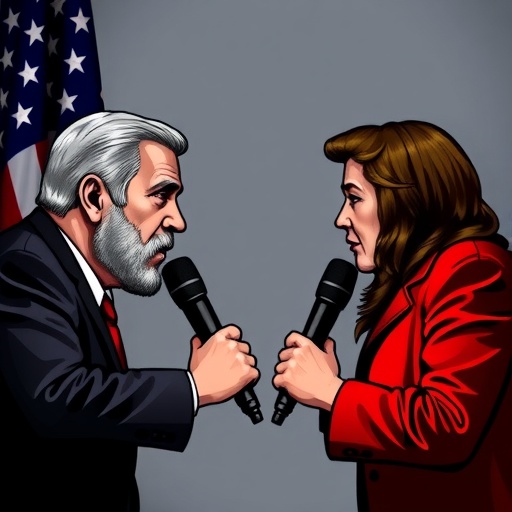
In the rapidly evolving landscape of communication, a groundbreaking study published in Nature Communications in 2026 sheds new light on the dynamics of disagreement. Researchers Bevis, Schroeder, and Yeomans reveal that spoken disagreements are inherently more constructive than their written counterparts. This revelation challenges long-held assumptions about the nature of conflict and offers transformative insights into how humans can engage more productively in debates, discussions, and deliberations in both professional and personal contexts.
The study delves into the nuanced interplay between vocal tone, immediate feedback, and interpersonal cues that characterize spoken disagreements. Contrary to the perceived permanence and clarity of written text, the flexibility and immediacy of spoken language foster a collaborative atmosphere even amid opposing viewpoints. This phenomenon reveals the deeply social and adaptive nature of human communication which written text, constrained by lack of vocal and non-verbal cues, cannot fully replicate.
One of the core technical elements explored by the research team involves the cognitive mechanisms underpinning conflict resolution. Spoken language activates a suite of neural pathways associated with empathy, emotional regulation, and social cognition. These pathways enable interlocutors to better decode intent, detect sarcasm, or perceive genuine concern, thus reducing the likelihood of entrenched polarization during disagreements. Written communication, in contrast, often triggers more analytical but less empathetic cognitive processes, potentially escalating misinterpretations and defensive reactions.
The methodology employed to obtain these results was rigorous and multifaceted. Participants were engaged in a series of debates conducted either through real-time voice interactions or through asynchronous text exchanges. By analyzing psychophysiological responses, verbal and non-verbal signals, and conflict outcomes, the researchers established a comprehensive framework illustrating how spoken disagreements facilitate mutual understanding and iterative problem-solving more effectively than written exchanges.
Furthermore, the research highlights the role of paralinguistic features—such as intonation, stress, pause, and volume modulation—in shaping the trajectory and resolution of disagreements. These vocal characteristics allow communicators to signal openness, frustration, or willingness to compromise dynamically. The absence of these signals in written forms necessitates reliance on punctuation or emoticons, which are often ambiguous and insufficient to convey complex emotions reliably, thereby hindering constructive dialogue.
The implications of this study extend to numerous domains including digital communication platforms, legal negotiations, educational environments, and organizational management. In particular, the findings prompt a reconsideration of the increasing reliance on text-based communication tools like email, instant messaging, and social media in high-stakes discussions. The research argues for integrating or prioritizing voice communication modalities to reduce conflict escalation and enhance collaborative outcomes.
Moreover, the study explores cultural variances in communication preferences and conflict resolution strategies. It distinguishes how different societies that emphasize oral traditions may inherently benefit from the constructive qualities of spoken disagreement, while those with text-centric communication cultures may experience more entrenched conflicts, potentially influenced by the modality of discourse itself. This cross-cultural perspective enriches the global relevance of the research findings.
Another critical insight revolves around the temporal characteristics of communication. Spoken disagreements, by their nature, demand immediate exchange and adaptive responses, facilitating real-time clarification and dynamic calibration of arguments. Written disagreements, being asynchronous, allow prolonged reflection but also foster echo chambers and rigid stance fixation due to delayed feedback. The temporal immediacy of spoken interaction thus plays a central role in enhancing its constructiveness.
The research also investigates the emotional landscape of disagreement interactions. Spoken disagreement tends to foster emotional resonance between participants, promoting empathy and mutual respect. This emotional connection, observed through nuanced vocal expressions and immediate repairs, mitigates adversarial escalation and supports collaborative resolution. Written communication, often perceived as cold or impersonal, lacks this emotive dimension, which might explain its association with more destructive conflict outcomes.
Importantly, this study challenges the common perception that written communication is inherently less prone to misunderstanding due to its permanence and ability to be reviewed multiple times. The findings articulate that the richness of vocal cues in spoken disagreement, coupled with immediate interlocutor feedback, outweighs the supposed clarity and deliberateness of written text, thus fostering deeper understanding and cooperation.
From a technological standpoint, the findings have profound implications for the design of future communication platforms. The integration of advanced voice technologies, including real-time sentiment analysis, voice modulation feedback, and AI-mediated conversational facilitation, could enhance the constructiveness of virtual disagreements. This lines up with growing trends toward incorporating voice interfaces in digital environments and positions voice as a critical element in conflict management tools.
The research additionally raises important considerations about remote work dynamics, which have surged globally. Organizations increasingly depend on written communication for coordination, but this often results in miscommunications and unresolved conflicts. Encouraging voice or video meetings as primary modes of dissenting discussions could markedly improve organizational harmony and productivity, a practical takeaway supported by the study’s rigorous data.
Lastly, the study opens new avenues for investigating how hybrid communication styles, combining written and spoken elements, can be structured to maximize constructive outcomes. For example, initial spoken disagreements could establish mutual understanding, followed by written summarizations to ensure clarity and documentation. Such integrated approaches might represent the future of effective conflict resolution techniques.
In essence, the pioneering work by Bevis, Schroeder, and Yeomans convincingly demonstrates that the human voice is not merely a vehicle for transmitting content but a powerful tool for fostering understanding, managing emotions, and achieving productive disagreement. As society continues to grapple with polarization and miscommunication, this research provides both a scientific rationale and a practical roadmap for leveraging spoken dialogue to resolve conflicts more constructively and harmoniously.
Cite Scienmag News
Glenn Wilkins. (April 27, 2026). Spoken Disagreement Outperforms Written for Constructive Debate. Scienmag. https://scienmag.com/spoken-disagreement-outperforms-written-for-constructive-debate/
Glenn Wilkins. "Spoken Disagreement Outperforms Written for Constructive Debate." Scienmag, 27 April 2026, https://scienmag.com/spoken-disagreement-outperforms-written-for-constructive-debate/. Accessed 1 September 2026.
Glenn Wilkins. "Spoken Disagreement Outperforms Written for Constructive Debate." Scienmag. April 27, 2026. https://scienmag.com/spoken-disagreement-outperforms-written-for-constructive-debate/


