


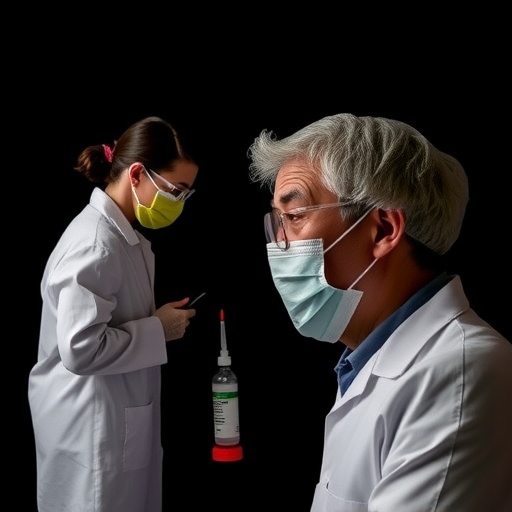
In recent years, the scientific community, particularly those involved in vaccine research, has faced intense scrutiny and a slew of unfounded allegations. From claims that mRNA vaccines alter human DNA to accusations that vaccines harbor tracking microchips or cause autism, the breadth of misinformation has been significant and persistent. These narratives, largely debunked by experts and lacking any substantive evidence, have nonetheless fueled skepticism and eroded public trust in some domains. However, a newly released comprehensive survey from the Annenberg Public Policy Center (APPC) at the University of Pennsylvania offers a counterintuitive insight: despite relentless misinformation campaigns, Americans’ trust in vaccine scientists remains robust and comparable to their trust in medical scientists and the broader scientific community.
The Feb. 2026 nationwide survey, known as the Annenberg Science and Public Health (ASAPH) panel, sampled views from 1,650 adults across the United States and revealed that approximately 69% of respondents express moderate or greater trust in scientists working on vaccines to act in their best interests. This level of confidence mirrors the trust placed in general medical scientists (72%) and scientists overall (70%). The findings suggest that public perception has maintained a remarkable equilibrium, undeterred by misinformation, emphasizing a resilience in the perceived credibility of vaccine researchers.
Comparatively, the trust vested in vaccine scientists matches closely with traditional symbols of trustworthiness such as police officers and the military, each holding around 70% trust levels. This differential is notable when juxtaposed with lower trust ratings for journalists (49%), religious leaders (47%), elected officials (36%), and business executives (30%). The comparative metrics underscore a nuanced public calculus that distinguishes between various societal actors, situating vaccine scientists among the more trusted figures despite significant public debate and politicization surrounding vaccines.
The survey employed a sophisticated, multi-factor evaluative tool termed Factors Assessing Science’s Self-Presentation (FASS), developed and validated by APPC researchers. This tool examines perceptions along five dimensions: credibility, prudence, error correction (self-correction), bias mitigation, and societal benefit. By parsing public attitudes through these lenses, the ASAPH survey probes beneath simple trust metrics to unravel the deeper cognitive frameworks shaping how the public evaluates scientific actors and their output.
Intriguingly, vaccine scientists are rated equivalently to general scientists in terms of credibility, self-correction, perceived biases, and the beneficial nature of their research. Notably, vaccine scientists are distinguished by higher evaluations of prudence—a factor encapsulating perceptions about whether scientists act responsibly, avoid reckless behaviors such as cutting corners, and do not exhibit superiority complexes. This metric is crucial as prudence relates to the ethical and cautious conduct crucial in high-stakes scientific fields like vaccine development, where public health consequences are immediate and profound.
The prudence dimension, often the most criticized factor for scientists broadly, reveals that public perception deems vaccine scientists less likely to engage in behaviors such as reckless grant-chasing or ignoring unintended consequences. A higher proportion of survey respondents explicitly disagreed with statements suggesting vaccine scientists feel superior, replace older problems with new ones, or cut corners to achieve publications. These attitudes may reflect the heightened visibility and scrutiny under which vaccine scientists operate, possibly reinforcing a narrative of caution and ethical diligence in their work.
Trust extends beyond personal characteristics to the integrity of scientific funding. The ASAPH survey also reveals that the public holds vaccine scientists and medical scientists to similar standards regarding transparency about their funding sources. Over half of respondents indicated moderate to high trust that these scientists disclose who sponsors their research. This aspect of trust is pivotal, especially in an era rife with concerns about conflicts of interest that can undermine scientific objectivity.
Regarding the impact of human and political biases on scientific work, the public perceives vaccine scientists, medical scientists, and scientists in general as equally affected “somewhat” by such biases. The average response clustered near the midpoint of a five-point scale, indicating a cautious acknowledgement of bias as a present but not overriding force. This recognition implies a realistic view of scientific human factors rather than idealized objectivity, highlighting the nuanced nature of public trust.
The ASAPH study’s methodology underscores rigorous, contemporary survey techniques. Conducted over two weeks in February 2026 using a probability-based sample and conducted via telephone and web, the approach mitigates common survey biases by quarantining panelists from other survey panels. The margin of error, ±3.5 percentage points, ensures statistical validity in the findings. The ASAPH panel’s ongoing, multi-wave approach since 2021 ensures a rich longitudinal dataset enabling trend analyses surrounding public attitudes toward science and public health.
The resilience of vaccine scientists’ trustworthiness also raises philosophical and sociological questions as to why prudence scores lag behind other factors of trustworthiness. This dimension probes ethical comportment and risk awareness—areas crucial for maintaining public confidence in rapidly evolving scientific fields where missteps can have amplified consequences. Scientists may need to engage more effectively in public discourse to convey their cautious, ethical approaches to research and counteract perceptions that might associate scientific progress with reckless ambition.
This survey’s findings are particularly timely given the ongoing public health challenges posed by infectious diseases like COVID-19, influenza, and RSV. Amidst these pressing concerns, understanding the nuances of public trust can inform health communication strategies and policy frameworks seeking to bolster vaccine uptake and scientific literacy. The ASAPH survey situates trust in vaccine scientists as a foundational pillar supporting these efforts, suggesting strategic leverage points to maintain and deepen this confidence.
The Annenberg Public Policy Center continues to spearhead research tracking public attitudes toward scientific and health policy issues, offering critical empirical insights to policymakers, communicators, and educators. Their multi-wave approach captures evolving sentiments and equips stakeholders with data-driven guidance for addressing skepticism, misinformation, and complex challenges at the science-public interface.
By quantitatively parsing trust and perception across targeted scientific domains, the ASAPH survey provides a robust template for evaluating how different scientific roles are understood and valued by society. This nuanced understanding is critical when science intersects with politicized or contentious terrains, enabling tailored communication that acknowledges public concerns while reinforcing factual consensus.
Ultimately, this latest Annenberg survey signals a cautiously optimistic narrative: despite intense misinformation targeting vaccines and vaccine researchers, the U.S. public generally maintains a consistent, moderate-to-high degree of trust. Such findings underscore the enduring importance of transparent, ethical scientific practices and highlight the potential for informed public engagement to weather waves of skepticism in contemporary discourse.
News Publication Date: April 2026
Web References:
References:
- Jamieson, P. E., et al. (2023). Factors Assessing Science’s Self-Presentation and their effect on conservatives’ and liberals’ support for funding science. Proceedings of the National Academy of Sciences.
- APPC ASAPH Survey Wave 28 Methodology Report. (2026).
Cite Scienmag News
Kristina Jarvis. (April 27, 2026). Scientists Highly Regarded by Public; Vaccine Researchers Viewed on Par with General Scientific Community. Scienmag. https://scienmag.com/scientists-highly-regarded-by-public-vaccine-researchers-viewed-on-par-with-general-scientific-community/
Kristina Jarvis. "Scientists Highly Regarded by Public; Vaccine Researchers Viewed on Par with General Scientific Community." Scienmag, 27 April 2026, https://scienmag.com/scientists-highly-regarded-by-public-vaccine-researchers-viewed-on-par-with-general-scientific-community/. Accessed 1 September 2026.
Kristina Jarvis. "Scientists Highly Regarded by Public; Vaccine Researchers Viewed on Par with General Scientific Community." Scienmag. April 27, 2026. https://scienmag.com/scientists-highly-regarded-by-public-vaccine-researchers-viewed-on-par-with-general-scientific-community/


