


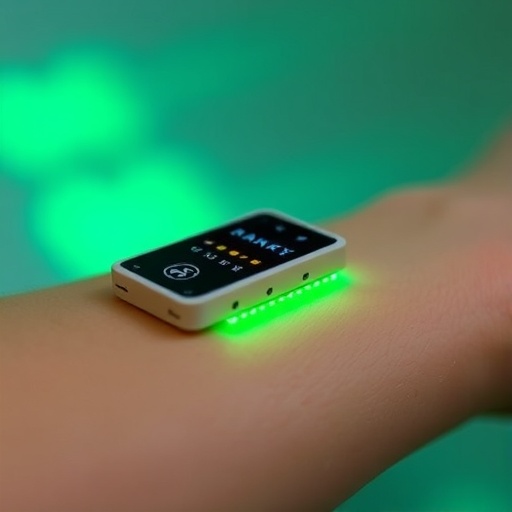
In a groundbreaking advancement that promises to revolutionize personalized healthcare and nutrition, researchers have developed a novel electrochemical device capable of real-time monitoring of vitamin levels in human sweat with nanomolar sensitivity. This innovative skin-attached sensor, reported in a recent Nature Communications publication, marks a significant leap forward in wearable biosensing technology, offering unprecedented opportunities for continuous, non-invasive monitoring of essential micronutrients. By enabling precise tracking of vitamin concentrations, this technology could transform the management of nutritional deficiencies, accelerate clinical diagnostics, and optimize athletic performance and wellness regimes.
The genesis of this cutting-edge device stems from the urgent need to develop accessible, accurate, and real-time monitoring systems for vital biomarkers. Vitamins, despite their critical roles in a myriad of physiological processes, have historically been challenging to monitor dynamically due to the reliance on invasive blood testing and delayed laboratory analyses. Leveraging the biochemical composition of sweat, which reflects systemic physiological states, the research team constructed a bioelectronic platform that interfaces directly with the skin, offering a window into the body’s micronutrient landscape without the need for needles or blood draws.
At the core of this pioneering technology lies a sophisticated electrochemical sensor capable of detecting vitamins at nanomolar concentrations—a level of sensitivity that ensures even trace quantities can be observed with remarkable specificity and accuracy. Achieving this sensitivity is particularly impressive given the complex and dilute nature of sweat, which contains myriad electrolytes, metabolites, and proteins that often complicate selective detection. The research team tackled these challenges by integrating highly selective molecular recognition elements within the sensor architecture, thus isolating the signal of target vitamins from interfering substances.
The device’s thin, flexible design is another vital aspect that enables seamless integration with the skin’s surface, promoting continuous monitoring without discomfort or disruption to daily activities. Composed of biocompatible materials and engineered for mechanical flexibility, the sensor conforms naturally to the skin’s contours, maintaining stable contact while withstanding the mechanical strain of body movements. This ergonomic design ensures the reliability of data over extended periods—a critical factor for both clinical diagnostics and long-term health management.
Functionally, the sensor operates by transducing the electrochemical interactions between the target vitamins and the recognition elements into an electrical signal, which is then processed in real-time by integrated electronics. This signal transduction mechanism allows for rapid, dynamic measurement of vitamin concentrations, with the system transmitting data wirelessly to external devices such as smartphones or health monitors. This connectivity facilitates immediate access to nutritional information, empowering users and healthcare providers to make timely, informed decisions.
One of the profound implications of this technology lies in its application for individualized nutritional tracking and supplementation. Conventional approaches to vitamin monitoring largely depend on episodic blood analyses and generalized dietary recommendations. By contrast, this wearable sensor provides continuous feedback on vitamin status, enabling personalized adjustments to diet and supplementation protocols. This capability is particularly valuable for populations with heightened nutritional needs, including pregnant women, athletes, elderly individuals, and patients with chronic illnesses or malabsorption syndromes.
Clinical implications extend further, with the potential for early detection and monitoring of vitamin deficiencies or imbalances that contribute to a broad spectrum of health disorders—from impaired immune function to neurological deficits. The chronic underdiagnosis of micronutrient deficiencies often results in delayed interventions; thus, real-time wearable monitoring offers a proactive approach to health management. Healthcare providers could use this technology to remotely monitor patients’ nutritional status, facilitating telemedicine and reducing the need for invasive clinical visits.
Moreover, athletes and fitness enthusiasts stand to benefit enormously from this technology by optimizing their micronutrient intake in relation to physical exertion and recovery dynamics. Exercise influences vitamin metabolism and requirements markedly; hence, real-time feedback could help tailor nutritional strategies to individual physiological demands, enhancing performance and reducing the risk of deficiency-related complications such as muscle weakness or oxidative stress.
From a technological standpoint, the development of this vitamin sensor integrates multidisciplinary expertise spanning materials science, electrochemistry, biochemistry, and wearable electronics. The researchers employed nanoscale electrode fabrication techniques to enhance surface area and sensitivity, coupled with advanced molecular probes tailored for different vitamin structures—such as water-soluble B-complex vitamins and fat-soluble vitamins like A and D. Optimizing the sensor’s selectivity and stability against sweat’s biochemical milieu was a crucial undertaking to ensure accurate and reliable readings.
The rigorous validation of the device included extensive in vitro testing using artificial sweat across varying concentrations and compositions, followed by human trials under controlled and real-world conditions. These trials confirmed the sensor’s ability to track dynamic fluctuations in vitamin levels in response to dietary intake, environmental factors, and metabolic changes. Importantly, the device maintained its performance during extended wear, demonstrating robustness against perspiration rate variability, temperature changes, and mechanical stress.
In terms of data management, the integration of the sensor with mobile technologies leverages machine learning algorithms to interpret complex vitamin profiles, identify trends, and predict potential deficiencies. This combination of biosensing and data analytics heralds a new era of precision nutrition, where interventions can be fine-tuned based on continuous physiological feedback rather than static laboratory results.
While this development represents a significant milestone, the research team acknowledges ongoing challenges and future directions. Extending the range of detectable micronutrients, enhancing multiplexing capabilities, and improving the sensor’s power autonomy remain key objectives. Furthermore, implementing large-scale clinical studies to evaluate long-term benefits and user acceptability will be critical for widespread adoption.
In summary, the advent of a real-time, nanomolar-level vitamin monitoring device embedded into the skin marks a paradigm shift in health monitoring technology. This wearable sensor not only democratizes access to critical nutritional data but also fosters a proactive, data-driven approach to wellness, disease prevention, and therapeutic intervention. As this technology moves toward commercialization, it holds the promise to reshape human health management in ways previously constrained by the limitations of traditional biomarker assessment methods.
The implications of this technology ripple beyond medicine and nutrition into public health policy, fitness industries, and even personalized cosmetics. By providing a non-invasive, continuous stream of critical biochemical data through a convenient and user-friendly interface, the technology underpins a future in which self-care is empowered by intelligent, responsive, and personalized biosensing systems. The potential for integration with other physiological monitoring platforms broadens the scope for holistic health tracking, enabling a truly comprehensive picture of an individual’s well-being.
In conclusion, this achievement embodies the convergence of cutting-edge science and engineering aimed at overcoming longstanding hurdles in nutritional biomarker detection. The electrochemical skin-attached vitamin sensor offers a compelling vision for the future—one where vital nutrients are tracked with precision, patients and consumers are empowered with actionable insights, and the foundational goal of optimal, personalized health is made attainable through technology.
Cite Scienmag News
Daisy Hatcher. (April 23, 2026). Nanomolar Vitamin Monitoring via Skin-Attached Device. Scienmag. https://scienmag.com/nanomolar-vitamin-monitoring-via-skin-attached-device/
Daisy Hatcher. "Nanomolar Vitamin Monitoring via Skin-Attached Device." Scienmag, 23 April 2026, https://scienmag.com/nanomolar-vitamin-monitoring-via-skin-attached-device/. Accessed 3 September 2026.
Daisy Hatcher. "Nanomolar Vitamin Monitoring via Skin-Attached Device." Scienmag. April 23, 2026. https://scienmag.com/nanomolar-vitamin-monitoring-via-skin-attached-device/


