

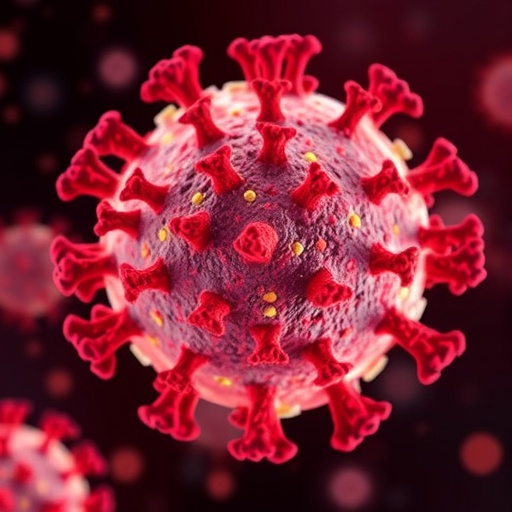
In a groundbreaking study published in Pediatric Research on April 22, 2026, researchers have unveiled compelling evidence linking endovascular profiles to neutrophil activation in children and young adults suffering from long COVID. This discovery promises to illuminate the underlying vascular mechanisms contributing to the persistent symptoms observed in this population, opening new avenues for targeted treatments and improved diagnostic criteria.
Long COVID, a condition characterized by ongoing symptoms following acute SARS-CoV-2 infection, has posed significant challenges to clinicians and researchers alike. Symptoms such as fatigue, cognitive impairment, and cardiovascular complications persist for months in some patients, yet the exact pathological pathways behind these manifestations remain elusive. The latest research by Steifman et al. delves deep into the immunovascular interactions that may be driving this chronic state in a particularly vulnerable group: children and young adults.
Neutrophils, a key component of the innate immune system, have historically been recognized for their role in frontline defense against pathogens. However, excessive or dysregulated activation of neutrophils can exacerbate inflammation and contribute to tissue damage, particularly within the vascular endothelium—the delicate lining of blood vessels. This study meticulously analyzed the endovascular profiles of patients, uncovering patterns that implicate neutrophil hyperactivation in the pathogenesis of long COVID symptoms.
Using advanced flow cytometry and biomarker assays, the research team performed immunophenotyping of circulating neutrophils and assessed their functional states. The analyses revealed significant elevations in neutrophil extracellular trap (NET) formation, a process by which neutrophils release chromatin structures to trap pathogens but that can also induce endothelial injury and thrombosis. This excessive NETosis was correlated with markers indicative of endothelial dysfunction, suggesting a pathogenic interplay that could underlie the multi-organ sequelae observed in young individuals with lingering post-COVID symptomatology.
Importantly, the study cohort included a diverse population of pediatric and young adult patients who had recovered from acute SARS-CoV-2 infection but continued to experience debilitating symptoms. By comparing their vascular and immunologic profiles with those of age-matched healthy controls, the researchers were able to isolate neutrophil-driven perturbations as a hallmark feature. These findings emphasize the role of ongoing immune activation rather than viral persistence alone, thereby refining current hypotheses about the etiology of long COVID.
Complementing these cellular analyses, the investigators employed sophisticated endothelial function testing, including flow-mediated dilation measurements and circulating biomarker assessment of vascular injury. These methods confirmed that endothelial perturbations, including elevated soluble adhesion molecules and pro-inflammatory cytokines, were significantly associated with neutrophil activation parameters. The study thereby establishes a strong mechanistic link between immune cell behavior and vascular health disruption.
The implications of these findings extend beyond mere pathophysiological insight. By identifying specific signatures of neutrophil activation coupled with endothelial dysfunction, the research points toward potential biomarkers for diagnosing and monitoring long COVID in younger patients. Such biomarkers could revolutionize clinical assessments, enabling earlier intervention and tailored therapeutic approaches that directly target immune-vascular dysregulation.
Therapeutically, the study paves the way for exploring interventions that modulate neutrophil activity. Current anti-inflammatory and immunomodulatory agents may be repurposed or optimized to mitigate excessive neutrophil responses, thereby protecting vascular integrity and alleviating symptom burden. Clinical trials following these insights could transform management paradigms for long COVID, particularly in pediatric and adolescent populations that historically have had fewer treatment options.
This research also highlights the importance of longitudinal studies to track the evolution of immune and vascular profiles over time in long COVID patients. Understanding whether neutrophil activation and endothelial dysfunction persist, resolve, or fluctuate could inform prognosis and guide treatment durations. The dynamic interplay of immune and vascular systems unveiled by Steifman et al. underscores the complexity of long COVID and the necessity for multi-disciplinary approaches in tackling this emerging public health concern.
Moreover, the study raises compelling questions about the triggers for sustained neutrophil activation post-infection. Whether residual viral antigens, autoimmunity, or dysregulated immune memory responses are responsible remains to be elucidated. Investigating these upstream drivers will be critical for designing targeted therapies that address root causes rather than just mitigating downstream effects.
Importantly, the findings resonate with broader research efforts linking vascular health to COVID-19 severity and recovery. The pediatric and young adult focus of this study fills a critical knowledge gap since much of the early COVID-19 vascular research centered on older adults or acute illness phases. Understanding how these mechanisms operate across age groups will be essential for comprehensive long COVID management strategies.
The study also sets a methodological benchmark by integrating immunological assays, vascular function tests, and clinical symptomatology evaluations. Such holistic approaches enable robust correlation of laboratory findings with real-world patient experiences, ensuring that scientific discoveries translate into meaningful clinical impact.
Future investigations inspired by this work will likely explore the roles of other innate immune cells, endothelial progenitor cells, and systemic inflammatory mediators. The vascular niche represents a complex biological interface where immune and endothelial cells interact, influencing disease trajectories and therapeutic responses.
In conclusion, the compelling evidence linking endovascular profiles to neutrophil activation in children and young adults with long COVID reveals a critical piece of the complex puzzle underlying persistent post-COVID symptoms. By shedding light on the immunovascular dynamics at play, this study by Steifman and colleagues paves the way for innovative diagnostic and therapeutic breakthroughs that could alleviate the burden of long COVID on younger generations worldwide.
Subject of Research: The study investigates the relationship between neutrophil activation and endovascular profiles in children and young adults suffering from long COVID, focusing on the immune-vascular mechanisms contributing to persistent symptoms.
Article Title: Endovascular profiles linked to neutrophil activation in children and young adults with long COVID.
Article References:
Steifman, C.B., Alvarez-Carcamo, B., Verma, S. et al. Endovascular profiles linked to neutrophil activation in children and young adults with long COVID. Pediatr Res (2026). https://doi.org/10.1038/s41390-026-05024-1
Image Credits: AI Generated
DOI: 10.1038/s41390-026-05024-1
Keywords: Long COVID, neutrophil activation, endovascular profiles, pediatric COVID, endothelial dysfunction, neutrophil extracellular traps, immune-vascular interaction, post-acute sequelae of SARS-CoV-2 infection.


