


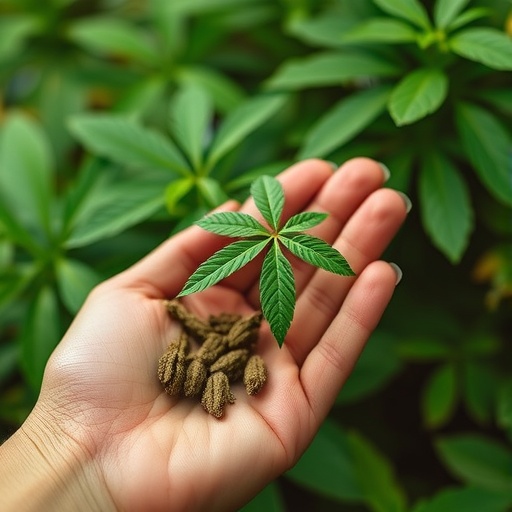
Over the past decade, the United States has witnessed a dramatic surge in the use of kratom, a plant known for its psychoactive properties and opioid-like effects at high doses. A groundbreaking study recently published in the journal Addiction offers a comprehensive national analysis revealing sharp increases in kratom-related exposures reported to poison centers across the country. This escalation has raised significant public health concerns, especially given the plant’s rising association with severe medical outcomes.
Kratom, derived from the leaves of the Mitragyna speciosa tree native to Southeast Asia, has long been used traditionally for its stimulant and analgesic properties. In the U.S., its unregulated market presence has burgeoned over the last decade. According to the new study, reports of kratom exposures to poison control centers have skyrocketed from a mere 19 cases in 2010 to an alarming 1,242 cases in 2023—a staggering increase exceeding 6,500%. This meteoric rise signals a growing trend of kratom use and, implicitly, its emerging health ramifications.
Even more concerning is the sharp uptick in severe medical outcomes linked to kratom exposure. Severe outcomes, as defined by the study, encompass life-threatening effects, significant residual disabilities, or fatalities directly attributable to kratom. While no severe cases were reported in 2010, this number escalated to 158 in 2023. This data indicates not only a higher number of kratom users but also an increased proportion experiencing serious health crises as a result.
State-level regulatory approaches appear to play a decisive role in these health outcomes. The research highlights a consistent pattern whereby states that have instituted outright bans on kratom reported substantially lower rates of both exposure and severe medical outcomes. In stark contrast, states adopting consumer-protection models or no regulatory framework at all exhibited elevated incidence rates, suggesting that stronger regulation can mitigate the public health impact of this substance.
Dr. Ryan Feldman, senior author of the study and a faculty member at the Medical College of Wisconsin, underscores the regulatory patchwork currently characterizing kratom governance in the U.S. Unlike nationally scheduled opioids, kratom remains unscheduled under the Controlled Substances Act and is not FDA-approved for medical use. This regulatory ambiguity delegates responsibility to individual states, resulting in heterogeneous policies and varying public health consequences.
Kratom’s complex pharmacology includes a diverse array of alkaloids acting primarily as partial agonists at mu-opioid receptors, producing analgesia and euphoria. However, its interaction with multiple neurochemical systems, including adrenergic and serotonergic pathways, underlies its potential to provoke severe toxicities. Medical complications associated with kratom use documented in this study and elsewhere include seizures, cardiac arrhythmias, hepatotoxicity, and respiratory depression.
Clinical data from poison center reports reveal that hospitalization is common following kratom exposure, with nearly one in seven single-substance kratom cases requiring hospital admission. Moreover, about one in sixteen cases necessitated admission to a critical care unit, emphasizing the potential for life-threatening toxicity. These data underscore the importance of viewing kratom not merely as a benign herbal supplement but as a substance with significant risk potential.
Adding complexity to kratom’s risk profile is its frequent concomitant use with other substances. The study notes that kratom’s interference with hepatic metabolic pathways can amplify the toxicity of co-ingested drugs. This pharmacokinetic interaction raises the likelihood of adverse events, particularly in poly-substance users, complicating clinical management and increasing the burden on emergency healthcare systems.
The authors of the study call for more rigorous, unbiased research to elucidate kratom’s benefits and risks more clearly. Existing literature is hindered by methodological limitations, small sample sizes, and potential confounding factors. Given the rapid increase in kratom consumption and associated harms, high-quality scientific evidence is crucial to inform balanced regulatory policies that protect public health while addressing consumer demand.
Current legislative debates at state and federal levels reflect this contentious balancing act. Proponents of kratom argue for its role in harm reduction and as an alternative for opioid withdrawal management, whereas opponents emphasize its potential for abuse and severe adverse effects. Without robust, evidence-based guidelines, policymakers risk either under-regulating, leading to escalating harms, or over-regulating, potentially curtailing access to a substance some users find therapeutically valuable.
As this new research clearly demonstrates, kratom use and its associated health risks are unlikely to diminish spontaneously. Instead, the evolving crisis calls for urgent public health interventions, including enhanced surveillance, education campaigns, clinical awareness, and science-driven policymaking. Only through such comprehensive efforts can the nuanced challenges posed by kratom be effectively addressed.
In summary, this decade-spanning study paints a stark picture of kratom’s rise in popularity against the backdrop of increasing health emergencies. The explosive growth in poison center reports and severe outcomes ventilates a vital public health concern demanding immediate attention and action. The study’s findings suggest that decisive regulatory measures at the state and potentially national level can significantly influence the safety landscape surrounding kratom use.
News Publication Date: 22-Apr-2026
Web References: https://onlinelibrary.wiley.com/doi/10.1111/add.70416
References:
Comstock G, Gulotta AP, Rein LE, and Feldman R. Association Between State-Level Kratom Regulations and Poison Center-Reported Severe Medical Outcomes and Healthcare Use: A United States National Analysis. Addiction. 2026. DOI: 10.1111/add.70416
Cite Scienmag News
Courtney Benton. (April 22, 2026). Kratom Consumption Surges in the US, Bringing Significant Health and Lifestyle Impacts. Scienmag. https://scienmag.com/kratom-consumption-surges-in-the-us-bringing-significant-health-and-lifestyle-impacts/
Courtney Benton. "Kratom Consumption Surges in the US, Bringing Significant Health and Lifestyle Impacts." Scienmag, 22 April 2026, https://scienmag.com/kratom-consumption-surges-in-the-us-bringing-significant-health-and-lifestyle-impacts/. Accessed 3 September 2026.
Courtney Benton. "Kratom Consumption Surges in the US, Bringing Significant Health and Lifestyle Impacts." Scienmag. April 22, 2026. https://scienmag.com/kratom-consumption-surges-in-the-us-bringing-significant-health-and-lifestyle-impacts/


