


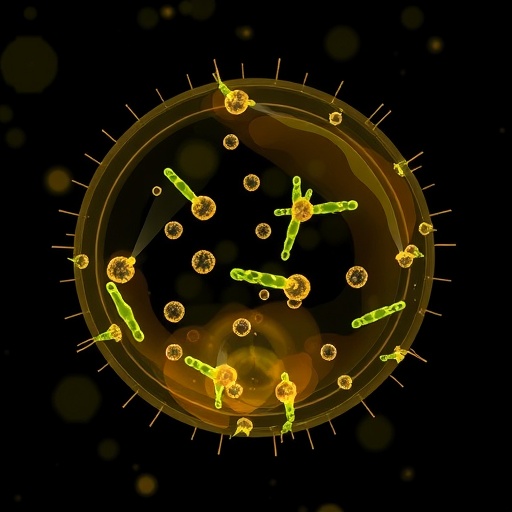
In a groundbreaking development within environmental health and prenatal science, new research published on April 22, 2026, has unveiled the hidden complexities of the prenatal exposome through the lens of amniotic fluid analysis. Amniotic fluid, a crucial biological matrix surrounding the developing fetus in utero, offers unprecedented insights into the chemical and biological environment to which the fetus is exposed. Despite its undeniable significance, this fluid has remained a relatively untapped reservoir for understanding fetal exposure to a myriad of environmental contaminants. The latest study spearheaded by Ji, Shear, Abrahamsson, and colleagues pioneers the application of non-targeted analytical techniques to discern both endogenous metabolites and previously unidentified exogenous toxicants residing within amniotic fluid.
The vulnerability of the developing fetus to environmental perturbations is well-documented, with early-life exposures correlating to lifelong health outcomes. However, identifying the full spectrum of these exposures—collectively known as the prenatal exposome—has been a daunting challenge. Traditional targeted analyses have limited scope and fail to capture the unknown or unexpected chemicals present during critical gestational windows. To address this gap, the researchers utilized state-of-the-art non-targeted analysis (NTA), integrating high-resolution mass spectrometry with sophisticated bioinformatics workflows to unravel the molecular composition of amniotic fluid without preconceived bias toward specific compounds.
What sets this study apart is its comprehensive examination that simultaneously maps both naturally occurring metabolites and a vast array of environmental contaminants. Endogenous metabolites form the biochemical backbone of fetal physiology, reflecting metabolic processes and potential disruptions. At the same time, exogenous chemicals, often anthropogenic in origin, have the capacity to interfere with normal developmental trajectories. The dual-characterization approach delivers a more holistic picture of fetal exposure, a strategy rarely implemented in prenatal toxicology until now.
The application of NTA to amniotic fluid samples revealed a staggering diversity of chemical entities. Among these were novel contaminants not previously reported in the context of pregnancy, illustrating the dynamic and complex chemical milieu to which the fetus is subjected. These findings challenge existing paradigms that often rely upon a narrow subset of known hazardous substances, such as certain heavy metals or persistent organic pollutants. Instead, the study invites a paradigm shift toward comprehensive chemical surveillance of the prenatal environment.
The technological underpinnings of this research are equally noteworthy. Leveraging advances in ultrahigh-performance liquid chromatography coupled with high-resolution tandem mass spectrometry (UHPLC-HRMS/MS), the investigation achieved unparalleled sensitivity and specificity. This enabled the detection of trace-level chemicals amidst a complex biological matrix—a notoriously difficult analytical challenge. Moreover, the integration of machine learning-based feature annotation algorithms allowed for the tentative identification of unknown compounds, propelling the identification process well beyond the constraints of conventional databases.
From a toxicological perspective, the identification of new contaminants within amniotic fluid raises urgent questions about their biological relevance and potential health implications. Many chemicals detected have unknown or poorly characterized toxicodynamics and toxicokinetics in the context of fetal development. This knowledge gap underscores the necessity for further toxicological characterization and risk assessment. Understanding how these environmental exposures influence fetal programming, immune system development, and neurodevelopment could pave the way for preventative strategies against developmental disorders.
The implications for public health policy are profound. By elucidating a broader spectrum of fetal exposures, this research advocates for revisiting and possibly expanding current regulatory frameworks. Current exposure limits and safety standards are largely based on adult toxicology data and exclude numerous chemicals unmonitored in prenatal contexts. Incorporating such comprehensive exposure data could refine guidelines for chemical use and shape prenatal care strategies to better protect maternal-fetal health.
Furthermore, this study highlights an emerging role for amniotic fluid as a sentinel matrix for environmental monitoring. Sampling amniotic fluid, though invasive, offers direct access to the fetal environment, outperforming surrogate tissues or fluids such as cord blood, urine, or maternal serum in exposure specificity. This methodological advantage could significantly enhance the precision of epidemiological studies aiming to correlate prenatal chemical exposures with postnatal health outcomes.
The interdisciplinary collaboration driving this work is another key attribute, integrating expertise from analytical chemistry, toxicology, maternal-fetal medicine, and computational sciences. Such a multifaceted approach is essential to tackle the intricacies of the prenatal exposome, which exists at the intersection of environmental science, biology, and public health. The study establishes a new benchmark for research transparency and reproducibility by openly sharing spectral libraries and analytical workflows, fostering broader scientific engagement.
Ethical considerations also surface amid this advancement. The invasiveness of amniotic fluid collection warrants strict ethical oversight, balancing research benefits with maternal and fetal safety. The authors emphasize the importance of integrating NTA approaches within clinically justified amniocentesis procedures rather than prompting additional invasive sampling. This approach aligns with responsible research principles while maximizing the utility of available biological specimens.
Looking ahead, the potential to combine NTA data from amniotic fluid with longitudinal birth cohorts offers exciting research avenues. Tracking children’s health trajectories alongside prenatal chemical exposure profiles could illuminate mechanistic pathways through which environment shapes development. This approach could ultimately inform targeted interventions and precision medicine paradigms for at-risk populations.
Moreover, advancements in non-invasive prenatal sampling technologies—such as cell-free fetal DNA/RNA analysis and metabolomics of maternal biofluids—may complement and expand upon findings from amniotic fluid studies. Integrating multi-omics strategies with environmental exposomics promises a comprehensive view of prenatal health in the 21st century, where genetic, epigenetic, and chemical factors converge.
In conclusion, the study conducted by Ji and colleagues marks a transformative leap in our comprehension of prenatal chemical exposure. By harnessing cutting-edge non-targeted analysis, the research discloses a complex and previously uncharted chemical ecosystem within the amniotic fluid, positioning the field to confront emerging environmental threats to fetal health more effectively. This work not only provides a critical scientific foundation but also galvanizes the collective effort required to safeguard the most vulnerable population during their earliest chapters of life.
As science pushes the boundaries of what we know about fetal exposure, these revelations redefine our approach to maternal-fetal medicine and environmental health. The path forward lies in embracing integrative methodologies, fostering regulatory evolution, and prioritizing the well-being of future generations through meticulous environmental stewardship. The amniotic fluid exposome is no longer an enigma but a vital key unlocking new dimensions of prenatal care and research.
Cite Scienmag News
Ophelia Keating. (April 22, 2026). Non-Targeted Analysis Reveals New Contaminants in Amniotic Fluid. Scienmag. https://scienmag.com/non-targeted-analysis-reveals-new-contaminants-in-amniotic-fluid/
Ophelia Keating. "Non-Targeted Analysis Reveals New Contaminants in Amniotic Fluid." Scienmag, 22 April 2026, https://scienmag.com/non-targeted-analysis-reveals-new-contaminants-in-amniotic-fluid/. Accessed 3 September 2026.
Ophelia Keating. "Non-Targeted Analysis Reveals New Contaminants in Amniotic Fluid." Scienmag. April 22, 2026. https://scienmag.com/non-targeted-analysis-reveals-new-contaminants-in-amniotic-fluid/


