


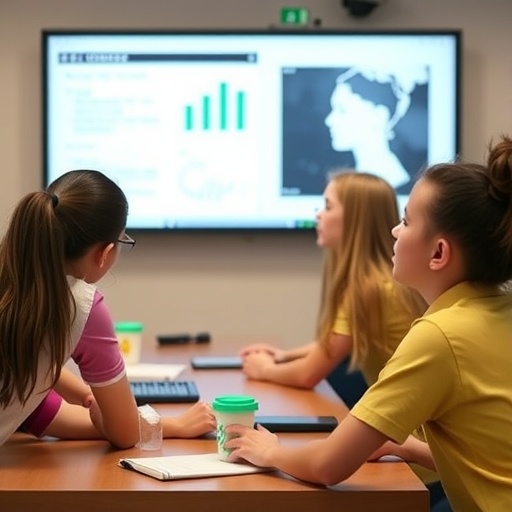
In recent years, the surge in digitalization within education has marked a profound transformation in the ways secondary education is conceptualized and delivered. Spain, in particular, has witnessed a meteoric adoption of virtual learning environments, with government data from the 2022/2023 academic year reporting that an impressive 92% of public secondary schools provide students with access to these digital platforms via devices such as computers and tablets. This widespread embrace of technology heralds significant opportunities in cultivating 21st-century skills, yet it simultaneously demands a critical reconsideration of pedagogical methodologies, echoing concerns about the sustainability and depth of digitally mediated learning processes.
Against this backdrop, a methodical inquiry spearheaded by the Universitat Oberta de Catalunya (UOC) offers a crucial empirical lens into the ramifications of digital schooling. Conducting in-depth interviews with thirty secondary school educators across Catalonia, the research delves into the lived realities of teachers navigating a landscape increasingly dominated by digital platforms. Their insights scrutinize how this platformization affects core facets of education—student attention, literacy development, autonomy, and cognitive engagement—illuminating the intricate interplay between technology and learning.
The investigation, led by researchers Jordi Solé and Raúl Navarro of the Laboratory of Social Education within UOC’s Faculty of Psychology and Education Sciences, alongside Dr. Marta Venceslao Pueyo of the University of Barcelona, presents its findings in an open-access article in the Digital Education Review. Their analysis challenges the prevailing techno-optimistic narratives that often overshadow pedagogical realities, underscoring a critical dissonance between policy-driven digital acceleration and the nuanced impacts observed by educators at the frontline of instruction.
Central to understanding these impacts is the recognition that digital platforms are far from neutral instruments; instead, they function as catalytic agents reshaping educational rhythms and practices. The research reveals how these platforms restructure school timetables and enmesh themselves into teaching methodologies, redefining not only what is taught but also how pupils engage cognitively. Such reorganization predicates the necessity to evaluate digitalization’s effects with a sophisticated appreciation of secondary education’s pivotal role during formative developmental stages.
The study’s findings foreground pressing concerns regarding cognitive fragmentation. Teachers report that digital tools facilitate an environment characterized by fragmented learning episodes and superficial engagement with content. Rapid task switching, encouraged by platform design, fosters an attention economy detrimental to sustained cognitive effort and in-depth comprehension. This fragmentation contravenes traditional didactic continuity, diminishing the capacity for students to undertake profound analytical processes and holistic synthesis of knowledge.
Moreover, the accelerated pace imposed by digital environments induces a multitasking logic that undermines concentration. Teachers observe that learners struggle to manage competing stimuli, leading to a pervasive sense of cognitive overload and diminished intellectual endurance. The shift towards automation, particularly through generative artificial intelligence, exacerbates these challenges by enabling students to delegate core cognitive functions such as writing and argumentation to technology, thereby eroding their personal engagement and responsibility in fundamental learning activities.
This cognitive delegation raises profound questions about the evolving educational subjectivity—how students perceive and inhabit their roles as learners. Educators express alarm over an observable decline in depth of learning, with written language skills notably impacted by overreliance on automated generation tools. The pedagogical value of conventional assignments and assessment paradigms is increasingly scrutinized as a consequence, highlighting a misalignment between traditional evaluation methods and emerging digital practices.
Additionally, the phenomenon of digital fatigue and saturation frequents classroom discourse. Continuous exposure to screen-mediated tasks fosters exhaustion and detachment, conditions detrimental to both motivation and achievement. This fatigue intertwines with a cultural shift towards immediacy and instant gratification, modalities that subtly reshape student identity and engagement, favoring ephemeral interactions over the cultivation of sustained intellectual curiosity and resilience.
Despite predominantly critical perspectives, the body of interviewed teachers articulates a nuanced position, recognizing the potential pedagogical benefits of technology when judiciously integrated and critically mediated. Many educators assert their professional autonomy in navigating the digital terrain, selectively employing platforms and tools where they complement and enhance learning objectives rather than dictate them. This tempered optimism underscores the necessity of nuanced governance and reflective practice amidst rapid digital transformation.
Importantly, these findings expose a significant gap in the public discourse and policymaking spheres where educators’ voices remain marginalized. The study advocates for a recalibration of debates surrounding digital education, suggesting that empirical evidence grounded in teacher experiences must inform future educational reforms. Such inclusion ensures that technological adoption aligns more closely with pedagogical effectiveness and student well-being.
Looking ahead, the researchers propose extending their inquiry to explore the dynamic interrelations between digital platforms, artificial intelligence, and educational subjectivity more deeply. Key questions include identifying the types of learners emerging from digitally dominated schooling and deciphering the dominant discourses shaping educational trajectories. Understanding these elements is critical to envisioning an educational paradigm that balances technological innovation with humanistic values.
This research embodies a commitment to educational paradigms attuned to the complexities of digital transformation. It constitutes part of the UOC’s broader mission of cultivating future education models that prioritize critical engagement, ethical use of technology, and sustainable learning frameworks. By fostering dialogue between empirical research and educational practice, this work contributes to the foundational knowledge necessary for navigating the challenges and possibilities inherent in 21st-century education.
News Publication Date:
2024-05-27
Web References:
- Digital Education Review article
- Ministry of Education data on virtual learning environments
- UOC Laboratory of Social Education (LES)
- UOC Faculty of Psychology and Education Sciences
- UOC-FuturEd centre
Cite Scienmag News
Glenn Wilkins. (April 21, 2026). Researchers Observe Shifts in Students’ Attention and Cognition During Screen-Based Learning. Scienmag. https://scienmag.com/researchers-observe-shifts-in-students-attention-and-cognition-during-screen-based-learning/
Glenn Wilkins. "Researchers Observe Shifts in Students’ Attention and Cognition During Screen-Based Learning." Scienmag, 21 April 2026, https://scienmag.com/researchers-observe-shifts-in-students-attention-and-cognition-during-screen-based-learning/. Accessed 3 September 2026.
Glenn Wilkins. "Researchers Observe Shifts in Students’ Attention and Cognition During Screen-Based Learning." Scienmag. April 21, 2026. https://scienmag.com/researchers-observe-shifts-in-students-attention-and-cognition-during-screen-based-learning/


