


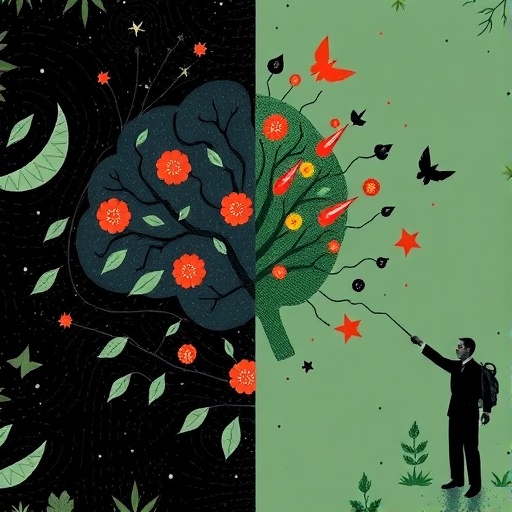
Cultural psychology has long been anchored in a comparative framework that dichotomizes societies into individualistic and collectivistic categories. This binary lens has shaped the discipline’s approach to understanding how culture influences psychological processes across different populations. Historically, much research has drawn upon contrasts primarily between Western and Eastern cultures, often portraying them as monolithic entities characterized by stable, overarching cultural values. However, this traditional view is increasingly seen as insufficient for capturing the complex, fluid realities of culture. New theoretical and empirical work is emerging to challenge this rigid schema, advocating for a more nuanced, dynamic approach to cultural psychology that acknowledges internal diversity and cultural change.
One of the fundamental critiques of the individualism–collectivism framework is its tendency to treat cultures as bounded and uniform. This static view overlooks the inherent heterogeneity within any given society, where multiple cultural subgroups and intersecting identities coexist and evolve over time. Consequently, psychological phenomena cannot be fully understood through an oversimplified cultural binary. Contemporary research emphasizes the need to explore the rich spectrum of cultural variation both between and within societies, recognizing that culture is neither fixed nor homogeneous, but instead a constantly negotiated and fluid set of meanings and practices.
Expanding beyond the conventional East-West comparisons allows cultural psychologists to address a broader array of cultural expressions and psychological tendencies. Studies have begun to investigate lesser-studied regions and populations, uncovering cultural patterns that do not conform neatly to the individualism-collectivism dichotomy. These investigations reveal a complex mosaic of values, social norms, and self-construals that challenge simplistic categorizations. Such findings underscore the importance of moving away from a one-size-fits-all model and toward frameworks that account for multiple overlapping cultural currents within and across societies.
Within-culture variation is a crucial dimension that has often been sidelined in previous research. The recognition that individuals within the same cultural group may hold divergent, sometimes conflicting psychological orientations necessitates revising how culture is conceptualized. Variability may arise from factors such as socioeconomic status, gender, ethnicity, generational differences, and social context. This internal heterogeneity implies that psychological theories must incorporate mechanisms through which culture operates at multiple levels, from the collective to the individual, capturing the ways people experience and enact culture differently within the same population.
The notion of culture as dynamic also challenges assumptions about its stability over time. Cultural norms, beliefs, and practices undergo continuous transformation influenced by globalization, migration, technological advancements, and intercultural contact. The concept of acculturation, traditionally studied as a unidirectional process wherein immigrants assimilate into a host culture, is now better understood as a multidimensional and bidirectional process. Psychological acculturation processes highlight how individuals navigate, integrate, or resist various cultural influences, leading to hybrid cultural identities and novel psychological outcomes.
At the group level, cultural change represents a collective adaptation that can reshape prevailing cultural frameworks. Social movements, policy reforms, and demographic shifts drive cultural transformations that influence collective mentalities and behavioral patterns. Advances in cultural psychology stress the importance of studying these dynamic processes to elucidate how cultural systems evolve and how individuals contribute to, and are influenced by, such changes. This approach situates culture within a broader ecological and historical context rather than treating it as a static backdrop for psychological phenomena.
Methodologically, this dynamic perspective invites more sophisticated research designs that capture temporal and contextual variability in culture. Longitudinal studies, mixed methods, and ethnographically rich approaches become essential to map cultural shifts and the interplay between multiple cultural dimensions. Additionally, recognizing the multiplicity of identities and subcultures within societies prompts the integration of intersectional frameworks to better reflect contemporary social realities.
The resurgence of interest in culture’s fluid nature aligns well with the increasingly multicultural realities of many societies worldwide. As demographic landscapes become more diverse, the lived experience of culture grows more complex, intersecting multiple traditions, languages, and value systems. Cultural psychology’s evolution toward a dynamic model equips researchers and practitioners with tools to understand psychological diversity in a way that is relevant to this pluralistic world.
Importantly, moving beyond the individualism-collectivism dichotomy does not entail abandoning these concepts altogether but rather situating them within a broader, more flexible theoretical landscape. Individualism and collectivism can be reconceptualized as part of a constellation of cultural dimensions interacting dynamically and contextually rather than as fixed, binary opposites. This shift promotes a more integrative understanding of culture’s multiple facets and the psychological processes that unfold within and across cultural boundaries.
This developmental trajectory in cultural psychology also has profound implications for applied domains, including clinical psychology, education, organizational behavior, and intercultural communication. Tailoring interventions, educational curricula, and workplace policies to accommodate cultural complexity fosters inclusivity and efficacy. It also supports the recognition of diverse cultural identities within institutions, enabling more responsive and adaptive practices that consider cultural variability as a resource rather than a challenge.
Moreover, the dynamic view of culture highlights the role of individual agency in cultural processes. People are not merely passive recipients of cultural scripts but active agents who interpret, negotiate, and sometimes transform their cultural environments. This perspective bridges cultural psychology with theories of identity construction and social cognition, offering a richer framework to understand how individuals shape and are shaped by culture in ongoing, reciprocal exchanges.
Future research agendas in cultural psychology must prioritize interdisciplinary collaboration, integrating insights from anthropology, sociology, neuroscience, and social psychology. Such collaborations enrich theoretical frameworks and methodological approaches, fostering comprehensive analyses of culture that transcend disciplinary boundaries. They also facilitate innovative interventions that better address the complexities of human psychology in culturally diverse contexts.
In sum, cultural psychology is poised to advance beyond the constraints of stable dichotomies and towards a more dynamic, multidimensional understanding of culture and psychology. This paradigm shift recognizes culture as a living, evolving phenomenon characterized by heterogeneity, fluidity, and complex interactions at individual and group levels. By embracing this complexity, cultural psychology becomes better equipped to capture the richness of human experience and provide meaningful insights into psychological diversity in a rapidly changing world.
As we move forward, the challenge for cultural psychologists will be to refine and operationalize these dynamic concepts into robust and sensitive research methodologies and theoretical models. This will enable the field to generate nuanced knowledge that respects cultural intricacies and supports global efforts toward social cohesion, understanding, and well-being.
This renewed focus also emphasizes cultural psychology’s relevance not only within academia but also in policy-making and public discourse. In an era marked by increasing migration, global interconnectedness, and intercultural contact, a sophisticated grasp of cultural dynamics can inform strategies to address social tensions, promote cultural competence, and foster intercultural dialogue.
The transformation in cultural psychology heralds exciting possibilities for the future, suggesting a move toward a more inclusive, empathic, and scientifically rigorous discipline. By transcending old dichotomies and embracing cultural complexity, cultural psychology stands to enrich our understanding of the human mind and society in ways that resonate deeply with the realities of the 21st century.
Cite Scienmag News
Glenn Wilkins. (April 20, 2026). Rethinking Cultural Psychology Beyond Fixed Dichotomies. Scienmag. https://scienmag.com/rethinking-cultural-psychology-beyond-fixed-dichotomies/
Glenn Wilkins. "Rethinking Cultural Psychology Beyond Fixed Dichotomies." Scienmag, 20 April 2026, https://scienmag.com/rethinking-cultural-psychology-beyond-fixed-dichotomies/. Accessed 4 September 2026.
Glenn Wilkins. "Rethinking Cultural Psychology Beyond Fixed Dichotomies." Scienmag. April 20, 2026. https://scienmag.com/rethinking-cultural-psychology-beyond-fixed-dichotomies/


