


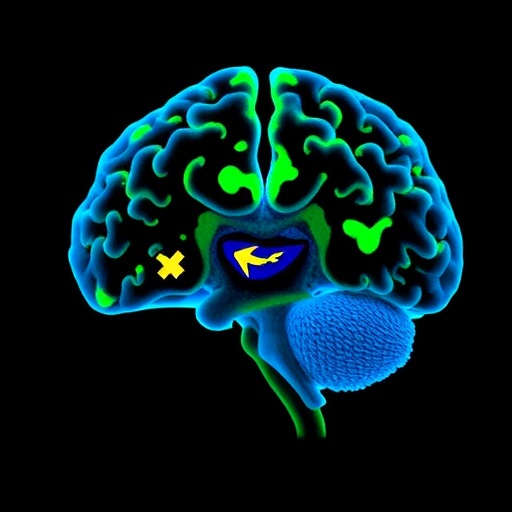
In a remarkable advancement at the intersection of immunology and oncology, researchers have engineered a novel Bacillus Calmette-Guérin (BCG) strain capable of selectively activating trained immunity within tumor-associated macrophages (TAMs), profoundly sensitizing glioblastoma tumors to radiotherapy in preclinical mouse models. This breakthrough study, recently published in Nature Communications, heralds a paradigm shift in glioblastoma treatment strategies, leveraging the body’s innate immune memory to weaken aggressive brain tumors traditionally resistant to conventional therapies.
Glioblastoma multiforme (GBM) remains one of the most formidable and lethal central nervous system malignancies, notorious for its invasive growth patterns and dismal prognosis despite multimodal treatment regimens. Radiotherapy, a cornerstone of GBM management, often falters against an immunosuppressive tumor microenvironment (TME) dominated by TAMs that facilitate tumor proliferation and evade immune clearance. The newly engineered BCG vector responds precisely to this challenge by reprogramming TAMs, effectively disrupting the tumor’s immunosuppressive barrier and augmenting radiation response.
This sophisticated approach draws on the concept of trained immunity, an emerging immunological paradigm whereby innate immune cells exhibit long-lasting functional reprogramming after encountering specific stimuli, akin to adaptive immune memory yet distinct in its mechanisms. The researchers genetically optimized the BCG strain to target and retrain TAMs within glioblastoma niches, which previously have been regarded as difficult to modulate due to their phenotypic plasticity and tumor-supportive functions.
Mechanistically, the engineered BCG delivers pathogen-associated molecular patterns (PAMPs) that engage PRRs (pattern recognition receptors) on TAMs, igniting intracellular signaling cascades including NF-κB and inflammasome activation. These events orchestrate epigenetic remodeling and metabolic rewiring, enriching chromatin accessibility at pro-inflammatory loci and promoting cytokine secretion profiles favorable for anti-tumor immunity. Notably, these reprogrammed TAMs foster an environment conducive to radiotherapy efficacy by increasing tumor cell radiosensitivity and diminishing immunosuppressive checkpoints.
Preclinical validation employed orthotopic murine glioblastoma models, wherein administration of the engineered BCG profoundly altered TAM phenotype from tumor-supportive M2-like states to more pro-inflammatory M1-like profiles. This phenotypic conversion translated to significant tumor regression when BCG treatment was combined with standard-of-care radiation, reducing tumor burden and extending overall survival in treated animals compared to controls receiving radiotherapy alone.
This novel immunotherapeutic strategy taps into the potential of trained innate immunity, which has been once exclusively connected with infections and vaccinations, now repositioned as a formidable antagonistic force against malignancies. The selective triggering of trained immunity circumvents the need for systemic immune activation, thus minimizing off-target inflammatory side effects that often complicate cancer immunotherapy.
Importantly, the study also elucidated the molecular determinants underpinning immune cell reprogramming by the BCG strain. Single-cell transcriptomic analyses unveiled transcriptional signatures indicative of enhanced antigen presentation, chemoattraction of effector lymphocytes, and sustained pro-inflammatory states. These data reinforce the concept that engineered microbes can serve as precise immunomodulators, shaping the TME’s immune landscape to favor therapeutic outcomes.
Glioblastoma’s notorious heterogeneity and adaptive resistance mechanisms make this approach particularly promising, as it leverages an intracellular training of macrophages rather than solely targeting tumor cells directly. By harnessing the immunological plasticity of TAMs, the engineered BCG offers a durable and adaptable immunomodulatory platform capable of synergizing with radiation and potentially other therapeutic modalities such as chemotherapy or immune checkpoint inhibitors.
The implications of this study extend beyond glioblastoma treatment. Engineered microbial vectors representing a versatile class of therapeutic agents raise exciting prospects for modulating trained immunity in diverse solid tumors that exhibit TAM-driven immunosuppression. Furthermore, the concept of tumor-specific innate immune reprogramming could inspire next-generation cancer vaccines or adjuvants designed to tailor immune responses to individual tumor milieus.
Looking forward, translating these findings to clinical settings will necessitate careful evaluation of safety, dosing regimens, and delivery methods to maximize macrophage targeting while avoiding systemic infection risks inherent to live microbial therapies. Advances in synthetic biology and microbial engineering will likely accelerate this process, enabling refined control over immunogenic payloads and tropism.
The convergence of innovative microbiology, immunotherapy, and radiation oncology exemplified by this work epitomizes the cutting-edge frontier of cancer treatment research. By shifting paradigms from directly attacking tumor cells to empowering innate immune senses within the tumor microenvironment, this study offers a compelling blueprint for overcoming resistance and achieving durable remissions in an otherwise devastating disease.
This engineered BCG strategy uniquely exploits the dual capabilities of innate immune memory and microbial engineering to unlock new therapeutic avenues. Unlike classical immune checkpoint blockade that typically targets adaptive immunity, trained immunity harnessed here operates through epigenetic states, providing a complementary and potentially synergistic route to amplify anti-tumor efficacy.
The study’s multidisciplinary approach, spanning virology, immunology, oncology, and genomics, underscores the importance of integrating diverse scientific fields to devise transformative treatment modalities. As each component—from genetic engineering of microbes to characterization of macrophage phenotypes—is finely tuned, the resulting therapeutic synergy offers hope against one of the most aggressive cancer types known to medicine.
In conclusion, the innovative use of a genetically engineered BCG strain to induce trained immunity selectively within tumor-associated macrophages redefines the landscape of glioblastoma therapy. Through a precise immunomodulatory mechanism, this strategy enhances radiotherapy responses, reshapes the immunosuppressive tumor microenvironment, and opens new frontiers for microbial-based cancer treatments. As this technology evolves, it holds the promise not only to improve outcomes for glioblastoma patients but also to revolutionize the broader field of cancer immunotherapy.
Cite Scienmag News
Nathaniel Bowman. (April 20, 2026). Engineered BCG Boosts Glioblastoma Radiotherapy via Macrophages. Scienmag. https://scienmag.com/engineered-bcg-boosts-glioblastoma-radiotherapy-via-macrophages/
Nathaniel Bowman. "Engineered BCG Boosts Glioblastoma Radiotherapy via Macrophages." Scienmag, 20 April 2026, https://scienmag.com/engineered-bcg-boosts-glioblastoma-radiotherapy-via-macrophages/. Accessed 4 September 2026.
Nathaniel Bowman. "Engineered BCG Boosts Glioblastoma Radiotherapy via Macrophages." Scienmag. April 20, 2026. https://scienmag.com/engineered-bcg-boosts-glioblastoma-radiotherapy-via-macrophages/


