


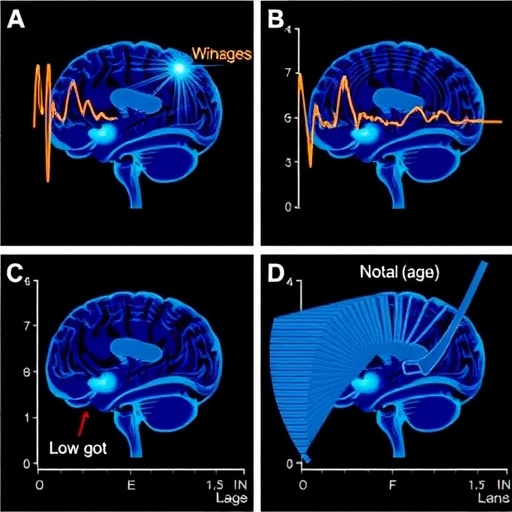
In a groundbreaking study poised to reshape our understanding of Parkinson’s disease, researchers have unveiled how targeted neuromodulation can normalize the erratic cortical dynamics implicated in this neurodegenerative disorder. The findings shed unprecedented light on the brain’s intricate metastable states—subtle patterns of neural activity that hitherto remained elusive—demonstrating their aberration in Parkinson’s patients and their remarkable restoration through advanced neuromodulatory techniques.
Parkinson’s disease, characterized primarily by motor dysfunction such as tremors and rigidity, arises from the progressive loss of dopaminergic neurons in the brain. However, the pathophysiology goes far beyond simple neurotransmitter deficits, enveloping complex alterations in brain network dynamics. This study delves into one frontier of this complexity: cortical metastable dynamics, ephemeral but crucial neural states that facilitate the brain’s adaptability and coordination.
Metastability in neural circuits represents a delicate balance between stability and flexibility, enabling the brain to flexibly transition between various functional configurations. This dynamic switching is foundational for healthy cognitive and motor function. In Parkinson’s disease, this delicate dance becomes disrupted, leading to rigid, maladaptive patterns that contribute to the hallmark motor symptoms.
The research team employed cutting-edge electrophysiological recording techniques alongside sophisticated computational modeling to capture these transient neural states. They observed that in patients with Parkinson’s, cortical metastable dynamics exhibited pronounced alterations—fragmented and reduced in their variability and temporal complexity. This abnormality reflects a brain stuck in less flexible modes, undermining efficient information processing.
Crucially, the investigative team applied targeted neuromodulation therapies, particularly leveraging deep brain stimulation (DBS) and novel non-invasive approaches. These techniques apply finely tuned electrical stimuli to precise brain regions, aiming to recalibrate disrupted neural circuits and restore normal function. Throughout the study, neuromodulation protocols were customized to each patient, enabling a more personalized and efficacious intervention.
Post-neuromodulation analysis revealed striking normalization of cortical metastable dynamics. The previously constrained neural states regained their fluidity and complexity, closely mirroring patterns observed in healthy control subjects. This reversion was correlated with significant improvements in patients’ motor control and overall functional capacity, illustrating a direct link between metastable neural behavior and disease symptoms.
The implications extend beyond the symptomatic relief afforded by neuromodulation. By restoring metastable dynamics, the brain’s inherent capacity for flexible adaptation and integration across networks is reawakened, offering a new conceptual framework for neurorehabilitation. This suggests that therapeutic success may revolve less on merely dampening pathological activity and more on reestablishing dynamic neural equilibrium.
The study also leveraged advanced data analytics rooted in nonlinear dynamical systems theory, quantifying metastable states using metrics like phase synchrony and temporal entropy. This quantitative approach permitted an objective assessment of neural complexity changes before and after stimulation, reinforcing the robustness of the findings. Such methodologies could pioneer new diagnostic and monitoring tools for Parkinson’s and other neurodegenerative disorders.
Furthermore, the researchers explored the broader cortical-subcortical interplay by examining connectivity patterns alongside metastability. Their results underscored that neuromodulation orchestrates widespread network recalibrations rather than isolated focal effects, demonstrating how cortical dynamics are inextricably linked to basal ganglia function and overall sensorimotor integration.
Importantly, these insights open new avenues for fine-tuning neuromodulatory therapies. By identifying biomarkers associated with pathological metastable dynamics, clinicians may tailor stimulation parameters to optimize network normalization uniquely for each patient, reducing variability in therapeutic outcomes and side effects.
This research stands at a rare interdisciplinary crossroads, integrating neurophysiology, computational neuroscience, clinical neurology, and engineering. It exemplifies how convergence across fields can unravel the profound mysteries of brain disorders, translating experimental insights directly into transformative clinical strategies.
Future directions envisaged by the research group include expanding the analysis to varied Parkinson’s phenotypes and longitudinally tracking metastable dynamics throughout disease progression and treatment. Such longitudinal data could illuminate how early interventions might prevent or mitigate network rigidity before irreversible neuronal loss occurs.
The potential to generalize these findings to other neurological and psychiatric conditions marked by aberrant brain dynamics, such as epilepsy, depression, or schizophrenia, cannot be overstated. Understanding and manipulating cortical metastability may herald a new class of treatments that target the brain’s temporal architecture rather than merely neurochemical imbalances.
Equally compelling is the prospect of integrating neuromodulation with adaptive machine learning algorithms, which could dynamically adjust stimulation parameters in real time based on ongoing neural activity, maximizing therapeutic efficacy while minimizing disruption. This vision for closed-loop neuromodulation represents a paradigm shift in personalized brain therapy.
In sum, this pioneering investigation provides the most comprehensive evidence yet that restoring the brain’s metastable dynamics via neuromodulation is a viable strategy for ameliorating Parkinson’s disease symptoms. It highlights the profound role of neural time dynamics in health and disease, setting a new horizon for research and treatment in neurodegeneration.
As Parkinson’s disease affects millions worldwide and remains incurable, these findings offer a beacon of hope. The normalization of metastable cortical dynamics not only demystifies one piece of the Parkinsonian puzzle but also charts a tangible path toward therapies that harness the brain’s innate flexibility to restore function and improve lives.
This landmark work exemplifies how elucidating the fundamental neural mechanisms underlying disease can catalyze innovative interventions, transforming patient care through the nuanced modulation of brain dynamics. The study is poised to ignite wide-ranging interest across the neuroscience and clinical communities, potentially becoming a cornerstone reference in the evolving field of neuromodulatory treatment.
With further validation and technological refinement, neuromodulation-driven normalization of metastable dynamics could redefine neurological therapeutics, ushering an era where brain rhythm restoration is as critical as neurotransmitter replacement in combating disorders like Parkinson’s disease.
Cite Scienmag News
Cassandra Pierce. (April 20, 2026). Neuromodulation Normalizes Cortical Dynamics in Parkinson’s. Scienmag. https://scienmag.com/neuromodulation-normalizes-cortical-dynamics-in-parkinsons/
Cassandra Pierce. "Neuromodulation Normalizes Cortical Dynamics in Parkinson’s." Scienmag, 20 April 2026, https://scienmag.com/neuromodulation-normalizes-cortical-dynamics-in-parkinsons/. Accessed 4 September 2026.
Cassandra Pierce. "Neuromodulation Normalizes Cortical Dynamics in Parkinson’s." Scienmag. April 20, 2026. https://scienmag.com/neuromodulation-normalizes-cortical-dynamics-in-parkinsons/


