


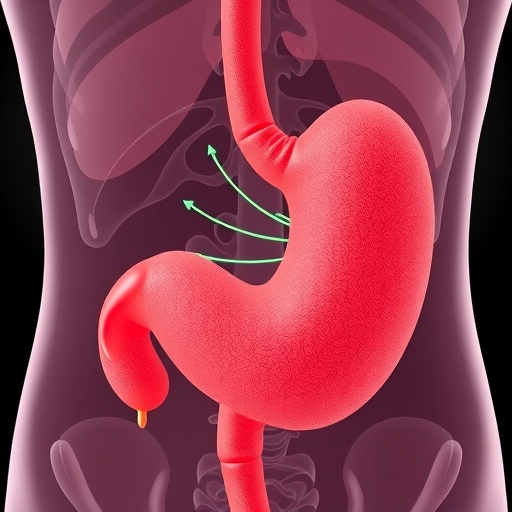
A groundbreaking study recently published in the prestigious journal Cell Reports Medicine has unveiled the intricate microbial signatures within the human oral cavity and gut that serve as highly reliable biomarkers for the early detection of gastric cancer (GC). This landmark investigation offers a profound leap forward in our understanding of the microbiome’s role in oncogenesis, revealing a critical oral-to-gut bacterial transmission pathway and its direct implication in tumor progression.
Researchers from BGI Genomics collaborated with the esteemed academician Fang Jingyuan and his team at Renji Hospital, affiliated with Shanghai Jiao Tong University School of Medicine, to decode the complex microbial interplay underlying gastric carcinogenesis. Leveraging extensive metagenomic sequencing, the study meticulously analyzed 404 clinical samples, unveiling a profound taxonomic shift in the microbiomes of gastric cancer patients when compared to healthy controls.
The study identified 28 bacterial species exhibiting significant differential abundance, with 23 species notably enriched in gastric cancer patients. Among these enriched species, a striking 20 were shared between the oral cavity and the gut microbiome, suggesting a translocation phenomenon. These typically oral-resident bacteria were not simply present but actively proliferating within the gut environment of cancer patients, challenging previous assumptions about spatial microbial confinement.
To definitively validate the origin of these shared bacteria, the researchers utilized population-average nucleotide identity (popANI) for strain-level genomic analysis. This high-resolution approach revealed that oral and gut strains within the same individuals matched with over 99.9% genetic identity. This finding unambiguously confirms the migration of specific bacterial strains from the mouth to the gastrointestinal tract, elucidating a previously understudied microbial pathway in gastric cancer pathophysiology.
Once established within the gut, these orally-derived bacteria do not operate in isolation. Instead, they organize into a robust co-abundance network that enhances their survival through otherwise formidable physiological barriers such as gastric acid exposure and bile salt presence. This resilient bacterial consortium orchestrates a metabolic reprogramming toward enhanced lactic acid fermentation, markedly acidifying the local tumor microenvironment.
This acidic microenvironment is not a benign occurrence but a catalyst that triggers several oncogenic cascades critical for tumor development and progression. Key molecular pathways activated include matrix metalloproteinases, which mediate extracellular matrix remodeling facilitating tumor invasion and neovascularization. Additionally, the acidic milieu fosters immune evasion by selectively recruiting immunosuppressive cells, thereby shielding the tumor from immune surveillance.
The emergent data propound a refined “initiator-promoter” model of gastric carcinogenesis. In this paradigm, Helicobacter pylori infection initiates carcinogenic processes by driving chronic gastric inflammation and disrupting mucosal barriers. Subsequently, oral lactic acid bacteria act as molecular promoters, colonizing the compromised gastric epithelium, promoting biofilm formation, and orchestrating immune modulation to exacerbate disease progression.
This dual-stage mechanism sheds light on perplexing clinical observations, particularly the occurrence of gastric cancer in Helicobacter pylori-negative patients and the persistent malignancy risk following H. pylori eradication therapy. It implies that targeting both initiator and promoter microbial agents is imperative for comprehensive gastric cancer prevention strategies.
The study’s clinical implications are profound. The researchers employed machine learning algorithms using microbial biomarkers derived from saliva and stool samples to develop non-invasive diagnostic classifiers. These models achieved remarkable accuracy, with area under the receiver operating characteristic (AUROC) scores of 0.87 for saliva-based tests and 0.85 for stool-based assays, affirming the viability of microbiome-based diagnostics in the clinical arena.
Saliva sampling, being minimally invasive, cost-effective, and easily implementable in large populations, emerges as a particularly promising tool for early gastric cancer screening. As a result, this approach has the potential to transform current diagnostic paradigms and improve patient outcomes through timely disease interception.
Beyond diagnostics, the study reshapes our broader understanding of the systemic implications of the microbiome in oncology. The delineation of the oral-gut microbial axis as a critical player in tumor biology opens novel avenues for therapeutic interventions, including microbiome modulation strategies aimed at disrupting pathogenic microbial communities or restoring protective symbionts.
This multidisciplinary research highlights the power of integrating high-resolution genomic techniques with sophisticated computational models to unravel complex host-microbe interactions contributing to cancer. It sets the stage for future investigations exploring how microbiome dynamics influence other malignancies and chronic diseases, paving the way for personalized microbiome-centric medicine.
BGI Genomics, the world-leading precision medicine integrator and principal sponsor in this study, underscores its commitment to harnessing genomics for transformative healthcare advances. Headquartered in Shenzhen, China, BGI Genomics supports over 2,300 medical institutions globally, positioning it at the forefront of microbiome research and precision oncology.
This pioneering work represents a pivotal step in translating microbiome science from bench to bedside, heralding a new era where microbial signatures provide vital insights into cancer detection, prognosis, and therapeutics, fundamentally altering how clinicians approach gastric cancer management.
News Publication Date: 2026
Web References:
https://gut.bmj.com/content/early/2026/01/02/gutjnl-2025-336966
http://dx.doi.org/10.1016/j.xcrm.2026.102761
References:
- Fang Jingyuan et al., Cell Reports Medicine, 2026, DOI: 10.1016/j.xcrm.2026.102761
- Related study in Gut on Streptococcus anginosus and methionine metabolites in GC
Cite Scienmag News
Nathaniel Bowman. (April 20, 2026). Oral-Gut Axis Reveals Salivary Biomarkers for Early Detection of Gastric Cancer. Scienmag. https://scienmag.com/oral-gut-axis-reveals-salivary-biomarkers-for-early-detection-of-gastric-cancer/
Nathaniel Bowman. "Oral-Gut Axis Reveals Salivary Biomarkers for Early Detection of Gastric Cancer." Scienmag, 20 April 2026, https://scienmag.com/oral-gut-axis-reveals-salivary-biomarkers-for-early-detection-of-gastric-cancer/. Accessed 3 September 2026.
Nathaniel Bowman. "Oral-Gut Axis Reveals Salivary Biomarkers for Early Detection of Gastric Cancer." Scienmag. April 20, 2026. https://scienmag.com/oral-gut-axis-reveals-salivary-biomarkers-for-early-detection-of-gastric-cancer/


