


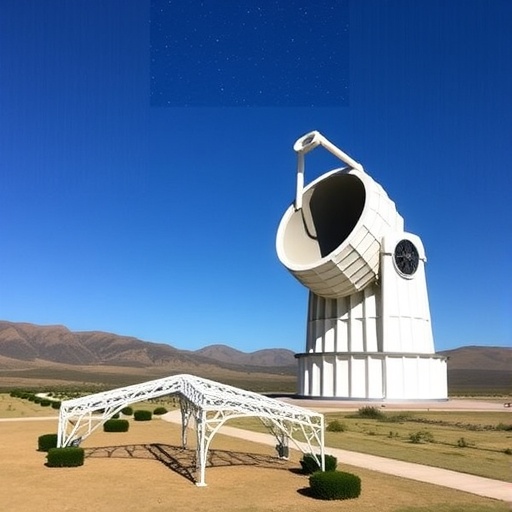
The Giant Magellan Telescope and the Coquimbo Regional Government have embarked on a landmark strategic partnership set to redefine the future of astronomy and scientific innovation within Chile. This collaboration focuses on fostering an advanced, comprehensive astronomical industry by establishing Chile’s very first national visitor and education center for astronomy. Developed in conjunction with the renowned Exploratorium, this center aims to ignite public engagement, offer immersive educational experiences, and promote the burgeoning field of astrotourism—a sector poised to become a cornerstone of the region’s economic and scientific landscape.
At the core of this alliance is the shared vision of transforming the Coquimbo region into a preeminent global hub for science and technology. With Chile already hosting the majority of the world’s astronomical infrastructure, the partnership strategically leverages this asset. Notably, the Coquimbo Region is home to critical facilities including the Vera C. Rubin Observatory, a pinnacle of survey telescope innovation. This initiative will actively drive regional economic development while providing a platform to showcase Chile’s cutting-edge advancements in astronomy and related fields.
The Giant Magellan Telescope (GMT), stationed at the Las Campanas Observatory, represents the forefront of astronomical instrumentation—classified amongst the new generation of extremely large telescopes (ELTs). These telescopes are characterized not only by unparalleled light-gathering power but also by their sophisticated engineering capabilities spanning adaptive optics, data acquisition systems, and precision mechanics. The GMT’s construction and operation herald a multi-decade scientific endeavor expected to catalyze significant technological innovation and multidisciplinary research opportunities.
Central to the partnership is the establishment of the Giant Magellan Telescope’s primary operations base in the Coquimbo Region. This operations campus will serve as the nerve center for telescope management, data processing, and scientific collaboration. The campus will house the groundbreaking visitor and education center—a first-of-its-kind national landmark designed to bridge the gap between the public and the scientific community. Made possible by the Exploratorium’s expertise in interactive science education, this facility will create a dynamic environment where visitors tangibly experience the mechanics of telescopic observation, cutting-edge astronomical research, and the engineering feats underpinning modern astronomy.
By embedding scientific outreach within an operational scientific infrastructure, the partnership harnesses the dual benefits of educational enrichment and workforce development. The center will highlight how telescope components—ranging from unprecedentedly precise primary mirrors to complex image sensors—are engineered and maintained. This approach creates pathways for students, technicians, and researchers to develop the skillsets vital for sustaining Chile’s leadership role in astronomical sciences.
Moreover, this symbiotic alliance recognizes logistics as a critical pillar of successful large-scale astronomical projects. The Port of Coquimbo has been designated the main logistics hub, facilitating the careful transport of large, intricate telescope components sourced globally. This focused infrastructure enhances the efficiency of the GMT construction timeline, ensuring safe delivery and assembly of equipment critical to meeting stringent optical and operational specifications.
The initiative also addresses an imperative environmental and observational priority: the long-term preservation of Chile’s world-class dark skies and stable atmospheric conditions. Astronomical site protection is increasingly vital as light pollution and environmental degradation threaten observing quality worldwide. This partnership reinforces policies and practices safeguarding these unique natural resources, ensuring Chile’s skies remain optimal for ground-breaking astronomical research.
The Giant Magellan Telescope itself embodies a zenith of international collaboration and technological advancement. Its primary mirrors, each 8.4 meters in diameter, must conform to nanometer-scale tolerances—a feat achieved through pioneering polishing techniques and advanced metrology. The telescope’s adaptive optics system promises to correct for atmospheric distortions in real-time, enhancing image clarity to unprecedented levels. Such technical sophistication reaffirms the GMT’s status as a beacon of scientific and engineering excellence.
In embracing this holistic integration of scientific innovation, education, and economic development, the partnership also aims to catalyze a robust astronomy tourism sector within the Coquimbo Region. The visitor center is designed to attract global audiences eager to engage with the universe’s mysteries firsthand. Interactive exhibitions, live telescope viewing, and immersive digital experiences will draw visitors into the thrill of astronomical discovery and highlight the tangible benefits of large-scale scientific infrastructure investment.
The strategic vision underpinning this partnership is further enriched by leadership synergy. Governor Cristóbal Juliá articulated how the collaboration marries science with local economic aspirations, emphasizing job creation and technology sector growth. Meanwhile, Giant Magellan Telescope President Daniel Jaffe underscored the expansive reach of this $ multi-billion international project, highlighting its role in fostering not only scientific knowledge but regional prosperity and workforce opportunity.
This transformative alliance will profoundly impact Chile’s scientific ecosystem well beyond the lifecycle of the Giant Magellan Telescope itself. The co-location of research activity, education, and logistical infrastructure within the Coquimbo Region establishes an enduring framework for innovation. It prepares Chile to fully harness the capabilities of its astronomical assets and ensures the nation remains at the forefront of the global astronomical community through forthcoming decades.
Ultimately, the Giant Magellan Telescope and Coquimbo Regional Government are charting a bold new trajectory—one where cutting-edge astronomical discovery is seamlessly integrated with public engagement, economic vitality, and environmental stewardship. This model exemplifies a forward-thinking approach to scientific infrastructure that not only expands the boundaries of human knowledge but also empowers the communities and ecosystems that support these endeavors.
Keywords
Giant Magellan Telescope, Coquimbo Region, Astronomy, Extremely Large Telescopes, Exploratorium, Astrotourism, Vera C. Rubin Observatory, Telescope Operations, Scientific Education Center, Adaptive Optics, Telescope Engineering, Astronomy Infrastructure, Chile Astronomy
Cite Scienmag News
Grant Pearson. (April 17, 2026). Giant Magellan Telescope Partners with Coquimbo Regional Government to Advance Chile’s Astronomy Industry. Scienmag. https://scienmag.com/giant-magellan-telescope-partners-with-coquimbo-regional-government-to-advance-chiles-astronomy-industry/
Grant Pearson. "Giant Magellan Telescope Partners with Coquimbo Regional Government to Advance Chile’s Astronomy Industry." Scienmag, 17 April 2026, https://scienmag.com/giant-magellan-telescope-partners-with-coquimbo-regional-government-to-advance-chiles-astronomy-industry/. Accessed 4 September 2026.
Grant Pearson. "Giant Magellan Telescope Partners with Coquimbo Regional Government to Advance Chile’s Astronomy Industry." Scienmag. April 17, 2026. https://scienmag.com/giant-magellan-telescope-partners-with-coquimbo-regional-government-to-advance-chiles-astronomy-industry/


