


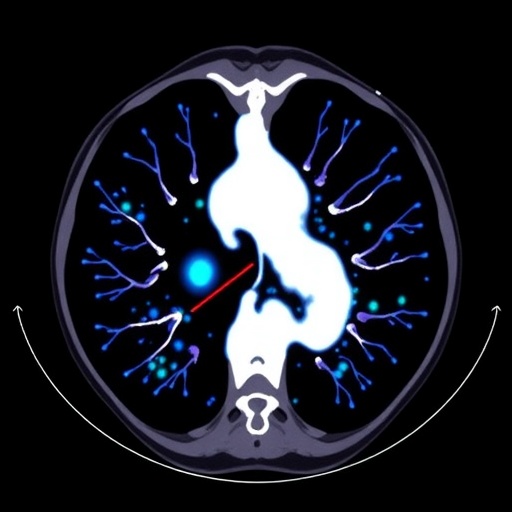
In a groundbreaking correction to a seminal study, researchers have shed new light on the application of ^18F-fluorodeoxyglucose positron emission tomography-computed tomography (^18F-FDG PET-CT) in the staging of locally advanced invasive lobular breast carcinoma (ILC). This development not only refines our understanding of the diagnostic capabilities of this hybrid imaging modality but also promises to significantly enhance clinical decision-making for one of the most complex breast cancer subtypes. As the oncology community continues to grapple with the nuances of ILC, recognized for its insidious growth patterns and diagnostic challenges, this correction provides a critical update to the prospective analysis initially published on this topic.
At the core of this research lies the intricate behavior of ILC, a histological variant of breast cancer distinct in its growth and metastatic characteristics. Unlike the more common invasive ductal carcinoma, ILC is notorious for its diffuse infiltration patterns that often elude conventional imaging techniques. The integration of ^18F-FDG PET-CT offers a promising solution by combining metabolic and anatomical insights, allowing for a more sensitive detection of malignant lesions. This technique utilizes ^18F-FDG, a glucose analog tagged with a positron-emitting radioisotope, which accumulates preferentially in hypermetabolic cancer cells, thereby illuminating active disease sites invisible to traditional imaging.
The correction issued by Metser, Dayes, Parpia, and colleagues underscores the importance of precise calibration and interpretation parameters for ^18F-FDG PET-CT in staging locally advanced ILC. Initially, some discrepancies were noted in the sensitivity and specificity values reported, which are now clarified to provide a more accurate reflection of the modality’s diagnostic performance. This rectification is crucial because it directly impacts treatment planning, guiding decisions about surgical intervention, systemic therapy, and radiation.
One of the pivotal insights of the updated findings is the adjusted sensitivity range of ^18F-FDG PET-CT in detecting both primary tumors and regional lymph node involvement in ILC patients. Due to the lower glycolytic activity typical of ILC cells compared to other breast cancer types, the uptake of ^18F-FDG has historically been variable. The revised data now better delineate which subgroups of patients benefit most from PET-CT imaging, particularly those with bulky or multifocal disease, aiding clinicians in stratifying risk and optimizing therapeutic regimens.
Furthermore, the correction details technical refinements in image acquisition protocols, including adjustments to the time interval between ^18F-FDG injection and image capture, as well as enhancements in the resolution of PET detectors. Such improvements have a profound effect on lesion detectability, especially in the context of small or diffuse infiltrative tumors characteristic of ILC. By capturing more precise images, clinicians can now detect occult metastases that would have otherwise gone unnoticed, thereby redefining disease staging and prognosis.
Beyond diagnostic accuracy, this study correction brings to the forefront the potential of ^18F-FDG PET-CT as a predictive tool for treatment response. The metabolic changes observed via PET scanning during neoadjuvant therapies can offer early indications of therapeutic efficacy or resistance. This capability is particularly vital for ILC patients, whose tumors often demonstrate heterogeneous responses to chemotherapy. By integrating metabolic imaging into treatment monitoring, oncologists can tailor interventions more precisely, possibly sparing patients from ineffective treatments and their associated toxicities.
The implications of this research also extend to surgical planning. Accurate staging influences the extent of surgery, from breast-conserving techniques to mastectomy, and informs the need for axillary lymph node dissection versus sentinel node biopsy. The enhanced visualization of disease burden by ^18F-FDG PET-CT supports more conservative approaches in selected cases, aligning with the modern paradigm of personalized oncologic care.
Importantly, the correction addresses previously underreported incidences of false positives and negatives, emphasizing the necessity for correlating PET-CT results with histopathological findings and other imaging modalities such as MRI and ultrasound. This multidisciplinary validation underscores that while ^18F-FDG PET-CT enhances diagnostic confidence, it should be integrated within a comprehensive diagnostic framework rather than employed in isolation.
The study also canvasses the biological underpinnings contributing to variable ^18F-FDG avidity in ILC. Factors such as tumor cellularity, expression of glucose transporters, and the microenvironmental milieu impact radiotracer uptake. Recognizing these variables not only informs imaging interpretation but could pave the way for novel radiotracers tailored to ILC’s unique metabolic profile, potentially overcoming current limitations of ^18F-FDG PET-CT.
Moreover, the updated findings highlight the critical timing of PET-CT in the diagnostic algorithm. Optimal staging is recommended prior to the initiation of systemic therapies to avoid confounding effects of treatment-induced metabolic changes. Additionally, the study suggests that serial imaging could be beneficial in long-term surveillance, especially given ILC’s propensity for late recurrences.
Clinically, this correction may stimulate revisions in guidelines pertaining to breast cancer staging. Currently, ^18F-FDG PET-CT is not universally standard for routine evaluation of ILC, partly due to inconsistent data. The clarified efficacy and technical recommendations presented here could encourage broader adoption, ultimately improving patient outcomes by facilitating earlier and more accurate detection of disease extent.
On a translational research front, this correction reiterates the vital role of prospective, well-controlled studies in validating imaging biomarkers and techniques. It reinforces the need for large-scale multicenter collaborations to verify findings across diverse populations and technological platforms, ensuring that advancements are robust and generalizable.
In conclusion, the correction to this prospective study on ^18F-FDG PET-CT for staging locally advanced invasive lobular breast carcinoma marks a pivotal enhancement in the realm of breast cancer diagnostics. It fortifies the evidence base supporting the nuanced role of metabolic imaging in managing a notoriously elusive cancer subtype. As technology evolves and our understanding deepens, such meticulous updates are essential for refining clinical pathways and empowering oncologists to deliver precision medicine with ever greater confidence.
This advancement underscores the intersection of molecular imaging and oncology as a fertile ground for innovation. By continuously improving detection accuracy, treatment planning, and monitoring through enhanced PET-CT protocols, the oncology field moves closer to the goal of individualized, effective, and patient-centered care achievable for those facing invasive lobular breast carcinoma.
Cite Scienmag News
Nathaniel Bowman. (April 15, 2026). Prospective 18F-FDG PET-CT Study on Lobular Breast Cancer. Scienmag. https://scienmag.com/prospective-18f-fdg-pet-ct-study-on-lobular-breast-cancer/
Nathaniel Bowman. "Prospective 18F-FDG PET-CT Study on Lobular Breast Cancer." Scienmag, 15 April 2026, https://scienmag.com/prospective-18f-fdg-pet-ct-study-on-lobular-breast-cancer/. Accessed 4 September 2026.
Nathaniel Bowman. "Prospective 18F-FDG PET-CT Study on Lobular Breast Cancer." Scienmag. April 15, 2026. https://scienmag.com/prospective-18f-fdg-pet-ct-study-on-lobular-breast-cancer/


