


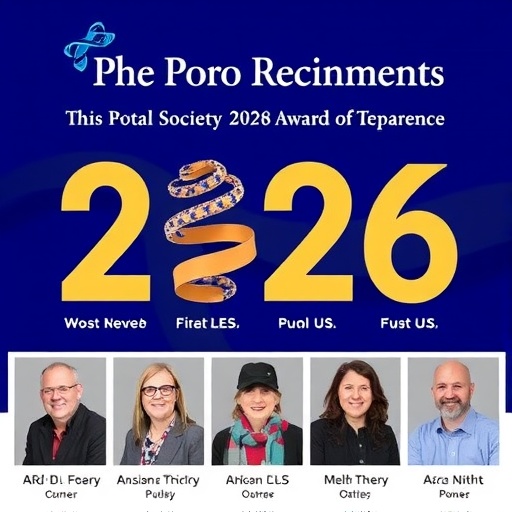
The Protein Society has revealed the recipients of its prestigious 2026 Protein Society Awards, set to be honored during the 40th Anniversary Symposium in Boston, USA, scheduled for July 19-22, 2026. This international event marks a cornerstone in celebrating outstanding contributions to the dynamic field of protein science, underscoring breakthroughs that continue to shape our understanding of biological mechanisms at the molecular level. Each awardee’s work, meticulously selected by the Society, highlights pioneering methodologies and transformative discoveries in protein research, spanning structural biology, enzymology, proteomics, and beyond.
As the symposium unfolds over 3.5 days, attendees will experience a series of plenary talks delivered by award recipients, providing an unparalleled opportunity to engage with groundbreaking science firsthand. These lectures will delve deeply into the intricacies of protein folding dynamics, elucidation of enzyme catalysis mechanisms, and the innovative use of computational models to predict protein interactions and functions. The awardees’ investigations not only enhance the fundamental understanding of protein behavior but also propel advancements in therapeutic development, biotechnology, and synthetic biology.
Proteins, as essential macromolecules, execute a vast array of cellular functions, including catalyzing biochemical reactions, signal transduction, and structural support. The award-winning research showcases novel approaches to exploring protein conformational landscapes using advanced techniques like cryo-electron microscopy, NMR spectroscopy, and single-molecule fluorescence. These cutting-edge methodologies have permitted visualization of transient states and molecular intermediates that were previously inaccessible, thereby providing critical insights into protein dynamics that govern biological activity.
The Society’s recognition highlights researchers who have bridged gaps between theory and practice. For instance, some honorees have innovatively combined experimental data with machine learning algorithms to map protein-protein interaction networks, revealing previously hidden regulatory pathways. Others have engineered synthetic proteins with tailor-made functions, triggering new avenues in drug design and industrial biocatalysis. Such integrative and multidisciplinary strategies exemplify the future trajectory of protein science, emphasizing precision and predictive capacity.
In addition to structural and functional studies, the awarded research emphasizes the biological significance of post-translational modifications (PTMs) and their role in modulating protein activity. By developing novel mass spectrometry-based workflows and chemical probes, these scientists have enabled comprehensive profiling of PTMs, unearthing modifications that control signal transduction processes and protein degradation. This line of work holds immense promise for understanding disease mechanisms and identifying novel biomarkers.
One of the central themes emerging from the imminent symposium is the interrogation of protein misfolding and aggregation, phenomena critically implicated in neurodegenerative diseases such as Alzheimer’s and Parkinson’s. The laureates’ investigations utilize diverse approaches ranging from biophysical characterizations of amyloid fibrils to high-throughput screening for aggregation inhibitors. These studies not only advance our grasp on pathological protein states but also propose novel therapeutic targets to counteract protein aggregation-linked maladies.
The symposium will also spotlight breakthroughs in membrane protein research, a notoriously challenging sector due to the hydrophobic nature and complex milieu of these proteins. Awardees in this category have unveiled mechanisms of membrane transport, signal transduction, and receptor activation through the application of innovative detergents, nanodiscs, and lipidic cubic phase crystallization. Their success in overcoming traditional barriers sets the stage for therapeutic exploitation of membrane-bound targets, crucial in drug discovery.
Moreover, the 40th Anniversary Symposium promises stimulating discussions around the evolution of protein engineering. Award-winning scientists have harnessed directed evolution, computational design, and deep mutational scanning to create enzymes with enhanced stability, specificity, and catalytic efficiency. Such engineered proteins are transforming industrial processes, offering environmentally friendly alternatives and improving yield in pharmaceutical manufacturing.
The impact of these awards extends beyond the bench, as many recipients have contributed to the establishment of community resources, open-access databases, and collaborative platforms that democratize protein scientific knowledge. By fostering global cooperation and data sharing, they aid in accelerating discovery and the translation of fundamental research into practical applications, including personalized medicine and synthetic biology constructs.
Reflecting on the historical significance of the Protein Society’s 40-year legacy, the 2026 awards resonate as a testament to the relentless curiosity and innovation in protein science. From the elucidation of the first protein structures to the integration of artificial intelligence in protein prediction, the trajectory mapped by these accomplished scientists frames an exciting future. Their work embodies the convergence of experimental rigor and computational prowess, driving the frontier of molecular life sciences.
Each plenary session during the symposium will not only celebrate these momentous scientific achievements but also inspire the next generation of researchers to tackle the complex challenges of protein science. The awardees’ stories, rich with technical depth and visionary insights, reinforce the foundational role of proteins in health, disease, and biotechnology, promising continued advancements that will impact society broadly.
As the global community anticipates this landmark event, it is clear that the 2026 Protein Society Awardees represent the vanguard of scientific excellence. Their contributions illuminate the nuanced and multifaceted nature of proteins, highlighting the relentless pursuit of knowledge that defines this vibrant field. With their groundbreaking findings set to be showcased in Boston, the symposium is poised to be a defining moment in the ongoing evolution of protein science.
News Publication Date: Not specified in the original content.
Web References: Not provided.
References: Not provided.
Keywords
Protein Society, Protein Science, 2026 Protein Society Awards, Protein Folding, Enzymology, Structural Biology, Post-translational Modifications, Membrane Proteins, Protein Engineering, Cryo-EM, NMR Spectroscopy, Proteomics, Synthetic Biology, Drug Discovery, Machine Learning in Biology, Neurodegenerative Diseases
Cite Scienmag News
Gregory Coleman. (April 14, 2026). The Protein Society Reveals 2026 Award Recipients. Scienmag. https://scienmag.com/the-protein-society-reveals-2026-award-recipients/
Gregory Coleman. "The Protein Society Reveals 2026 Award Recipients." Scienmag, 14 April 2026, https://scienmag.com/the-protein-society-reveals-2026-award-recipients/. Accessed 3 September 2026.
Gregory Coleman. "The Protein Society Reveals 2026 Award Recipients." Scienmag. April 14, 2026. https://scienmag.com/the-protein-society-reveals-2026-award-recipients/


