


A groundbreaking new study published in Eurosurveillance has shed light on the prevalence and distribution of chronic hepatitis B virus (HBV) infections across the European Union and European Economic Area (EU/EEA) in 2022. Utilizing an advanced epidemiological technique known as the Workbook Method, researchers have delivered unprecedented insights into how this persistent viral infection affects diverse population groups within this region. The study underscores the critical need for targeted public health interventions and refined surveillance systems to mitigate the ongoing burden of HBV.
Chronic hepatitis B remains a formidable public health challenge in Europe, with an estimated overall prevalence of approximately 0.7% in 2022. This figure marks a notable decline from previous estimates of 1% recorded between 2005 and 2015, yet it masks considerable heterogeneity in infection rates across individual countries. Southern and eastern European nations exhibit the highest chronic HBV burdens, whereas northern and western member states report substantially lower prevalence. These geographic disparities highlight underlying social, economic, and healthcare delivery factors influencing viral transmission dynamics.
Key populations disproportionately affected by HBV include migrants, men who have sex with men (MSM), and people who inject drugs (PWID). Intriguingly, the majority of cases—approximately two thirds—occur among individuals outside of these defined risk groups, complicating assumptions about disease epidemiology. Nevertheless, when focusing on these high-risk populations, the prevalence consistently exceeds that of the general population, indicating ongoing vulnerabilities and transmission pathways demanding specialized outreach and clinical services tailored to their unique circumstances.
Persistent obstacles impede the precise quantification of hepatitis B prevalence in EU/EEA countries. Asymptomatic infection in the majority of chronic cases compromises the validity of clinical surveillance, while heterogeneity in national screening protocols further impairs data consistency. Moreover, the underrepresentation of marginalized groups in epidemiologic surveys poses challenges to fully capturing disease burden. Consequently, empirical data must be supplemented with robust statistical models to generate actionable prevalence estimates.
The Workbook Method offers a sophisticated framework to estimate HBV prevalence rigorously by integrating population size metrics with infection rates specific to each key group. This multifaceted approach assimilates data from scientific literature and official health sources, validated through consultation with ECDC hepatitis focal points. By harmonizing disparate datasets, the method overcomes limitations inherent in traditional surveillance, enabling more nuanced characterization of chronic HBV distribution.
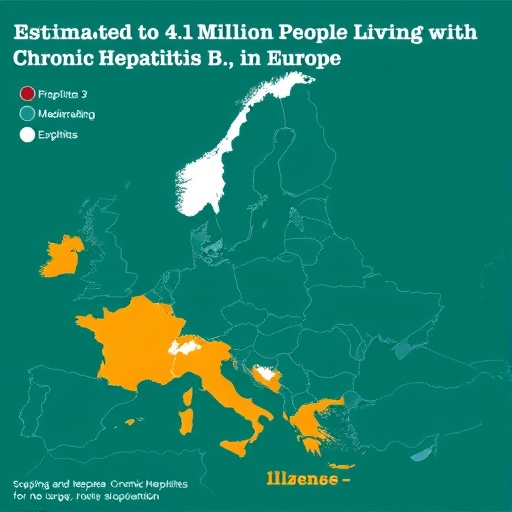
Applying this methodology, the research team estimated that between 2.4 and 4.1 million individuals were living with chronic hepatitis B throughout the EU/EEA in 2022. The national prevalence spanned a broad spectrum, with some countries reporting rates as low as 0.1%, while others approached 3.1%. Migrant populations demonstrated the widest prevalence range, from 0.8% up to an alarming 10.5%, underscoring the heterogeneity within this group. Notably, nations in northwestern Europe disproportionately experienced high migrant-related HBV burdens, with Cyprus as a geographical outlier.
In contrast, HBV prevalence among people who inject drugs and men who have sex with men varied between 0.1% and approximately 8.7% or 10.5%, respectively, without discernible geographical clustering. Although these populations contributed fewer cases compared to migrants and the general populace, their elevated infection rates reaffirm the necessity for prevention strategies tailored specifically to their risk profiles, including harm reduction programs and targeted screening initiatives.
Despite the advances propounded by this analytical approach, several methodological constraints persist. The Workbook Method hinges critically on the quality and completeness of input data, which may suffer from gaps or discrepancies. Furthermore, it does not explicitly adjust for overlapping population categories, which could lead to double-counting or misattribution of cases. Such nuances underscore the need for continuous enhancement of epidemiological tools and data gathering practices.
The study’s findings convey a compelling imperative to design and implement population-specific public health interventions. For migrant communities, the authors advocate improved access to culturally competent healthcare and tailored diagnostic services to bridge gaps in HBV identification and treatment linkage. Meanwhile, preventive efforts within the broader population must not be neglected, given that most chronic HBV cases occur outside of recognized high-risk groups, emphasizing universal screening and vaccination strategies.
Moreover, these insights contribute substantially to the broader discourse on hepatitis B elimination goals articulated by global health authorities. Enhanced surveillance, combined with stratified intervention models, can accelerate progress toward meeting WHO targets. However, achieving these objectives will require sustained political commitment, resource allocation, and cross-sector collaboration that addresses social determinants and health inequities.
In summary, this comprehensive examination of chronic hepatitis B in the EU/EEA reveals a multifaceted and evolving epidemic landscape. By harnessing quantitative modeling and contextualized epidemiological data, the study paves the way for more informed public health responses. Continued research efforts and data refinement remain indispensable to combating this silent yet impactful viral threat.
News Publication Date: 9-Apr-2026
Web References: http://dx.doi.org/10.2807/1560-7917.ES.2026.31.14.2500322
Cite Scienmag News
Kristina Jarvis. (April 13, 2026). Estimated 2.4 to 4.1 Million People Living with Chronic Hepatitis B in Europe. Scienmag. https://scienmag.com/estimated-2-4-to-4-1-million-people-living-with-chronic-hepatitis-b-in-europe/
Kristina Jarvis. "Estimated 2.4 to 4.1 Million People Living with Chronic Hepatitis B in Europe." Scienmag, 13 April 2026, https://scienmag.com/estimated-2-4-to-4-1-million-people-living-with-chronic-hepatitis-b-in-europe/. Accessed 3 September 2026.
Kristina Jarvis. "Estimated 2.4 to 4.1 Million People Living with Chronic Hepatitis B in Europe." Scienmag. April 13, 2026. https://scienmag.com/estimated-2-4-to-4-1-million-people-living-with-chronic-hepatitis-b-in-europe/


