


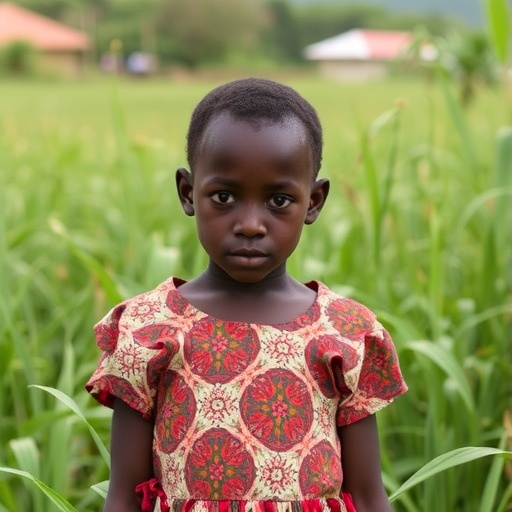
LAWRENCE — Despite progressive legal reforms aimed at eradicating child marriage, Malawi continues to grapple with this deeply entrenched societal issue. The act of marrying girls before they reach the age of 18 remains pervasive, affecting nearly 40% of the female youth population in the country. This persistence of child marriage, in the face of updated laws and constitutional amendments, highlights the complexity and cultural embedment of the practice within Malawian society, demanding a reevaluation of current intervention strategies.
Recent scholarly work from the University of Kansas sheds new light on the dynamics at play. Drawing upon the lived experiences and insights of practitioners actively engaged in the field, the research critically analyzes why existing approaches have fallen short. Linda Banda, a scholar and native of Malawi, who has significant experience as a child protection specialist within international NGOs, emphasizes how child marriage precipitates a cycle of poverty, abuse, and adverse health outcomes affecting both young brides and their offspring. Her research marks a turning point by integrating lived local knowledge with academic inquiry.
One of the pivotal questions that propelled this research forward was the dichotomy between legal frameworks and their actual impact on the ground. Malawi’s legislative environment has evolved considerably over the past decade, with a seminal 2015 law setting the minimum marriage age at 18 and a constitutional amendment in 2017 that removed prior exceptions permitting underage marriage with parental consent. Yet, the enactment and enforcement of these laws have failed to dismantle the normative social practices that sustain child marriage.
The research team, including associate professor Juliana Carlson, undertook an extensive qualitative study involving more than 20 interviews. These interviews spanned various critical sectors, including local and international NGOs, government agencies, faith-based organizations, journalists, and community leaders. Their collective testimonies uncovered significant fragmentation among stakeholders and highlighted how efforts to eradicate child marriage are often piecemeal, governed by external mandates rather than locally resonant solutions.
At the heart of the problem lies an over-reliance on dominant international human rights frameworks, primarily the United Nations Convention on the Rights of the Child (CRC) and the Convention on the Elimination of All Forms of Discrimination Against Women (CEDAW). While these conventions provide essential guidelines focusing respectively on the rights of children and gender equality, interviewees noted these frameworks often engender siloed and isolated interventions. This segmented approach undermines the multifaceted nature of child marriage as both a children’s rights issue and a gender-based societal challenge.
The research highlights incidents where well-meaning efforts to keep girls in school via provision of educational resources were met with resistance or unintended consequences within families and communities. For instance, boys who did not receive equivalent support sometimes undermined these initiatives, revealing underlying gender tensions and socioeconomic competition within households. Moreover, organizations engaged in this sphere frequently compete for scarce donor funds, resulting in a skewed focus toward donor priorities rather than community-driven needs, further stagnating progress.
Crucially, the entrenched cultural and economic drivers of child marriage in Malawi, often ignored in international discourses, play a decisive role. Historically, child marriage has functioned as a coping mechanism against poverty and economic stress, embedded in complex rituals such as rites of passage and community expectations. These social functions underscore the limitations of externally imposed solutions that fail to engage with cultural codes and the lived realities of Malawian communities.
To better address these intertwined factors, the authors advocate for applying an African feminist theoretical lens. Unlike conventional rights-based approaches that emphasize individual autonomy and legal protections, African feminism prioritizes relationality, cultural embeddedness, and community interconnectedness. It approaches culture as a dual entity—a potential barrier but also a vital resource capable of mobilizing local values and traditions to forge sustained social change.
This reframing signals a paradigm shift for anti-child marriage interventions. Rather than dismissing cultural practices, African feminism challenges practitioners to critically engage and negotiate with communal belief systems. It repositions culture from being an obstacle to a forum within which harmful practices must be contested and healthier norms cultivated. Such a community-centric perspective is critical for devising contextually relevant, sustainable solutions to child marriage.
Malawi’s prior national strategy aimed at reducing child marriage by 20% during 2018-2023, yet this study reveals that fragmented implementation and lack of coordination impeded achieving this goal. In response, the nation is now operating under a renewed strategy for 2024-2030 emphasizing unified organizational collaboration, increased accountability, and culturally resonant programming. This strategic recalibration aims to transcend past disjointed efforts and accelerate tangible progress.
Looking forward, the researchers plan to extend their examination of contextual factors influencing child marriage. This includes investigating the increase in child marriage rates following natural disasters and the COVID-19 pandemic, phenomena that exacerbate vulnerabilities. Additionally, understanding the dynamics of child-to-child marriages and engaging men, boys, and community leaders as allies represent promising avenues for broadening intervention impact.
Ultimately, this body of work underscores that rigid adherence to international law and conventional children’s rights perspectives alone is insufficient. The institution of child marriage is not merely an individual decision but a culturally mediated social practice. Successfully dismantling it requires embracing nuanced frameworks like African feminism that honor community realities while strategically challenging harmful traditions.
“We found that competition for external funding has proven to be a challenge, and that it is not effective to just tell organizations what we want to see,” Carlson notes. Banda echoes this sentiment, stating, “African feminism helps us think about how change happens in communities. It doesn’t just see culture as a barrier but as a resource to solve problems.” This inclusive, informed approach promises to shift the paradigm and empower Malawian communities to protect their girls and futures more effectively.
Cite Scienmag News
Courtney Benton. (April 13, 2026). Study Reveals Exclusion of Local Knowledge and Culture in Malawi’s Child Marriage Prevention Efforts. Scienmag. https://scienmag.com/study-reveals-exclusion-of-local-knowledge-and-culture-in-malawis-child-marriage-prevention-efforts/
Courtney Benton. "Study Reveals Exclusion of Local Knowledge and Culture in Malawi’s Child Marriage Prevention Efforts." Scienmag, 13 April 2026, https://scienmag.com/study-reveals-exclusion-of-local-knowledge-and-culture-in-malawis-child-marriage-prevention-efforts/. Accessed 4 September 2026.
Courtney Benton. "Study Reveals Exclusion of Local Knowledge and Culture in Malawi’s Child Marriage Prevention Efforts." Scienmag. April 13, 2026. https://scienmag.com/study-reveals-exclusion-of-local-knowledge-and-culture-in-malawis-child-marriage-prevention-efforts/


