


In the realm of aquaculture, the extended duration required for sexual maturation in many species has long posed a significant obstacle to advancing breeding programs. Among these species, grass carp (Ctenopharyngodon idellus) stands out due to its pivotal role in freshwater aquaculture, with global annual production exceeding five million tons and a rich cultivation history spanning over a millennium in East Asia. Despite its economic and cultural importance, the prolonged period—approximately five years—necessary for grass carp to reach sexual maturity significantly hampers selective breeding efforts. Traditional breeding paradigms demanding multiple generations can extend over decades, presenting a substantial time and resource investment that restricts the pace of genetic enhancements.
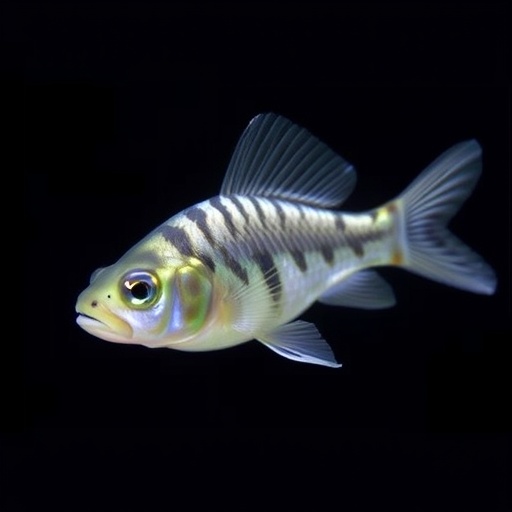
Addressing this critical challenge, a research team from the Institute of Hydrobiology at the Chinese Academy of Sciences has pioneered an innovative approach that markedly accelerates the reproductive cycle of grass carp through a cross-species surrogate reproduction strategy. Central to this methodology is the exploitation of female germline stem cells (FGSCs), which harbor the intrinsic capability to undergo differentiation into functional gametes. By isolating these cells from grass carp and transplanting them into zebrafish—a model species renowned for its compact size (~3 cm) and rapid maturation (~3 months)—the researchers aimed to condense the protracted breeding timeline into a fraction of the original span.
The concept hinges upon the plasticity and developmental synchrony of germline stem cells with the host organism’s reproductive system. The juvenile stage of grass carp, at around three months of age, presents a sexually dimorphic gonadal environment where female gonads not only predominate in size but are enriched with a high density of germline stem cells. These attributes facilitated efficient isolation and subsequent transplantation into the gonadal niche of zebrafish recipients, capitalizing on zebrafish’s fast-developing reproductive framework. Remarkably, the grass carp-derived cells demonstrated an extraordinary capacity to adapt to the zebrafish host’s accelerated developmental timeline, culminating in the formation of functional grass carp sperm within merely three months post-transplantation.
Comprehensive morphological and functional assessments of these surrogate-derived sperm revealed a close parallelism with native grass carp sperm. Analyses included evaluations of cellular morphology, flagellar integrity, and motility parameters, which collectively affirmed the preservation of key physiological traits necessary for successful fertilization. The sperm produced in this manner fertilized grass carp ova effectively, leading exclusively to all-female offspring, thereby substantiating the generation of viable and fertile progeny through an interspecific reproductive platform.
This groundbreaking surrogate reproduction technique heralds a profound shift in aquaculture breeding strategies by collapsing what traditionally spanned over five years into a single, accelerated developmental cycle of under four months. The implications extend beyond mere temporal efficiency; this advancement promises to revolutionize genetic improvement programs by enabling rapid turnover, thereby facilitating swift incorporation of desirable traits related to growth performance, disease resistance, and environmental adaptability.
The underlying mechanism enabling this cross-species germline compatibility underscores the evolutionary conservation of reproductive niches and cellular signaling pathways that govern gametogenesis. The zebrafish gonadal microenvironment provides critical support factors and cues that direct the differentiation trajectory of transplanted grass carp FGSCs, suggesting a universalistic dimension to stem cell niche interactions. Moreover, the capacity to produce all-female progeny offers substantial commercial advantages, given that female grass carp frequently exhibit superior growth rates, aligning with market preferences and production efficiency goals.
Looking ahead, the research consortium envisions expanding the surrogate reproduction framework to include the generation of functional oocytes, which would complete the gamete production cycle within surrogate hosts. Such developments would enable full-cycle reproduction of economically important fish species in rapidly maturing, manageable surrogate organisms. The ultimate aspiration is the creation of a “fish gamete megafactory,” a centralized, compact facility capable of year-round gamete production and genetic management across multiple species. This platform would not only democratize access to high-quality gametes but also allow precise genetic manipulations, expediting aquaculture’s transition toward more sustainable and productive paradigms.
Importantly, this transformative approach addresses key bottlenecks inherent to conventional breeding technologies by circumventing the dependency on slow maturing species. The use of zebrafish as surrogate hosts is particularly advantageous due to their tractability, well-characterized genetics, and amenability to laboratory breeding conditions. Their small size translates to reduced space and resource requirements, making the entire breeding cycle economically viable and scalable to commercial levels. These innovations collectively establish a new frontier in aquaculture biotechnology.
Furthermore, the study exemplifies the power of integrating developmental biology with applied fisheries science, demonstrating how fundamental insights into germline biology can generate tangible benefits in aquaculture. The demonstration that germline stem cells can be leveraged across phylogenetic distances challenges existing paradigms and opens avenues for biotechnological interventions in other species facing similar reproductive limitations. The ability to manipulate and harness stem cells for surrogate reproduction enhances the repertoire of tools available for addressing global food security concerns tied to fish production.
The robustness and reproducibility of this surrogate reproduction strategy evoke optimism for its rapid adoption within aquaculture industry frameworks globally. By dramatically shortening breeding cycles, this technology enables more responsive adaptation to evolving challenges such as climate change, emerging pathogens, and shifting consumer demands. Additionally, the high fidelity of the resulting gametes and offspring ensures that genetic gains are stable and predictable, circumventing issues of hybrid incompatibility or diminished fitness commonly observed in interspecies grafting attempts.
Extensive characterization and validation of this technology were conducted through rigorous experimental study, encompassing cellular biology techniques for stem cell isolation and transplantation, alongside advanced imaging and sperm functional assays. The researchers meticulously documented the developmental timeline, ensuring that the surrogate-derived gametes conformed to expected physiological benchmarks before proceeding to fertilization trials. This scientific rigor not only validates the technology but also establishes a framework for regulatory and ethical considerations necessary for commercial deployment.
In essence, this research epitomizes a convergence of innovation and necessity, leveraging the inherent biology of germline stem cells to surmount longstanding temporal constraints in fish breeding. Its successful implementation portends a future where aquaculture species with traditionally prohibitive maturation times can be bred rapidly and efficiently through surrogate hosts, substantially enhancing global aquaculture productivity and sustainability. The implications resonate broadly, suggesting that similar strategies might be applicable to other vertebrate systems where reproduction speed limits genetic improvement.
Cite Scienmag News
Alan Morgan. (April 13, 2026). Miniature Zebrafish, Massive Breakthrough: Grass Carp Reproduction Boosted 20-Fold. Scienmag. https://scienmag.com/miniature-zebrafish-massive-breakthrough-grass-carp-reproduction-boosted-20-fold/
Alan Morgan. "Miniature Zebrafish, Massive Breakthrough: Grass Carp Reproduction Boosted 20-Fold." Scienmag, 13 April 2026, https://scienmag.com/miniature-zebrafish-massive-breakthrough-grass-carp-reproduction-boosted-20-fold/. Accessed 4 September 2026.
Alan Morgan. "Miniature Zebrafish, Massive Breakthrough: Grass Carp Reproduction Boosted 20-Fold." Scienmag. April 13, 2026. https://scienmag.com/miniature-zebrafish-massive-breakthrough-grass-carp-reproduction-boosted-20-fold/


