


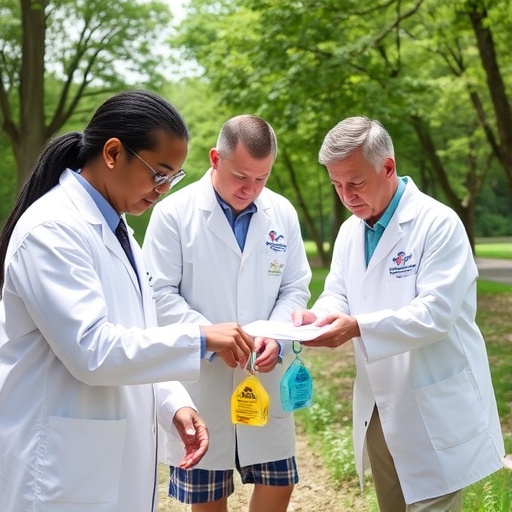
A groundbreaking longitudinal health study known as the Pennington Generation is set to transform our understanding of how early-life behaviors and family environments influence health trajectories over the lifespan. Spearheaded by the Pennington Biomedical Research Center, this ambitious statewide initiative zeroes in on critical factors such as physical activity, nutrition, sleep patterns, and their collective impact on childhood growth, weight gain, and the development of obesity. By harnessing longitudinal data collected from birth through adulthood, the study aims to unravel complex interactions between lifestyle behaviors and metabolic health outcomes.
The Pennington Generation study represents an unprecedented collaboration between Pennington Biomedical and the LSU AgCenter, leveraging both institutions’ unique strengths to facilitate comprehensive, community-based research. Through this partnership, the study gains access to a broad network of nutrition and public health agents embedded throughout Louisiana’s 64 parishes, enhancing participant recruitment and outreach in diverse populations. This community-engaged approach is particularly vital in rural and underserved areas, where trust and culturally sensitive communication significantly increase research participation and retention over time.
Dr. Peter Katzmarzyk, Pennington Biomedical’s Associate Executive Director for Population and Public Health Sciences and the study’s principal investigator, emphasizes the vital role of combining biomedical research with community engagement. “Our integrated approach bridges rigorous scientific investigation with grassroots outreach, ensuring families from all corners of Louisiana have equitable opportunities to contribute,” he notes. This blend of research excellence and local trust amplifies the study’s potential to generate actionable insights into pediatric obesity and metabolic disorders, conditions that disproportionately affect specific demographics in the region.
At the core of the Pennington Generation methodology is its design as an observational study that follows families longitudinally, capturing dynamic changes in behaviors and health markers across multiple generations. Participants undergo an initial comprehensive assessment, facilitated by a mobile health unit known as the Healthy Moves bus, which brings advanced clinical measurement technologies directly to participants’ communities. This innovative deployment ensures accessibility and reduces common barriers to participation, such as travel distance and logistical challenges.
Enrolling up to 1,500 families statewide, the study embraces a family-centric model, incorporating children from infancy through young adulthood (up to 24 years old) alongside immediate adult family members. This multigenerational design enables researchers to examine not only individual health trajectories but also familial patterns and shared environmental influences. The inclusion of adults planning pregnancy or currently pregnant further enriches data on the intergenerational transmission of metabolic health risks.
The partnership taps into the LSU AgCenter’s extensive extension model, cultivated through decades of community-based nutrition and health programs. Denise Holston, associate professor and state nutrition specialist with the LSU AgCenter, remarks on the agency’s established trust within rural communities, a critical asset for fostering engagement in clinical research. Their agents serve as local ambassadors who integrate Pennington Generation recruitment into ongoing outreach efforts while staffing onsite community events, thereby embedding the study within familiar and trusted health promotion frameworks.
Central to the study’s impact is its integration with Pennington Biomedical’s Greaux Healthy initiative, a comprehensive public health campaign aimed at preventing and treating childhood obesity statewide through evidence-based interventions. Data generated by the Pennington Generation will directly inform and refine Greaux Healthy’s strategies, enhancing the initiative’s responsiveness to real-world familial and environmental influences on metabolic health. This translational research feedback loop promises to accelerate the development of targeted prevention and treatment modalities.
Scientifically, Pennington Generation leverages cutting-edge multi-modal assessments, encompassing behavioral data, biometric measurements, and potentially genetic and environmental biomarkers, gathered during home visits and at community-based clinics. The use of longitudinal data permits the modeling of risk trajectories and the identification of critical sensitive periods where intervention may yield maximal benefits. Such temporal resolution is essential for disentangling causality in complex conditions like obesity, which arise from multifactorial influences over time.
Moreover, the study’s design allows for examination of health disparities and social determinants of health within Louisiana’s diverse populations. By capturing data across urban and rural parishes, socioeconomic strata, and varying racial and ethnic groups, Pennington Generation holds the promise of illuminating the contextual factors that perpetuate health inequities. This knowledge is paramount for informing equitable public health policies and tailoring interventions that are culturally competent and community-specific.
The Pennington Biomedical Research Center itself serves as an exemplary hub for translational biomedical science. With over 600 employees and a vast network of clinics and core research laboratories, the center possesses robust infrastructure for comprehensive metabolic and behavioral research. Its positioning within the LSU System underpins collaborative opportunities with academic institutions statewide, fostering a fertile environment for innovation in population health science.
Looking forward, the Pennington Generation study stands as a model for integrating state-of-the-art biomedical research with grassroots community participation, addressing a pressing public health challenge with scientific rigor and cultural empathy. Louisiana residents and families interested in participating or learning more can engage with the study via the Greaux Healthy platform, ensuring broad access to this vital research endeavor. Ultimately, this pioneering study not only seeks to decode the biological and behavioral antecedents of obesity but also to empower communities to achieve healthier generations to come.
Cite Scienmag News
Daisy Hatcher. (April 13, 2026). New Collaboration Expands Scope of Pennington Generation Study. Scienmag. https://scienmag.com/new-collaboration-expands-scope-of-pennington-generation-study/
Daisy Hatcher. "New Collaboration Expands Scope of Pennington Generation Study." Scienmag, 13 April 2026, https://scienmag.com/new-collaboration-expands-scope-of-pennington-generation-study/. Accessed 3 September 2026.
Daisy Hatcher. "New Collaboration Expands Scope of Pennington Generation Study." Scienmag. April 13, 2026. https://scienmag.com/new-collaboration-expands-scope-of-pennington-generation-study/


