


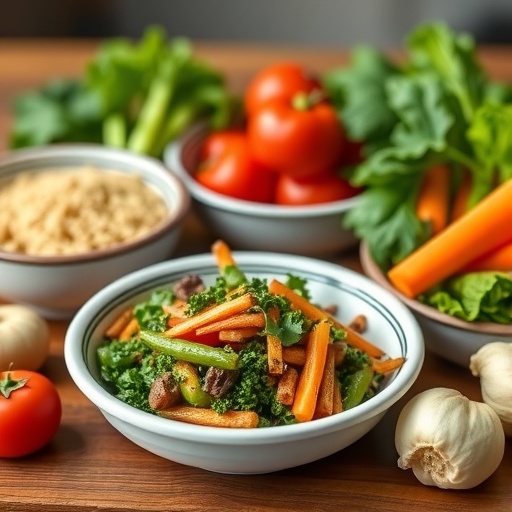
In a landmark correction published recently in the British Journal of Cancer, researchers have revisited and refined their extensive pooled analysis investigating the relationship between vegetarian diets and cancer risk. This monumental study encompasses data from over 1.8 million individuals spanning nine prospective studies conducted on three continents, offering an unprecedented global perspective on how diet potentially shapes cancer incidence. The correction elucidates critical nuances in their original findings, underscoring the intricate interplay between dietary patterns and oncological outcomes and advancing our comprehension of nutritional epidemiology on a massive scale.
Vegetarianism, often championed for its health benefits and sustainability, has been widely studied in relation to chronic diseases, yet its specific impact on cancer risk has remained somewhat contentious and underexplored at a global level. The original analysis aggregated data from multiple cohorts, leveraging diverse populations to mitigate bias and enhance statistical power. Researchers aimed to dissect how plant-based diets correlate with the incidence rates of various cancer types, considering confounding variables such as lifestyle, environmental factors, genetic predisposition, and regional dietary differences. The correction serves to refine risk estimates and recalibrate conclusions drawn from the initial comprehensive meta-analytic effort.
This refined analysis has particular significance in the realm of public health, where dietary recommendations play a pivotal role in cancer prevention strategies. With cancer remaining a leading cause of morbidity and mortality worldwide, even modest risk reductions attributable to diet could translate into substantial population-level benefits. The study’s monumental sample size—1.8 million participants—lends extraordinary precision to risk estimations, surpassing many earlier studies limited by smaller, localized samples. Such a vast dataset enables granular examination of subgroups, allowing exploration of cancer risk modulation by specific vegetarian diet subtypes including lacto-ovo-vegetarian, vegan, and pescatarian diets.
Within the realm of nutritional epidemiology, identifying causal relationships between diet and cancer is fraught with methodological challenges. Confounders abound—smoking rates, socioeconomic status, physical activity, and alcohol consumption intricately influence cancer risk. This pooled analysis employed rigorous statistical controls to adjust for these factors, striving to isolate the independent effect of vegetarianism. The correction addresses previously unaccounted data inconsistencies, ensuring robustness and validity of findings by implementing enhanced sensitivity analyses and incorporating additional covariates where necessary. Such meticulous refinement bolsters confidence that observed associations reflect genuine diet-cancer relationships rather than residual confounding.
The global reach of the participating cohorts—from North America to Europe and Asia—enriches findings with cross-cultural context, critical for generalizing recommendations. Variations in vegetarian diet formulations across regions, influenced by cultural norms and food availability, demand careful interpretation. For example, in some Asian cohorts, vegetarian diets may be richer in soy and fermented foods, which carry distinct bioactive compounds potentially influencing carcinogenesis pathways. This diversity allows dissection of how constituent components of vegetarian diets, such as antioxidants, fiber, phytochemicals, and reduced red and processed meat intake, converge to modulate cancer risk.
One of the pivotal cancer types spotlighted in the pooled study is colorectal cancer, historically linked to meat consumption. The analysis affirms and nuances prior evidence showing vegetarian diets associate with lower colorectal cancer risk, plausibly via mechanisms involving reduced exposure to carcinogenic heterocyclic amines and polycyclic aromatic hydrocarbons formed during meat cooking, as well as increased intake of protective dietary fiber which enhances gut microbial diversity and promotes production of anti-inflammatory short-chain fatty acids. However, the correction refines the magnitude of this protective effect, suggesting it is significant but not as pronounced as earlier estimates indicated.
Breast cancer risk associations within vegetarian populations emerged with intriguing complexity. While some data suggest modest reductions in risk, particularly in premenopausal women, the pooled analysis highlights heterogeneity across studies, potentially linked to differences in hormonal profiles influenced by phytoestrogens abundant in plant-based diets. The correction clarifies the statistical weighting applied to breast cancer subtypes, contributing to a more balanced conclusion that vegetarian diets may confer modest protective effects in specific contexts, warranting further mechanistic investigation.
Prostate cancer findings echoed a similarly layered narrative. Some cohorts reported lower incidence among vegetarians, possibly attributable to lower fat intake and reduced levels of circulating insulin-like growth factor 1 (IGF-1), a hormone implicated in prostate carcinogenesis. The correction adjusts earlier overestimations of these protective associations, emphasizing that while vegetarian diets are not a panacea, they provide a dietary pattern conducive to decreasing certain cancer risks.
The robust methodology employed includes individual participant data meta-analysis, a gold standard allowing harmonization of variables and standardized definitions of vegetarian dietary patterns. Advanced biostatistical modeling, including multivariate Cox proportional hazards models with stratification and random-effects meta-analysis, ensured nuanced estimation of hazard ratios for cancer incidence. The correction introduces additional model parameters to accommodate heterogeneity and potential publication bias identified during post-publication peer review.
Importantly, the study recognizes the limitations inherent in observational research. Causal inference remains challenging, and residual confounding can never be fully eliminated. Yet, the sheer scale and diverse nature of this pooled analysis mitigate some of these issues, enhancing external validity. The correction transparently addresses these caveats and reiterates the need for continued prospective research, including randomized dietary intervention trials, to isolate mechanistic pathways underpinning observed associations.
From a molecular biology standpoint, the study discusses plausible biological mechanisms linking vegetarian dietary components and cancer modulation. Plant-based diets are abundant in antioxidants such as vitamin C, E, carotenoids, and polyphenols; these compounds combat oxidative DNA damage, a key initiator of carcinogenesis. Moreover, high dietary fiber influences gut microbiota composition and function, yielding metabolites that regulate cellular proliferation, apoptosis, and inflammatory signaling pathways. Lower levels of carcinogenic heme iron and reduced intake of nitrosamines in vegetarian diets further contribute to risk attenuation.
The public health implications of this corrected analysis are vast. Considering global cancer incidence projections rising steeply, dietary modification represents a modifiable risk factor with considerable preventive potential. While nutritional guidelines historically emphasize meat reduction primarily for cardiovascular and metabolic health, this study reinforces cancer prevention as an essential rationale. Policymakers and healthcare providers might leverage these insights to promote plant-centric diets tailored to diverse populations, aligning with sustainability goals as well.
In the media landscape, this research correction may ignite renewed interest and debate about vegetarianism’s role in chronic disease prevention, particularly cancer. The compelling scale and scientific rigor elevate the conversation beyond anecdotal assertions or small-scale studies, situating vegetarian diets within evidence-based health promotion frameworks. The nuanced findings caution against simplistic extrapolations but position vegetarianism as a meaningful, though not exclusive, dietary strategy to lower cancer risk.
Future research directions highlighted by the authors include more granular exploration of diet-cancer links stratified by genetic susceptibility loci, epigenetic modulations, and metabolomic profiles. Integrating multi-omics data with large-scale epidemiologic studies promises richer mechanistic insights. Additionally, evaluating dietary transitions over the lifespan and their temporal relationship with cancer development may illuminate critical windows for intervention. The corrected analyses underscore a dynamic research frontier where nutrition science intersects with molecular oncology.
In summary, this major correction to the pooled analysis of vegetarian diets and cancer risk refines and reaffirms the central conclusion: adopting a vegetarian dietary pattern, characterized by high plant food consumption and low intake of red and processed meats, is associated with a modest but statistically significant reduction in risk for several common cancers. These findings are strengthened by the vast and diverse dataset, rigorous analytic techniques, and transparent acknowledgment of limitations. As global populations grapple with rising cancer burdens, dietary strategies grounded in solid empirical evidence such as this will be instrumental in shaping effective public health policies and individual choices.
Cite Scienmag News
Nathaniel Bowman. (April 13, 2026). Vegetarian Diets Linked to Cancer Risk: Global Study. Scienmag. https://scienmag.com/vegetarian-diets-linked-to-cancer-risk-global-study-2/
Nathaniel Bowman. "Vegetarian Diets Linked to Cancer Risk: Global Study." Scienmag, 13 April 2026, https://scienmag.com/vegetarian-diets-linked-to-cancer-risk-global-study-2/. Accessed 3 September 2026.
Nathaniel Bowman. "Vegetarian Diets Linked to Cancer Risk: Global Study." Scienmag. April 13, 2026. https://scienmag.com/vegetarian-diets-linked-to-cancer-risk-global-study-2/


