


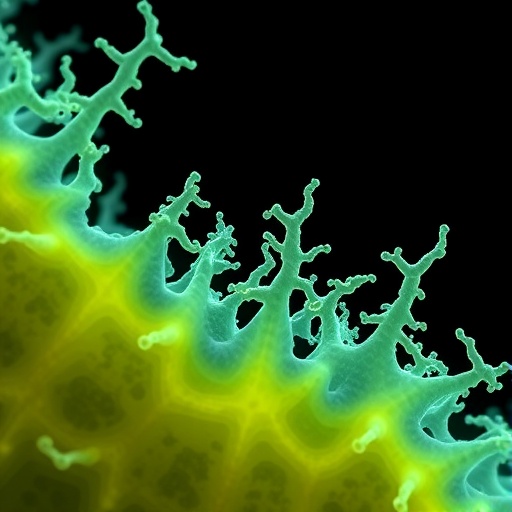
In the relentless battle against bacterial infections, biofilms stand as some of the most formidable adversaries faced by modern medicine. A recent landmark study published in Nature Communications uncovers the dynamic and rapid evolutionary processes that biofilms of Klebsiella pneumoniae undergo when cultivated in vitro, mirroring critical adaptive transformations these pathogens employ during human infections. This new research sheds unprecedented light on how bacterial communities evolve sophisticated survival strategies, adapting to hostile environments and therapeutic pressures in real time.
Klebsiella pneumoniae, a notorious opportunistic pathogen, has long challenged clinicians due to its robust biofilm-forming capacity. Biofilms are structured microbial communities encased in a self-produced extracellular matrix, adhering to surfaces and medical devices, and notoriously resistant to antibiotics and immune clearance. This research delves into the evolutionary trajectories of K. pneumoniae biofilms, highlighting the remarkably swift genetic and phenotypic adaptations these assemblies undertake, which are critical to their persistence and virulence in clinical settings.
One of the most revealing aspects illuminated in the study is the speed and complexity with which K. pneumoniae biofilms evolve in controlled laboratory conditions. Over relatively short timescales, biofilms undergo a plethora of genetic mutations and phenotypic shifts. These adaptive alterations enhance their ability to withstand antimicrobial agents and evade host immune defenses, painting a vivid picture of bacterial resilience that has profound implications for developing new therapeutic approaches.
The research team employed cutting-edge genomic sequencing technologies coupled with sophisticated biofilm assays to track mutational events and changes in biofilm architecture. Their results demonstrate that biofilms evolve not just through random mutation, but also through coordinated changes influencing quorum sensing pathways, matrix composition, and metabolic shifts. Such coordinated evolution underscores how K. pneumoniae biofilms are not static but highly dynamic entities capable of rapid innovation under selective pressures.
Underlying the biofilm’s survival is the intricate extracellular polymeric substance (EPS) matrix, whose composition evolves during infection-like conditions. Alterations in the EPS matrix not only alter the biofilm’s physical properties, such as density and adherence, but also modulate its susceptibility to antibiotics and immune effectors. This revelation that biofilm matrix components themselves are subject to rapid evolutionary change adds a new dimension to our understanding of microbial persistence.
Crucially, the study connects these in vitro evolutionary patterns to clinical isolates obtained from infected patients, strengthening the relevance of the findings. By comparing mutations observed in laboratory-evolved biofilms with those from patient-derived strains, the researchers provide compelling evidence that the adaptive mechanisms uncovered are central to the pathogen’s survival during real-world infections, particularly those resistant to standard treatments.
The findings challenge the long-held belief that biofilm formation and maturation are relatively slow, linear processes. Instead, the results illustrate a highly dynamic system where genetic and phenotypic plasticity confers a remarkable ability to respond to environmental challenges quickly. This plasticity enables K. pneumoniae biofilms to thrive even under aggressive antimicrobial therapies, complicating treatment outcomes and highlighting the urgent need for novel anti-biofilm strategies.
One of the most intriguing insights from this study is the role of adaptive mutations in regulatory genes that fine-tune biofilm development. These mutations orchestrate changes in gene expression networks governing biofilm structure and function, allowing the bacteria to optimize resource allocation, stress responses, and metabolic activities. Such fine-tuning reveals the high level of bacterial sophistication in biofilm management, a trait that has likely been honed during millennia of evolutionary pressure.
The implications extend beyond the clinical challenges posed by K. pneumoniae. Since biofilm formation is a widespread survival strategy among diverse bacterial pathogens, understanding the rapid evolutionary mechanisms described here opens doors to rethinking how we approach infections linked to biofilms across a wide range of microbes. This could catalyze the development of broad-spectrum anti-biofilm interventions targeting conserved evolutionary pathways.
Furthermore, this investigation highlights the importance of integrating evolutionary biology with microbiology and clinical research. By appreciating that bacterial populations within biofilms are constantly evolving entities, we can better predict their responses to interventions and design therapies that anticipate and counteract their adaptive strategies, rather than reacting to resistance after it has already emerged.
In addition to the detailed genetic and phenotypic analyses, the study explores the altered metabolic states encountered by evolving biofilms. It reveals that shifts toward anaerobic metabolism and modified nutrient usage patterns are integral to their adaptive success. These metabolic adjustments not only support survival in the oxygen-limited environments typical of infected tissues but also influence antibiotic penetration and efficacy, further complicating treatment regimens.
The researchers also emphasize the impact of spatial heterogeneity within biofilms on evolutionary dynamics. The microenvironments created by gradients of nutrients, oxygen, and waste products foster localized selection pressures, driving diversification of bacterial subpopulations. Such microevolutionary processes contribute to the emergence of phenotypically distinct, coexisting variants within a single biofilm, enhancing overall community resilience.
This multidimensional evolution of biofilms underscores the necessity for therapeutic approaches that are equally multifaceted. Targeting the extracellular matrix, disrupting quorum sensing, altering metabolic pathways, and employing combination antibiotic therapies are strategies that could arise from the insights generated by this research, potentially transforming our ability to treat persistent infections caused by K. pneumoniae and other biofilm-forming pathogens.
Finally, the study serves as a clarion call for the scientific community to shift paradigms concerning infection control. It advocates for continuous monitoring of bacterial populations at the genomic and phenotypic level during infection and treatment, enabling real-time adaptive management of antimicrobial therapies. This proactive strategy could substantially enhance treatment success rates and curb the emergence of chronic, drug-resistant infections driven by biofilm evolution.
In conclusion, this pioneering work not only elucidates the rapid in vitro evolution of Klebsiella pneumoniae biofilms but also establishes a conceptual framework linking these mechanisms to clinical outcomes. By unveiling how adaptive genetic changes shape biofilm behavior and persistence, the study heralds a new era in infectious disease research—one where evolutionary principles are harnessed to outpace and outsmart some of the most resilient microbial foes.
Cite Scienmag News
Gavin Prescott. (April 10, 2026). Rapid Klebsiella Biofilm Evolution Reveals Infection Adaptations. Scienmag. https://scienmag.com/rapid-klebsiella-biofilm-evolution-reveals-infection-adaptations/
Gavin Prescott. "Rapid Klebsiella Biofilm Evolution Reveals Infection Adaptations." Scienmag, 10 April 2026, https://scienmag.com/rapid-klebsiella-biofilm-evolution-reveals-infection-adaptations/. Accessed 4 September 2026.
Gavin Prescott. "Rapid Klebsiella Biofilm Evolution Reveals Infection Adaptations." Scienmag. April 10, 2026. https://scienmag.com/rapid-klebsiella-biofilm-evolution-reveals-infection-adaptations/


