


At the twilight of the 1st century AD, skilled artisans commissioned to embellish the walls of the Domus of Salvius in what is now Cartagena, Spain, applied techniques that continue to captivate modern scientists and historians alike. This opulent Roman residence in ancient Carthago Nova houses some of the most well-preserved murals from antiquity. Recent scientific investigations have uncovered the remarkable sophistication behind these pigments—not simply in their vibrant hues, but also concerning the chemical and material mastery involved in their production and application. These discoveries highlight the intricate knowledge possessed by Roman painters, revealing an advanced strategy to balance economic considerations with long-lasting, high-quality aesthetics.
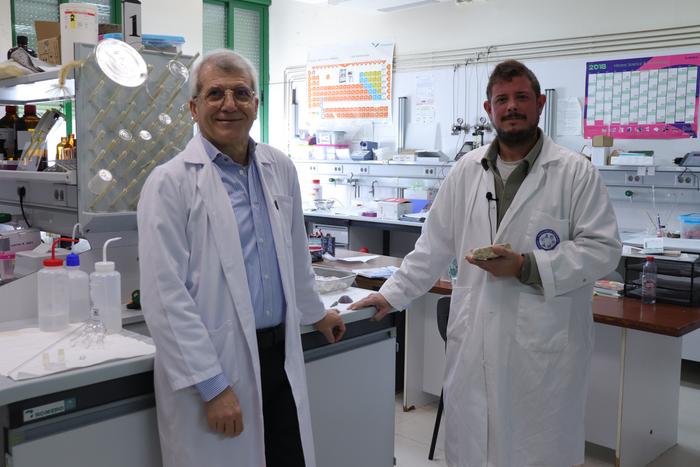
An interdisciplinary collaboration between the University of Murcia’s departments of Prehistory, Archaeology, and Ancient History, alongside the Department of Organic Chemistry at the University of Córdoba’s Chemical Institute for Energy and the Environment (IQUEMA), spearheaded this cutting-edge research. Leveraging state-of-the-art analytical methodologies, the team conducted exhaustive spectroscopic and diffraction analyses of pigment and mortar samples extracted from several mural fragments. Astonishingly, the pigment formulations identified have no known counterparts within the Iberian Peninsula to date, with only a single parallel documented in Ephesus, Turkey. This discovery underscores a network of sophisticated knowledge exchange that transcended regional borders within the Roman world.
The study was meticulously designed using an array of chemical and physical analysis tools. X-ray diffraction (XRD) enabled the precise characterization of the mineralogical composition of the mortars forming the mural substrate, revealing complex binders and aggregates that ensured the paintings’ structural integrity. Meanwhile, Raman spectroscopy provided molecular fingerprints of the pigment residues, enabling the identification of multiple components within layered pigment mixtures. Through these complementary techniques, the researchers reconstructed not only the materials used but also inferred the technological expertise involved in their synergistic combination and preservation.
Among the pigments, calcium carbonate appeared as the primary white pigment, while charcoal accounted for the deep blacks, and goethite—an iron oxyhydroxide—offered a distinct yellow tint. For green hues, glauconite was dominant, complemented by traces of Egyptian blue, the world’s first synthetic pigment and an emblem of Roman luxury. The red pigments were particularly intriguing: a deliberate admixture of cinnabar, an esteemed and costly mercury sulfide mineral colloquially dubbed “red gold,” blended with iron oxide to yield rich red tones. The iron oxide, a ubiquitous and affordable pigment, was utilized strategically to extend the more precious cinnabar, ensuring economic efficiency without compromising visual richness.
What truly distinguishes the Domus of Salvius murals from other Roman artistic endeavors is the innovative application technique discovered through high-resolution scanning electron microscopy (SEM) analysis. This revealed that the red pigment blend was never painted directly onto the wall’s surface. Instead, it was carefully layered atop a priming coat of yellow goethite. Such a foundation was far from arbitrary; cinnabar pigments are chemically vulnerable to environmental factors, including photodegradation, exposure to moisture, and alkaline substances, which can cause them to darken or deteriorate over time.
By employing a goethite primer, the craftsmen effectively engineered a protective microenvironment that stabilized the red pigment layer. This stratagem indicates a profound empirical understanding of pigment chemistry and material interactions, reflecting a scientific approach to artistry rarely credited to ancient painters. This methodological insight suggests the existence of codified technical “recipes” or manuals accompanied by shared artisanal knowledge disseminated through workshops spanning the Roman provinces, including Hispania’s distant territories.
The findings invite us to reconsider the technological prowess underpinning Roman decorative arts. Contrary to prior assumptions that wealthy patrons’ purchasing power alone dictated the use of expensive materials, the evidence elucidates that technical mastery profoundly influenced the creative process. It was not merely a question of luxury but a deliberate, informed deployment of materials designed to maximize durability and chromatic longevity. Thus, the interplay between economic strategy and scientific comprehension materialized in murals that could withstand the ravages of two millennia and maintain their visual integrity.
This study exemplifies how archaeometry—melding chemistry and archaeology—can unravel the nuanced complexity behind ancient artifacts. By interrogating the archaeological record with modern instrumentation, researchers can substantiate or challenge interpretations derived from classical written sources such as Vitruvius’s architectural treatises or Pliny the Elder’s natural histories. These texts, while invaluable, often lack empirical specificity when contextualized against material evidence. The Domus of Salvius murals, therefore, represent a prime example of how integrating laboratory science with historical inquiry enriches our understanding of ancient societies.
Furthermore, this research sheds light on the cultural and technological interconnections spanning the Roman Empire. The pigment mixtures and layering techniques resonate with artistic practices found in distant locales such as Ephesus, signaling an exchange of ideas and methods that contributed to a shared Mediterranean artistic vocabulary. Such cross-cultural fertilization challenges provincialist views of Roman Hispania as technologically isolated, instead portraying it as an active participant in imperial innovation networks.
The methodological prowess exhibited here stems from the application of Raman spectroscopy, a vibrational spectroscopic technique that discerns molecular structures by observing inelastic scattering of monochromatic light. This allows for non-destructive chemical characterization of organic and inorganic pigments embedded in archaeological samples. SEM, on the other hand, provides ultrastructural imagery that reveals pigment granularity and stratigraphy, critical to understanding application sequences and interactions within the paint layers.
Together, these analyses facilitated an unprecedented reconstruction of the Domus of Salvius’s painting techniques, revealing a material legacy that extends beyond mere aesthetics into the realm of empirical chemistry and practical innovation. This bridges the gap between artisanal craft and scientific research, enriching narratives about Roman technological accomplishment and cultural sophistication.
In sum, the enduring vibrancy and preservation of the Domus of Salvius murals embody the intersection of art, science, and economics in Roman society. The painters’ astute manipulation of pigment chemistry not only conveys aesthetic grandeur but also reflects a deep engagement with material science, echoing the broader intellectual currents coursing through the Empire. Their legacy, preserved on ancient plaster, invites ongoing exploration of antiquity through the lens of modern technology, yielding insights into the intricate tapestry of human history.
News Publication Date: 26-Jan-2026
Web References:
10.1038/s40494-025-02198-5
Cite Scienmag News
Courtney Benton. (April 10, 2026). UCO Uncovers Groundbreaking Mural Painting Technique Unknown in Roman Hispania. Scienmag. https://scienmag.com/uco-uncovers-groundbreaking-mural-painting-technique-unknown-in-roman-hispania/
Courtney Benton. "UCO Uncovers Groundbreaking Mural Painting Technique Unknown in Roman Hispania." Scienmag, 10 April 2026, https://scienmag.com/uco-uncovers-groundbreaking-mural-painting-technique-unknown-in-roman-hispania/. Accessed 3 September 2026.
Courtney Benton. "UCO Uncovers Groundbreaking Mural Painting Technique Unknown in Roman Hispania." Scienmag. April 10, 2026. https://scienmag.com/uco-uncovers-groundbreaking-mural-painting-technique-unknown-in-roman-hispania/


