


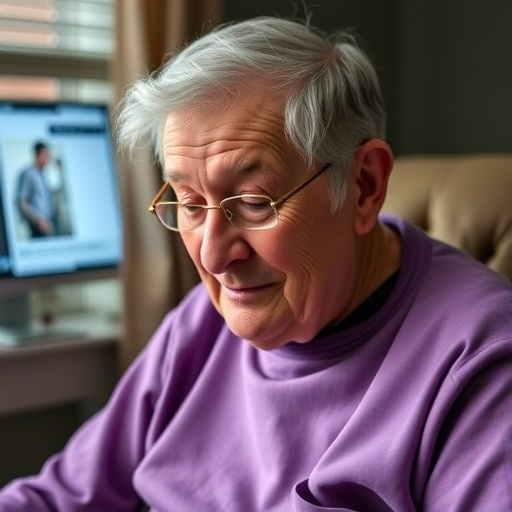
In an era where personalized medicine is transforming patient care, a groundbreaking study has emerged from the frontline of oncology research, shedding light on the critical role of frailty assessment in cancer treatment outcomes. The recently published research in the British Journal of Cancer elucidates the application of the electronic frailty index (eFI) in patients undergoing chemotherapy, highlighting its profound implications for optimizing therapeutic strategies in a vulnerable population.
Frailty, a multidimensional syndrome characterized by diminished physiological reserve and increased vulnerability to stressors, has long been recognized as a pivotal factor influencing cancer prognosis, treatment tolerance, and survival. However, conventional assessment methods have often been cumbersome, subjective, and confined to clinical intuition or rudimentary screening tools. The advent of electronic health records and advanced informatics has paved the way for more objective, scalable, and reproducible measures like the electronic frailty index, which synthesizes diverse clinical variables into a comprehensive frailty score.
The study, conducted by Michael et al., rigorously evaluated the utility of the eFI in a cohort of cancer patients undergoing chemotherapy. By retrospectively analyzing electronic health data, the researchers were able to quantify pre-treatment frailty and correlate these metrics with chemotherapy toxicity, treatment modifications, hospitalizations, and mortality. The findings compellingly demonstrated that higher eFI scores correlated strongly with adverse outcomes, underscoring the index’s predictive precision and clinical relevance.
What sets this investigation apart is its integrative approach, leveraging real-world data analytics to transcend the limitations of traditional frailty evaluations. The eFI algorithm incorporates various domains, including comorbidities, polypharmacy, functional impairments, and geriatric syndromes, thereby offering a holistic portrait of the patient’s health status. This granularity enables clinicians to stratify risk, tailor chemotherapy regimens, and implement preemptive interventions aimed at mitigating treatment-related complications.
From a technical standpoint, the study harnessed vast datasets extracted from electronic medical records, employing machine learning techniques to refine the predictive power of the frailty index. The algorithm was meticulously validated against established clinical benchmarks, ensuring robustness and applicability across diverse cancer types and treatment settings. This methodological rigor not only enhances the credibility of the eFI but also sets a new standard for leveraging digital health data in oncological practice.
The implications of this research extend beyond prognostication. Incorporating the eFI into routine oncology workflows has the potential to revolutionize decision-making processes. For instance, by identifying patients with elevated frailty scores prior to initiating chemotherapy, oncologists can customize dosing, schedule supportive care measures, or consider alternative treatment modalities that prioritize quality of life. This proactive strategy promises to reduce hospitalization rates, minimize treatment interruptions, and ultimately improve survival outcomes.
Moreover, the scalability of the eFI presents an attractive proposition for healthcare systems grappling with resource constraints and burgeoning cancer prevalence. Automated frailty assessments could be seamlessly integrated into electronic health systems, facilitating continuous monitoring and timely clinical alerts. Such integration promotes a dynamic, data-driven approach to patient management, fostering interdisciplinary collaboration among oncologists, geriatricians, pharmacists, and nursing staff.
The study also addresses a critical knowledge gap regarding the intersection of aging, frailty, and cancer therapeutics. As global populations age, the incidence of cancer in elderly and frail individuals is expected to rise, posing complex therapeutic dilemmas. By validating a reliable, objective frailty measure tailored to this demographic, the research lays the groundwork for more nuanced clinical trials and evidence-based guidelines that reflect the heterogeneity of the aging cancer population.
From a scientific perspective, the utilization of the electronic frailty index represents a convergence of gerontology, oncology, and informatics. The interdisciplinary nature of this tool exemplifies the power of translational research, where insights from fundamental geriatric principles are operationalized through cutting-edge technology to enhance clinical care. This synergy underscores the transformative potential that awaited discovery brings to the realm of personalized oncology.
The viral potential of this research also resides in its humanistic underpinnings. Cancer treatment is often a balancing act between extending quantity of life and preserving its quality. Electronic frailty assessment empowers clinicians to honor this equilibrium by integrating patient resilience into therapeutic planning. Such an approach resonates with patients and caregivers alike, fostering trust, shared decision-making, and a personalized care experience.
Furthermore, this investigation sparks a broader conversation about harnessing electronic health records for predictive analytics in medicine. The demonstrated success of the eFI could inspire analogous indices evaluating other critical parameters across diverse medical specialties, fueling a paradigm shift towards proactive, precision healthcare. This momentum aligns with global trends advocating for the democratization of health data and the integration of artificial intelligence in clinical practice.
Critically, while the study provides compelling evidence for the utility of electronic frailty indices, it also acknowledges the need for prospective validation and real-world implementation studies. Future research must address potential barriers such as data interoperability, privacy concerns, clinician training, and patient acceptance to fully realize the clinical benefits of this innovation. Yet, the foundational work by Michael et al. delineates a clear path forward.
In conclusion, the utilization of an electronic frailty index in cancer patients undergoing chemotherapy marks a seminal advancement in oncology care. By providing a quantifiable, objective measure of vulnerability, the eFI equips clinicians with a powerful tool to individualize treatment, optimize outcomes, and enhance the overall care paradigm. As this technology permeates clinical practice, it holds the promise of transforming how we understand and manage frailty in the complex journey of cancer therapy, heralding a new dawn in precision medicine.
Cite Scienmag News
Nathaniel Bowman. (April 10, 2026). Electronic Frailty Index Aids Chemotherapy in Cancer. Scienmag. https://scienmag.com/electronic-frailty-index-aids-chemotherapy-in-cancer/
Nathaniel Bowman. "Electronic Frailty Index Aids Chemotherapy in Cancer." Scienmag, 10 April 2026, https://scienmag.com/electronic-frailty-index-aids-chemotherapy-in-cancer/. Accessed 3 September 2026.
Nathaniel Bowman. "Electronic Frailty Index Aids Chemotherapy in Cancer." Scienmag. April 10, 2026. https://scienmag.com/electronic-frailty-index-aids-chemotherapy-in-cancer/


