


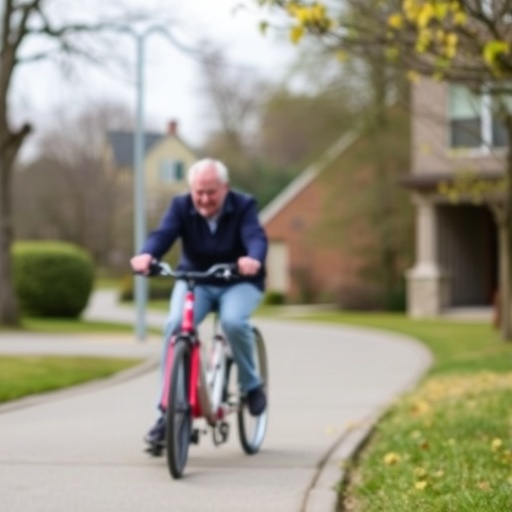
In an era marked by unprecedented advancements in medical science and technology, the challenge of addressing loneliness and reduced mobility among older adults remains daunting yet critical. A groundbreaking study published in BMC Geriatrics by researchers Cecen-Celik and Deniz introduces a pioneering integrated community-based rehabilitation model specifically designed to tackle these intertwined issues. This innovative approach not only aims to improve physical mobility but also seeks to alleviate the pervasive loneliness that often accompanies the aging process, thereby enhancing overall quality of life for seniors.
The intersection of mobility limitations and social isolation has long been recognized as a contributing factor to deteriorating health outcomes in the elderly population. Traditional rehabilitation programs have predominantly focused on physical recovery and independence, frequently overlooking the psychological and social dimensions that underpin holistic wellbeing. Cecen-Celik and Deniz’s research advances the field by integrating these critical aspects, proposing a holistic rehabilitation framework that bridges the gap between physical therapy and psychosocial support.
The foundation of the model rests upon a community-oriented infrastructure that leverages local resources and social networks to create a support system around older adults. This framework encourages active participation not only from healthcare providers but also from family members, caregivers, and community organizations, fostering an environment where elderly individuals feel engaged and valued. Such integration is crucial because it transforms rehabilitation from an isolated clinical endeavor to a vibrant communal activity.
One of the technical pillars of this model involves personalized mobility training programs that are adaptable to varying degrees of physical capability among older adults. These programs utilize state-of-the-art biomechanical assessments and real-time monitoring technologies that allow therapists to tailor interventions with precision. This customization ensures that mobility enhancement efforts are simultaneously safe, effective, and responsive to ongoing changes in physical status.
Equally innovative is the social engagement component embedded within the rehabilitation model. It employs structured group activities and peer support mechanisms to encourage social interaction and emotional connection. These strategies are reinforced by cognitive-behavioral techniques designed to help participants overcome social anxiety and other barriers to building meaningful relationships. The synergy between physical and social rehabilitation creates a comprehensive methodology to combat the dual threats of immobility and loneliness.
The research further highlights the use of digital health solutions as pivotal facilitators in the model’s implementation. Virtual reality environments, telehealth consultations, and mobile health applications form an interconnected technological ecosystem that extends the reach of rehabilitation services beyond clinical settings. These tools not only enhance accessibility but also provide immersive therapeutic experiences which motivate continued engagement while tracking progress meticulously.
Cecen-Celik and Deniz provide compelling evidence from pilot programs demonstrating significant improvements in mobility metrics alongside marked reductions in loneliness scores among participants. Quantitative data underscore enhanced gait speed, balance, and muscular strength, while qualitative assessments reveal increased perceived social support and decreased feelings of isolation. Such dual outcomes underscore the efficacy of integrating physical and psychosocial rehabilitation into a unified community-centric approach.
This integrated model also challenges prevailing public health paradigms by emphasizing prevention and maintenance rather than solely post-injury or disease management. Recognizing that sustained engagement and social connectivity are vital determinants of long-term mobility retention, the model promotes ongoing community involvement and empowerment. Empowerment ensures that older adults maintain autonomy and a sense of purpose, which are fundamentally linked to both psychological health and physical resilience.
Moreover, the framework addresses systemic barriers to rehabilitation including socioeconomic constraints, transportation difficulties, and fragmented healthcare services. By harnessing community assets and fostering collaborations across sectors, the model offers scalable solutions tailored to diverse demographic and geographic contexts. This adaptability enhances its potential for widespread adoption and policy integration, possibly reshaping geriatric care paradigms globally.
The authors also emphasize the importance of training multidisciplinary teams that include physiotherapists, social workers, psychologists, and community health workers. This collaborative approach ensures comprehensive care delivery, blending clinical expertise with community insight. Furthermore, ongoing professional education and interprofessional communication are highlighted as essential to sustaining model efficacy and responsiveness to evolving patient needs.
Cecen-Celik and Deniz propose future directions for research that include longitudinal studies examining long-term health outcomes and cost-effectiveness analyses comparing integrated models against traditional rehabilitation programs. They also advocate for the development of standardized outcome measures that capture both mobility functions and psychosocial wellbeing comprehensively. Such efforts would consolidate the evidence base and support health policy decision-making.
From a broader perspective, the study underscores the critical interdependence of social and physical health in aging populations. The innovative integrated rehabilitation model exemplifies how addressing these facets concomitantly can transform geriatric care by mitigating risks of disability, depression, and hospitalization. It prompts a paradigm shift towards more empathetic and person-centered healthcare architectures.
In summary, the pioneering work of Cecen-Celik and Deniz represents a significant leap forward in geriatric rehabilitation research. By weaving together physical therapy, social engagement, technological innovation, and community integration, their model offers a beacon of hope for the millions of older adults grappling with the twin challenges of loneliness and immobility. As the global population ages, such visionary approaches are not only timely but indispensable for fostering healthier, more connected, and dignified later lives.
Cite Scienmag News
Beatrice Stafford. (April 10, 2026). Combating Loneliness and Mobility Issues in Seniors. Scienmag. https://scienmag.com/combating-loneliness-and-mobility-issues-in-seniors/
Beatrice Stafford. "Combating Loneliness and Mobility Issues in Seniors." Scienmag, 10 April 2026, https://scienmag.com/combating-loneliness-and-mobility-issues-in-seniors/. Accessed 3 September 2026.
Beatrice Stafford. "Combating Loneliness and Mobility Issues in Seniors." Scienmag. April 10, 2026. https://scienmag.com/combating-loneliness-and-mobility-issues-in-seniors/


