


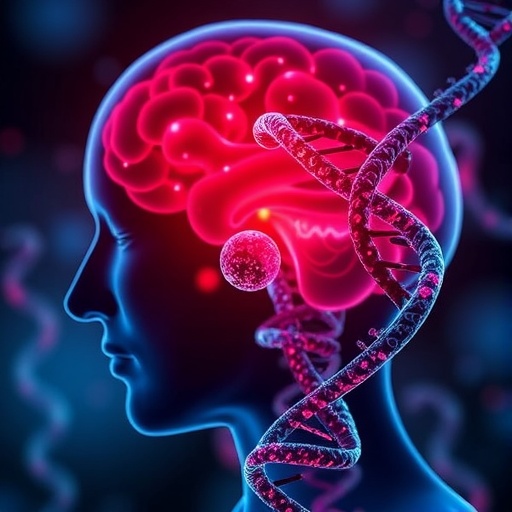
In a groundbreaking study that could reshape our understanding of schizophrenia’s molecular underpinnings, researchers have reported a significant upregulation of DNA repair-related genes in the prefrontal cortex of patients diagnosed with schizophrenia who exhibit a low genetic risk profile. This observation challenges long-held assumptions that schizophrenia’s pathogenesis is primarily driven by high genetic risk factors, highlighting instead a complex interplay between genetic predispositions and molecular compensatory mechanisms within the brain.
The prefrontal cortex, a region critically involved in executive functions, decision-making, and social behavior, has long been implicated in the neuropathology of schizophrenia. Traditionally, research has focused on neurotransmitter imbalances and synaptic anomalies, but this novel study pivots towards genomic maintenance pathways. Specifically, it sheds light on how the brain’s intrinsic DNA repair machinery may be dynamically modulated in response to or as a consequence of the disorder.
Utilizing advanced transcriptomic techniques, the researchers performed an in-depth analysis of postmortem brain tissue samples from individuals diagnosed with schizophrenia alongside carefully matched control subjects. The focus on low genetic risk patients, classified using polygenic risk scores, allowed the team to isolate molecular features unconfounded by a heavy genetic load, thereby revealing intrinsic biological responses that might otherwise remain hidden in genetically predisposed populations.
The study identified a suite of genes involved in diverse DNA repair processes—ranging from base excision repair and nucleotide excision repair to double-strand break repair—as being significantly upregulated in the prefrontal cortex tissues of these patients. This coordinated gene expression pattern indicates that the neural environment in schizophrenia is subjected to heightened genomic stress potentially exacerbated by metabolic dysregulation, oxidative damage, and inflammatory processes.
One of the key findings relates to the elevated expression of genes encoding for critical enzymes such as DNA polymerases, ligases, and endonucleases. These enzymes orchestrate the meticulous detection, excision, and replacement of damaged DNA segments, ensuring genomic integrity is maintained. The augmented activity of these pathways suggests an adaptive or compensatory response to increased DNA damage insult in the affected cortical neurons.
The implications of these findings are multifaceted. First, they underscore the necessity of shifting the research paradigm towards understanding schizophrenia as a disorder that may involve substantial genomic maintenance dysfunction, rather than solely neurotransmitter imbalances or neurodevelopmental anomalies. Second, this altered DNA repair gene expression could potentially serve as a biomarker for identifying patient subgroups with distinct pathophysiological mechanisms, ultimately guiding more personalized therapeutic interventions.
Moreover, the observation that such upregulation is prominent in low genetic risk individuals indicates that environmental factors and epigenetic modifications might play a critical role in triggering DNA damage responses. This aligns with growing evidence implicating prenatal stress, exposure to toxins, and neuroinflammation as risk factors capable of inflicting DNA damage, thereby activating repair pathways as a neuroprotective mechanism.
Notably, the prefrontal cortex is especially vulnerable due to its high metabolic demand and extensive neuronal connectivity, which render it particularly sensitive to oxidative stress and downstream DNA lesions. The study’s insights into the heightened DNA repair activity within this region may provide clues into the selective regional vulnerability observed in schizophrenia and associated cognitive deficits.
Further molecular analyses revealed alterations in the regulation of the DNA damage response (DDR) signaling cascade, including heightened expression of sensor proteins such as ATM and ATR kinases, which detect DNA strand breaks and orchestrate subsequent repair and cell cycle checkpoint activation. This activation hints at ongoing genomic instability in neuronal populations that may underlie neurodegenerative features observed in some schizophrenia phenotypes.
While the study primarily focuses on the enhancement of DNA repair gene expression, the broader context suggests a paradoxical scenario where despite increased DNA repair machinery, genomic damage accumulates, possibly due to overwhelmed or dysfunctional repair processes. This could lead to mutations, altered gene expression landscapes, and impaired neuronal function, collectively contributing to symptom manifestation and disease progression.
The research also opens avenues for therapeutic innovation. If DNA repair pathways are indeed implicated in schizophrenia, pharmacological agents that modulate these pathways could be explored as potential treatments. For instance, small-molecule enhancers of specific DNA repair enzymes or antioxidants mitigating the causative oxidative DNA damage might ameliorate neuronal dysfunction and improve clinical outcomes.
Importantly, this study elegantly underscores the heterogeneity of schizophrenia at the molecular level. By dissecting the role of DNA repair in patients with divergent genetic risk profiles, it highlights the necessity of integrating genomic, epigenomic, and transcriptomic data to unravel the full complexity of the disorder. Such integrative approaches are essential for moving beyond one-size-fits-all models in psychiatric research.
Another dimension worth considering is the interplay between DNA repair dynamics and neurodevelopmental trajectories. DNA damage occurring early in brain development can have lasting repercussions, potentially influencing neuronal differentiation, synaptic formation, and circuit maturation. The upregulated repair gene expression observed in adult patients might reflect a lifelong struggle to maintain genome stability, thereby linking developmental insults with adult psychopathology.
As the field advances, it is crucial to explore how these molecular findings correspond to clinical phenotypes. Future research may establish correlations between DNA repair gene expression levels and specific symptom clusters, cognitive impairments, or treatment responses in schizophrenia, further refining diagnostic criteria and therapeutic targeting.
The integration of this data with emerging technologies such as single-cell RNA sequencing and spatial transcriptomics could further elucidate cell type-specific differences in DNA repair activity within the brain, revealing whether certain neuronal or glial populations are more affected in schizophrenia, potentially pinpointing therapeutic targets with unprecedented precision.
While the present study is a pivotal step forward, it also prompts questions about causality and directionality. Is heightened DNA repair gene expression a driving force in schizophrenia pathogenesis, or a reactive response to upstream pathological events? Resolving this will require longitudinal studies and in vivo models capable of mechanistic elucidation.
In conclusion, the identification of upregulated DNA repair-related genes in the prefrontal cortex of low genetic risk schizophrenia patients offers a transformative lens through which to view this complex disorder. It suggests that genomic integrity maintenance is a previously underappreciated dimension of schizophrenia biology and emphasizes the intricate balance between genetic predisposition, environmental influences, and cellular stress responses in shaping mental health outcomes.
This discovery heralds a new wave of research focusing on genomic maintenance pathways and their modulators as potential biomarkers and therapeutic targets, aiming to untangle the enigmatic biological tapestry underlying schizophrenia and ultimately improve the lives of those affected by this challenging psychiatric illness.
Cite Scienmag News
Juliet Wilcox. (April 8, 2026). DNA Repair Genes Upregulated in Low-Risk Schizophrenia. Scienmag. https://scienmag.com/dna-repair-genes-upregulated-in-low-risk-schizophrenia/
Juliet Wilcox. "DNA Repair Genes Upregulated in Low-Risk Schizophrenia." Scienmag, 8 April 2026, https://scienmag.com/dna-repair-genes-upregulated-in-low-risk-schizophrenia/. Accessed 4 September 2026.
Juliet Wilcox. "DNA Repair Genes Upregulated in Low-Risk Schizophrenia." Scienmag. April 8, 2026. https://scienmag.com/dna-repair-genes-upregulated-in-low-risk-schizophrenia/


