


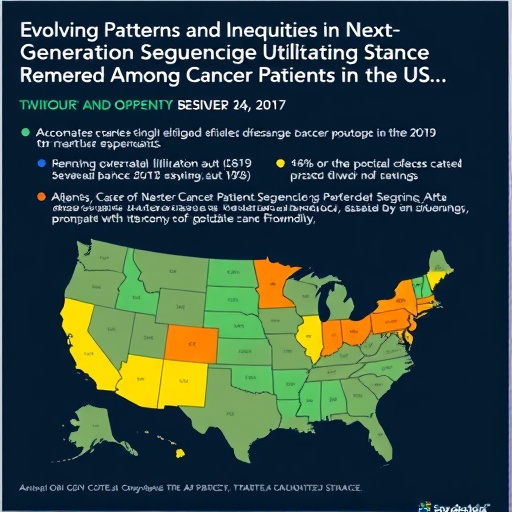
In recent years, genomic testing has emerged as a pivotal tool in the personalized treatment of cancer, offering unprecedented insight into the molecular underpinnings of tumors. Despite the promise of next-generation sequencing (NGS) to revolutionize oncologic care through precise genetic profiling, a new cohort study reveals a disconcerting reality: the majority of patients with advanced or metastatic cancers are not undergoing tumor genomic testing. This gap not only limits the clinical benefits that could be derived from targeted therapies but also underscores significant disparities rooted in social, economic, and racial factors.
The study, conducted with a robust methodology leveraging comprehensive data sets, focuses on the timeline and accessibility of NGS for patients afflicted with advanced-stage malignancies. By analyzing demographic and insurance-related variables, researchers identified a troubling pattern wherein patients from lower socioeconomic backgrounds, those who identify as Black or Hispanic, and individuals insured through Medicaid or Medicare experience notably longer intervals before receiving tumor genomic profiling. The findings suggest systemic barriers that hinder equitable integration of this cutting-edge diagnostic modality into routine oncology practice.
Understanding the technical landscape, next-generation sequencing is a highly sophisticated procedure capable of evaluating hundreds to thousands of gene regions simultaneously, providing a comprehensive molecular portrait of a tumor. This molecular information facilitates the identification of actionable mutations or alterations that may respond to specific targeted therapies or immunotherapies, thereby enabling precision oncology tailored to the unique genetic makeup of each patient’s cancer. However, despite the clinical utility and growing availability, NGS remains underutilized in certain patient populations, complicating efforts to standardize best practices in cancer care.
Socioeconomic status, serving as a critical determinant of health outcomes, emerges prominently from the data as a factor strongly correlated with delayed genomic testing. Individuals from economically disadvantaged communities face a constellation of challenges, including limited access to specialized oncology centers equipped with genomic testing capabilities, administrative hurdles within their insurance plans, and a general lack of awareness regarding the potential benefits of NGS. These these factors culminate in prolonged wait times and potential missed opportunities for early therapeutic intervention.
Moreover, racial and ethnic disparities further compound the problem. Black and Hispanic patients, historically underserved in many aspects of healthcare, are disproportionately affected by delays in genomic testing. This delay not only widens the gulf in survival outcomes but also perpetuates an ongoing cycle of inequity in medical research and clinical advancements. The underrepresentation of these populations in genomic datasets may also impact the development and efficacy of precision therapies, highlighting the need for inclusive policies and research participation.
Insurance coverage plays a crucial and often complicated role in shaping access to genomic technologies. The study delineates that patients enrolled in public insurance programs such as Medicaid or Medicare encounter longer wait times for sequencing compared to those with private insurance. Variability in coverage policies, reimbursement rates, and administrative processing times associated with these programs may contribute to these delays. Understanding and addressing insurance-based barriers are vital to ensuring equitable access across diverse patient groups.
Beyond the identification of disparities, the study calls for immediate and concerted policy initiatives directed at bridging these inequities. Healthcare systems, payers, and policymakers must collaborate to implement targeted interventions that streamline access to tumor genomic testing. Strategies may include expanding insurance coverage for NGS, investing in infrastructure within underserved communities, enhancing provider education, and incorporating patient navigation services designed to mitigate socioeconomic obstacles.
Clinicians play a pivotal role in this transformation. Awareness campaigns and continuous medical education must emphasize the importance of timely genomic profiling for eligible cancer patients, particularly within minority and economically disadvantaged communities. Adoption of standardized clinical pathways that integrate NGS early in the diagnostic and treatment decision-making process could help in reducing unwarranted variability in care delivery.
The implications of this study extend beyond immediate clinical practice, touching on fundamental ethical and social considerations in oncologic care. Ensuring that advancements in cancer genomics benefit all segments of society equitably aligns with principles of justice and non-maleficence. Furthermore, reducing disparities in genomic testing utilization may improve the generalizability of research findings across diverse populations, ultimately accelerating the development of universally effective cancer therapies.
Technically, the bottlenecks identified also invite innovation in healthcare delivery models and laboratory workflows. Incorporating telemedicine consultations, decentralized sample collection, and rapid turnaround sequencing technologies could alleviate logistical challenges. Additionally, data integration and interoperability across electronic health records can facilitate timely identification of patients eligible for genomic testing, triggering automatic referrals.
This pivotal study acts as a call to action in the oncology community, highlighting the urgent necessity to dismantle systemic barriers that impede access to precision medicine tools. The transformative potential of tumor genomic testing can only be fully realized if it is embedded within an equitable healthcare framework that prioritizes inclusive access, continuous quality improvement, and patient-centered care models.
In sum, while next-generation sequencing stands at the forefront of personalized oncology, revealing novel therapeutic avenues and prognostic markers, its deployment remains uneven across the cancer patient population. Socioeconomic disparities, racial and ethnic inequities, and insurance-related obstacles present complex challenges that demand multifaceted solutions. Addressing these issues will not only improve individual patient outcomes but also fortify the foundation for equitable cancer care in the genomic era.
News Publication Date: Not provided
Web References: (doi:10.1001/jamanetworkopen.2026.5585)
References: Not provided
Cite Scienmag News
Nathaniel Bowman. (April 7, 2026). Evolving Patterns and Inequities in Next-Generation Sequencing Utilization Among Cancer Patients in the US. Scienmag. https://scienmag.com/evolving-patterns-and-inequities-in-next-generation-sequencing-utilization-among-cancer-patients-in-the-us/
Nathaniel Bowman. "Evolving Patterns and Inequities in Next-Generation Sequencing Utilization Among Cancer Patients in the US." Scienmag, 7 April 2026, https://scienmag.com/evolving-patterns-and-inequities-in-next-generation-sequencing-utilization-among-cancer-patients-in-the-us/. Accessed 3 September 2026.
Nathaniel Bowman. "Evolving Patterns and Inequities in Next-Generation Sequencing Utilization Among Cancer Patients in the US." Scienmag. April 7, 2026. https://scienmag.com/evolving-patterns-and-inequities-in-next-generation-sequencing-utilization-among-cancer-patients-in-the-us/


