


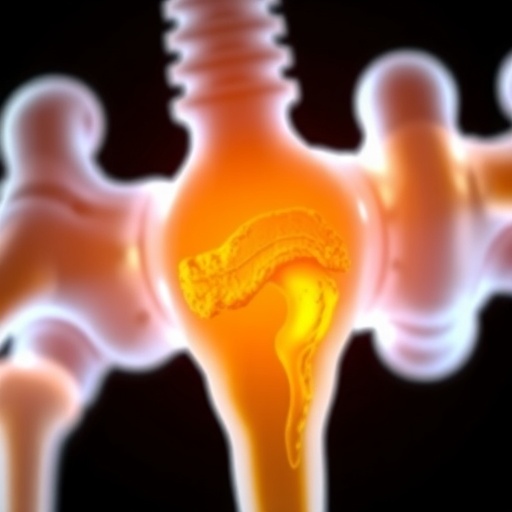
In a groundbreaking advancement that bridges traditional medicine with modern biomedical engineering, researchers at Washington State University have unveiled a novel approach to enhancing the integration and longevity of bone implants. By harnessing the potent natural extracts of turmeric and ginger, the team has developed a specialized coating for titanium implants that not only significantly improves bone bonding but also offers robust antibacterial and anti-cancer properties. This multidisciplinary innovation promises to address some of the most pressing complications associated with orthopedic implants, which affect millions of patients worldwide.
Orthopedic implants, including hip, knee, spinal, and shoulder replacements, have revolutionized the treatment of joint degeneration and bone fractures. However, the long-term success of these implants is often compromised by inadequate osseointegration—the bonding between bone tissue and the implant material—and infections that can lead to implant failure. The current standard materials, typically titanium alloys such as Ti-6Al-4V due to their favorable mechanical properties and biocompatibility, lack intrinsic antibacterial activity and sometimes fail to promote sufficient bone growth at the interface. This gap in functionality poses significant challenges for patient recovery and implant longevity.
The innovative solution presented by the Washington State University team integrates bioactive compounds derived from curcumin, the active component in turmeric, and extracts from ginger into a zinc oxide-hydroxyapatite composite coating applied to the titanium implants. Hydroxyapatite, a calcium phosphate ceramic closely resembling human bone mineral, is widely used to enhance implant biocompatibility and encourage osteoblast activity. The addition of zinc oxide nanoparticles further imparts antibacterial properties, making this composite a highly functional interface. The slow release of curcumin and ginger extract from this coating provides a continuous therapeutic effect right at the implant site.
Early-stage in vitro experiments demonstrated that this composite coating was capable of eradicating over 90% of bacteria colonizing the implant surfaces. This bactericidal effect is crucial, as biofilm-associated infections are a leading cause of implant failure, often necessitating painful revision surgeries. Beyond antibacterial efficacy, the extract induced a dramatic decrease in osteosarcoma cells—malignant cells responsible for one of the most common bone cancers affecting children and young adults. The reduction of cancer cells by nearly an order of magnitude in the vicinity of the implant highlights the dual therapeutic potential of this coating.
To validate these promising laboratory results, the researchers conducted in vivo evaluations using femoral implants in rodent models. The implants coated with the ZnO-hydroxyapatite-curcumin-ginger composite showed roughly twice the bone bonding strength after six weeks compared to uncoated controls. Microscopic analysis revealed enhanced mineralization and tighter integration at the bone-implant interface, suggesting that the bioactive compounds supplied biochemical cues that stimulated osteogenesis. This enhanced osseointegration not only fortifies the mechanical stability of the implant but potentially expands the functional lifespan, thereby improving clinical outcomes.
This study merges age-old herbal pharmacology with cutting-edge materials science, illustrating an exemplary translational research effort. Turmeric and ginger have been used for millennia in traditional medicines across Asia, recognized for their potent anti-inflammatory and antioxidant properties. In this biomedical context, curcumin’s inhibitory effects on inflammatory pathways help mitigate bone loss linked to chronic inflammation, a major hurdle in implant success. Ginger compounds contribute anti-cancer benefits by modulating various cellular pathways involved in tumor growth and proliferation, making the coating particularly suited for oncological orthopedic procedures.
Furthermore, the research capitalizes on advancements in 3D printing technology to customize these coated implants for load-bearing applications, a feat that was once deemed highly challenging. The use of additive manufacturing allows for intricate implant geometries tailored to patient-specific anatomy while maintaining the structural integrity required for mechanical loads. Embedding the bioactive coatings into these geometries creates a fully integrated system that tackles mechanical, biological, and pathological challenges concurrently.
The collaborative effort was led by Susmita Bose, Westinghouse Distinguished Chair Professor, and Amit Bandyopadhyay, Boeing Distinguished Professor, both renowned for their work at the intersection of materials engineering and regenerative medicine. They emphasized how this multi-functional implant addresses three critical problems: enhancing bone bonding, resisting infection, and mitigating residual cancer cells post-surgery. Their work represents the culmination of years of iterative experimentation and refinement, promising a paradigm shift in how orthopedic implants are designed and deployed.
Moreover, this approach could substantially reduce the financial and health burdens associated with implant-related complications. Infections are notoriously difficult to treat once established on implant surfaces, often necessitating implant removal and extended antibiotic therapies. By preemptively incorporating antibacterial and anticancer agents into the implant coating, patient outcomes could be improved, hospital stays shortened, and healthcare costs reduced.
The implications extend beyond orthopedic applications, as similar coatings might be adapted for dental implants or other biomedical devices prone to infection and integration challenges. The interdisciplinary nature of this research—spanning materials science, biomedical engineering, pharmacology, and veterinary medicine—sets a new standard for future implantable devices, emphasizing holistic approaches that leverage natural products alongside engineered materials.
In addition to its therapeutic potential, the study highlights the role of natural compounds as preventive agents in everyday health. Regular dietary intake of turmeric and ginger has long been associated with reduced inflammation and cancer risks. Integrating these benefits directly into medical devices elevates their role from dietary supplements to active participants in targeted medical interventions. The findings underscore the importance of continuing to explore natural bioactives within controlled biomedical contexts to harness their full potential.
As the research advances towards clinical translation, challenges remain, including scaling the manufacturing processes, ensuring long-term stability of the bioactive coating under physiological conditions, and comprehensive safety evaluations. However, the current findings provide a robust proof of concept that combining traditional medicinal compounds with state-of-the-art implant technologies can create multifunctional biomaterials that fundamentally improve patient care.
This pioneering work represents a significant leap forward in orthopedic biomaterials engineering—melding the wisdom of ancient remedies with the precision of modern science to solve persistent challenges in implant medicine. Its impact could extend to millions of patients suffering from degenerative bone diseases, traumatic injuries, or cancer worldwide, offering them safer, longer-lasting, and more effective surgical options.
Cite Scienmag News
Nathaniel Bowman. (April 7, 2026). Turmeric and Ginger Extracts Demonstrate Numerous Benefits for Bone Implant Success. Scienmag. https://scienmag.com/turmeric-and-ginger-extracts-demonstrate-numerous-benefits-for-bone-implant-success/
Nathaniel Bowman. "Turmeric and Ginger Extracts Demonstrate Numerous Benefits for Bone Implant Success." Scienmag, 7 April 2026, https://scienmag.com/turmeric-and-ginger-extracts-demonstrate-numerous-benefits-for-bone-implant-success/. Accessed 3 September 2026.
Nathaniel Bowman. "Turmeric and Ginger Extracts Demonstrate Numerous Benefits for Bone Implant Success." Scienmag. April 7, 2026. https://scienmag.com/turmeric-and-ginger-extracts-demonstrate-numerous-benefits-for-bone-implant-success/


