


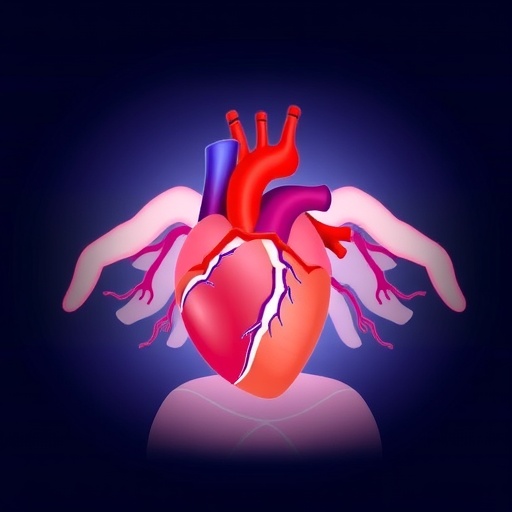
The Mount Sinai Health System has unveiled a groundbreaking initiative in cardiovascular medicine with the launch of the Adams Valve Institute, a global center dedicated to revolutionizing the care and surgical treatment of heart valve disease. This pioneering institute emerges from over two decades of transformative work led by Dr. David H. Adams, a renowned cardiac surgeon and the Marie-Josée and Henry R. Kravis Professor and Chair of the Department of Cardiovascular Surgery at the Icahn School of Medicine at Mount Sinai. The Institute promises to push the boundaries of innovation by uniting a multidisciplinary team of experts committed to advancing diagnostic imaging, reconstructive surgical techniques, clinical education, healthcare policy, and cutting-edge research across the entire spectrum of valvular heart diseases.
Heart valve disease represents a significant yet under-recognized health challenge, affecting between 8 and 11 million individuals in the United States alone and contributing to approximately 30,000 deaths annually. The human heart relies on its valves to maintain directional blood flow, opening and closing with each beat to ensure efficient circulation. When these valves malfunction, the heart’s ability to pump blood effectively is compromised, potentially leading to devastating outcomes such as heart failure and sudden cardiac arrest. Notably, disparities in diagnosis and treatment access exist, with African American, Hispanic, and Asian populations experiencing higher rates of underdiagnosis and undertreatment. Women, too, face a disproportionate burden, often facing delayed diagnosis and poorer clinical outcomes compared to men.
The Adams Valve Institute represents a strategically designed response to these pressing challenges with an emphasis on multidisciplinary collaboration. This collaborative ethos brings together cardiologists, imaging specialists, anesthesiologists, critical care professionals, and basic scientists who collectively share an overarching mission: to elevate the standard of care and innovate new solutions for heart valve disease. By harnessing the synergies of this diverse collective, the Institute strives to propagate best practices in clinical management, surgical interventions, and patient education on a national and global scale.
At the helm of the Institute is Dr. Ismail El-Hamamsy, Director of Aortic Surgery for Mount Sinai Health System. Dr. El-Hamamsy, an acclaimed cardiovascular surgeon and the Mount Sinai Randall B. Griepp, MD Professor in Cardiovascular Surgery, oversees the United States’ largest Ross procedure program. This unique operation, which involves replacing a diseased aortic valve with the patient’s own pulmonary valve, sidesteps the long-term disadvantages associated with artificial valve replacements. Its proven efficacy in restoring normal life expectancy and eliminating the necessity for lifelong blood thinners makes it a critical advancement, particularly for younger patients.
Building upon Mount Sinai’s established reputation, the Institute will develop specialized Centers of Excellence focused on complex and underserved domains within valvular heart disease. Mount Sinai’s Mitral Valve Repair Reference Center already stands as a global leader in mitral valve reconstruction, outcomes research, and patient-centered care protocols. The new Centers of Excellence will extend this principle-driven management approach to other vital areas including aortic valve disease, disorders of connective tissue such as Marfan syndrome, arrhythmic mitral valve prolapse, radiation-induced cardiac pathology, adult congenital heart disease, and complicated reoperative valve surgeries. These centers will harness cutting-edge technology and refined surgical techniques to offer hope and solutions to patients with rare and challenging disorders.
Integral to the Institute’s mission is a transformative research agenda aimed at generating breakthroughs in understanding valve disease pathophysiology, improving imaging modalities, and refining reconstructive methodologies. Dedicated investments into research infrastructure and committed faculty positions will underpin this ambition, fostering a culture of innovation and discovery. The drive toward innovation will not only improve patient outcomes but also propel the field of cardiovascular surgery forward on a mechanistic and translational level.
Addressing systemic barriers to care is another pivotal goal. The Adams Valve Institute is actively collaborating with nonprofit organizations to advocate for policy reform that enhances accessibility and quality of surgical care. Areas of focus include streamlining physician licensing processes, refining payer policies, expanding transparency in clinical outcomes reporting, and promoting recognized centers of excellence. Special attention is being paid to increasing care accessibility for historically underserved populations, including veterans, to eliminate longstanding disparities.
Education forms a cornerstone of the Institute’s global outreach. It plans to serve as an international hub for clinical education through expanded live surgery courses and mission programs. Additionally, it aims to develop the world’s largest digital compendium of valve reconstructive surgery videos. This freely accessible resource will enable surgeons globally to learn and adopt advanced reconstructive techniques, amplifying the impact of Mount Sinai’s expertise beyond geographical boundaries.
Mount Sinai’s leadership in cardiovascular medicine is well established. The Mount Sinai Fuster Heart Hospital ranks second nationally in cardiology, heart, and vascular surgery according to U.S. News & World Report, while also holding top positions within New York City and globally as recognized by Newsweek’s “The World’s Best Specialized Hospitals.” The Health System encompasses seven hospitals and an extensive network of ambulatory practices throughout the New York metropolitan area, supported by a large cadre of nearly 9,000 primary and specialty care physicians. The combined institution excels in translating research into clinical practice, ensuring the delivery of accessible, equitable, and high-value care.
Evan L. Flatow, MD, Dean for Clinical Affairs at the Icahn School of Medicine and Executive Vice President for Clinical Affairs of the Mount Sinai Health System, emphasizes that the establishment of the Adams Valve Institute acknowledges Mount Sinai’s longstanding leadership and commitment to innovation in heart valve surgery. Eric J. Nestler, MD, PhD, the Anne and Joel Ehrenkranz Dean at Icahn School of Medicine, highlights that the Institute’s integration with the Department of Cardiovascular Surgery will sustain cutting-edge, life-altering treatments for patients worldwide.
As heart valve disease continues to pose significant health risks globally, the Adams Valve Institute signals an era of hope and advanced care. By combining clinical excellence, research innovation, policy advocacy, and education, it positions itself as a beacon of progress and a catalyst for transformative change in cardiovascular surgery and patient outcomes worldwide.
Cite Scienmag News
Ophelia Keating. (April 7, 2026). Mount Sinai Establishes Adams Valve Institute to Advance Complex Valve Surgery and Valvular Heart Disease Treatment. Scienmag. https://scienmag.com/mount-sinai-establishes-adams-valve-institute-to-advance-complex-valve-surgery-and-valvular-heart-disease-treatment/
Ophelia Keating. "Mount Sinai Establishes Adams Valve Institute to Advance Complex Valve Surgery and Valvular Heart Disease Treatment." Scienmag, 7 April 2026, https://scienmag.com/mount-sinai-establishes-adams-valve-institute-to-advance-complex-valve-surgery-and-valvular-heart-disease-treatment/. Accessed 4 September 2026.
Ophelia Keating. "Mount Sinai Establishes Adams Valve Institute to Advance Complex Valve Surgery and Valvular Heart Disease Treatment." Scienmag. April 7, 2026. https://scienmag.com/mount-sinai-establishes-adams-valve-institute-to-advance-complex-valve-surgery-and-valvular-heart-disease-treatment/


