


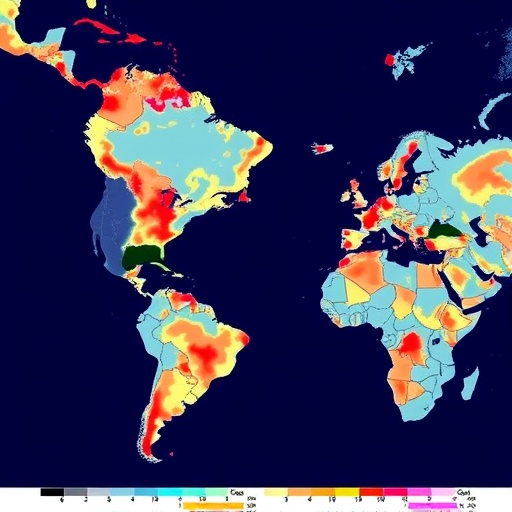
In a groundbreaking study published in Nature Communications in 2026, researchers led by Ogrzewalska, Vanstreels, Pereira, and colleagues have unveiled the complex genomic landscape of high pathogenicity avian influenza (HPAI) viruses isolated from Antarctica. Their findings reveal multiple independent introductions of these deadly viruses from South America into the Antarctic ecosystem, offering unprecedented insight into viral evolution, transmission pathways, and the emerging threat posed by HPAI in one of the world’s most remote and delicate environments.
Avian influenza viruses are notorious for their capacity to mutate and adapt rapidly, often triggering outbreaks with devastating consequences in bird populations and raising alarms over potential zoonotic spillover events. Antarctica, long considered a viral backwater due to its extreme isolation and harsh climate, has increasingly come under scientific scrutiny as surveillance efforts reveal the penetration of infectious agents previously thought unable to survive in such conditions. This study’s comprehensive genomic approach employs high-throughput sequencing combined with phylogenetic analysis to chart the provenance and evolutionary dynamics of HPAI strains detected in Antarctic wild birds.
One of the study’s pivotal revelations is that these HPAI viruses did not emerge within Antarctica itself through local viral evolution but chiefly arrived through multiple transmission events originating in South America. The genomes from Antarctic isolates exhibited close genetic affinity to contemporary South American HPAI viruses, indicating intercontinental viral flow across the Southern Ocean. This finding challenges prior assumptions that the Antarctic virome remains largely isolated due to geographic and climatic barriers and underscores the role of migratory bird species as vectors connecting distant viral reservoirs.
The researchers utilized whole genome sequencing of viral samples collected from various Antarctic avian hosts, including penguins and other seabirds, to reconstruct phylogenetic trees with precise resolution. Their analysis demonstrated a pattern of repeated viral introductions rather than a singular ancestral event, suggesting continuous or episodic migration-related seeding of HPAI viruses into Antarctica. This multifocal introduction pattern raises questions about biosecurity risks posed by wildlife and highlights the necessity of ongoing genomic surveillance in polar regions.
Technically, the study leveraged next-generation sequencing (NGS) platforms combined with advanced bioinformatic pipelines to assemble near-complete influenza virus genomes from environmental and biological specimens. Through Bayesian molecular clock modeling, the team was able to estimate the timing and frequency of viral introductions, which coincided with known migratory bird flyways linking South America and Antarctica. These methodological advances represent a new standard for tracking viral ecology in remote locales, enabling researchers to unpack complex transmission networks not visible through traditional epidemiologic approaches.
From a virological perspective, the Antarctic HPAI viruses displayed hallmark genetic markers of high pathogenicity, including the presence of polybasic cleavage sites in the hemagglutinin protein, which is critical for viral entry and systemic spread within avian hosts. The study also identified mutations associated with increased virulence and expanded host range potential, raising concerns over the potential impact on Antarctic avifauna health and the risk of these viruses adapting to new host species amid changing environmental conditions.
Ecologically, the presence of high pathogenicity avian influenza viruses in Antarctica poses unforeseen challenges. The Antarctic ecosystem represents a fragile balance of species adapted to extreme environments; the introduction of highly virulent pathogens could have cascading effects on biodiversity, population dynamics, and ecosystem services. The study’s authors emphasize the urgent need for integrated One Health approaches combining wildlife biology, virology, and climate science to anticipate and mitigate emerging infectious disease threats in polar environments.
Importantly, the researchers note that human activity may indirectly influence viral dissemination pathways. Increased scientific expeditions, tourism, and logistical operations in Antarctica heighten the potential for anthropogenic disturbance and inadvertent transport of pathogens. The genomic evidence of multiple incursion events highlights pathways that may be exploited by human-mediated vectors as well as natural bird migration, underscoring the necessity for stringent biosecurity protocols and surveillance programs.
Through their comprehensive genomic survey, the study pioneers the concept of Antarctica as an epidemiological crossroads rather than an isolated sanctuary, illustrating how global ecological connectivity enables even the most remote environments to be susceptible to infectious diseases sourced thousands of kilometers away. The discovery challenges prevailing paradigms and calls for a reevaluation of disease risk assessments and conservation strategies tailored to polar biomes.
From the standpoint of global health, the findings carry implications beyond Antarctic research communities. Understanding the mechanisms behind viral spread into new territories informs broader pandemic preparedness initiatives, especially given the demonstrated ability of influenza viruses to cross species and geographic boundaries swiftly. The study’s genomic data contribute valuable information for modeling influenza virus evolution and potential zoonotic emergence in an era of rapid environmental change.
Moreover, the study provides a critical baseline for future research into viral persistence and transmission dynamics under extreme climatic stressors. The Antarctic environment presents unique selective pressures, potentially driving novel viral adaptations that could reshape virulence or host specificity. Continuous monitoring and comparative genomic analyses will be essential to capture these evolutionary trajectories and predict future outbreak patterns within and beyond Antarctic wildlife.
The study also highlights the power of genomics in unraveling complex epidemiological puzzles. By integrating viral genetic data with ecological context and migratory bird movement patterns, the researchers have established a multifaceted framework for investigating infectious diseases in challenging environments. This approach can be extended to other pathogens and ecosystems, further bridging the gap between molecular biology and ecosystem health sciences.
In conclusion, the discovery that high pathogenicity avian influenza viruses have been introduced multiple times from South America into Antarctica marks a paradigm shift in our understanding of polar disease ecology. This research not only illuminates the hidden pathways of pathogen spread across vast oceanic barriers but also calls urgent attention to the potential risks posed by these viruses to Antarctic wildlife and global health security. As the planet faces accelerating environmental changes and increasing interconnectedness, this study serves as a clarion call for enhanced surveillance, biosecurity, and interdisciplinary collaboration to safeguard the fragile balance of polar ecosystems from emerging infectious threats.
Cite Scienmag News
Kristina Jarvis. (April 7, 2026). Antarctic Bird Flu Traces Multiple South American Introductions. Scienmag. https://scienmag.com/antarctic-bird-flu-traces-multiple-south-american-introductions/
Kristina Jarvis. "Antarctic Bird Flu Traces Multiple South American Introductions." Scienmag, 7 April 2026, https://scienmag.com/antarctic-bird-flu-traces-multiple-south-american-introductions/. Accessed 3 September 2026.
Kristina Jarvis. "Antarctic Bird Flu Traces Multiple South American Introductions." Scienmag. April 7, 2026. https://scienmag.com/antarctic-bird-flu-traces-multiple-south-american-introductions/


