


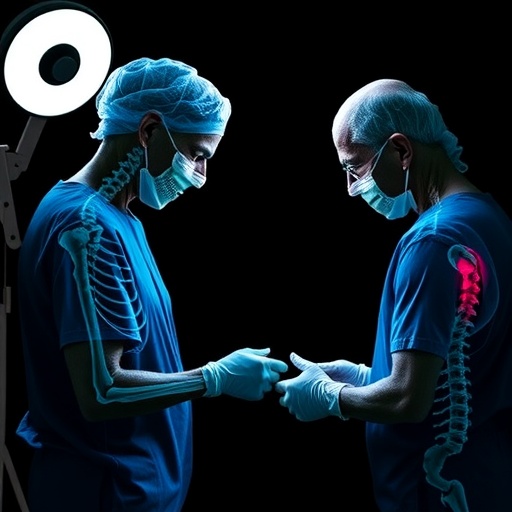
In the landscape of modern surgical oncology, the elderly population presents a unique conundrum for clinicians. While advances in cancer therapies and surgical techniques have extended lives, postoperative outcomes remain highly variable among older adults undergoing intermediate risk cancer surgeries. A groundbreaking study conducted by Choi, Ahn, Oh, and their team, recently published in BMC Geriatrics, delves deeply into the prognostic implications of sarcopenia and frailty in shaping postoperative complications and mortality rates in this vulnerable demographic. Their findings shed light on the critical role these physiological parameters play, potentially reshaping preoperative risk assessments and postoperative care strategies.
Sarcopenia, defined as the age-related loss of skeletal muscle mass and function, is increasingly recognized as a pivotal factor influencing surgical outcomes in older patients. The research elucidates how diminished muscle reserves compromise not only physical resilience but also metabolic and immunologic responses essential for recovery after surgery. This muscle depletion often correlates with prolonged hospital stays, increased risk of infection, and impaired wound healing, which cumulatively elevate morbidity and mortality risks following cancer operations of intermediate surgical risk.
Frailty, a multidimensional syndrome characterized by decreased physiological reserve and increased vulnerability to stressors, emerges as a formidable predictor of surgical risk alongside sarcopenia. The study meticulously integrates frailty assessments—encompassing nutritional status, mobility, and cognitive function—highlighting their synergistic effect in magnifying postoperative complications. Frailty’s impact extends beyond mere physical debilitation, encompassing systemic dysregulation that exacerbates responses to surgical trauma, culminating in poorer outcomes compared to non-frail counterparts.
This research innovatively combines standardized metrics for sarcopenia and frailty to formulate a refined prognostic model. Unlike traditional risk calculators dependent solely on chronological age or comorbidities, this integrative approach captures the biologic aging process more holistically, offering clinicians a powerful tool for nuanced surgical decision-making. By quantifying muscle mass via imaging modalities and assessing frailty through validated clinical scales, practitioners can better stratify patient risk profiles.
Importantly, the study highlights the temporal dynamics of sarcopenia and frailty, documenting how preoperative identification enables targeted interventions. Nutritional supplementation, physical rehabilitation, and pharmacologic therapies directed at muscle preservation and functional enhancement emerge as avenues to modulate risk, potentially reducing postoperative complications. The authors advocate incorporating these measures into prehabilitation programs, transforming preoperative care from reactive assessment to proactive optimization.
The researchers also emphasize the heterogeneity within the elderly cohort undergoing intermediate risk cancer surgeries. Factors such as tumor type, surgical complexity, and baseline functional capacity intertwine with sarcopenia and frailty, influencing outcomes. This nuance calls for personalized treatment paradigms that transcend standardized age-based protocols, aligning with the principles of precision medicine.
Clinically, the implications resonate deeply. Surgeons and multidisciplinary teams must now recognize the profound influence of muscle and functional status as determinants of patient trajectories. Such insights may drive modifications in operative timing, anesthesia planning, and postoperative monitoring, enhancing safety and recovery. Moreover, incorporating these parameters into patient counseling addresses the ethical mandate of informed consent, delivering transparent discussions on risks tailored to individual physiology.
The study’s robust methodology underpins its credibility. Employing prospective cohort designs, comprehensive baseline assessments, and rigorous statistical analyses, the authors ensure that findings are both reliable and applicable to real-world clinical settings. This evidence base lays the foundation for guidelines that standardize sarcopenia and frailty screening in surgical oncology, bridging the gap between research and practice.
In a broader context, the investigation intersects with public health imperatives addressing the aging global population and rising cancer incidence. With life expectancy climbing worldwide, optimizing surgical outcomes in older adults is paramount to sustaining healthcare systems and enhancing quality of life. Insights into sarcopenia and frailty dovetail with geriatric principles, advocating for integrated care models that prioritize functional status alongside disease control.
The potential for technological innovation also surfaces in this dialogue. Advances in imaging software facilitate precise muscle quantification, while wearable devices and digital platforms enable remote frailty monitoring. Such tools could democratize access to risk assessment, especially in resource-limited settings, ensuring equitable care delivery at scale.
From a research perspective, the study opens avenues for future exploration. Understanding molecular mechanisms linking muscle degradation, systemic inflammation, and immune competency could unveil therapeutic targets. Furthermore, longitudinal studies tracking postoperative recovery trajectories according to sarcopenia and frailty profiles could refine rehabilitative approaches and personalized follow-up strategies.
Ethical considerations permeate this discourse as well. Balancing surgical aggressiveness with realistic prognostic expectations requires sensitivity and shared decision-making frameworks. Recognizing sarcopenia and frailty not as mere risk factors but as entities warranting comprehensive management underscores a shift toward holistic elder care in oncological surgery.
In conclusion, the pioneering work by Choi and colleagues fundamentally advances our grasp of how sarcopenia and frailty interplay to influence surgical outcomes in older adults facing intermediate risk cancer operations. Their integrative prognostic model promises to enhance patient stratification, inform personalized care strategies, and ultimately improve postoperative survival and quality of life in this growing patient population. As this knowledge permeates clinical pathways globally, the surgical community stands poised to transform the paradigm of geriatric oncologic care from reactive to proactive, optimizing outcomes through precision and compassion.
Cite Scienmag News
Ophelia Keating. (April 7, 2026). Sarcopenia, Frailty Predict Surgery Risks in Elderly. Scienmag. https://scienmag.com/sarcopenia-frailty-predict-surgery-risks-in-elderly/
Ophelia Keating. "Sarcopenia, Frailty Predict Surgery Risks in Elderly." Scienmag, 7 April 2026, https://scienmag.com/sarcopenia-frailty-predict-surgery-risks-in-elderly/. Accessed 3 September 2026.
Ophelia Keating. "Sarcopenia, Frailty Predict Surgery Risks in Elderly." Scienmag. April 7, 2026. https://scienmag.com/sarcopenia-frailty-predict-surgery-risks-in-elderly/


