


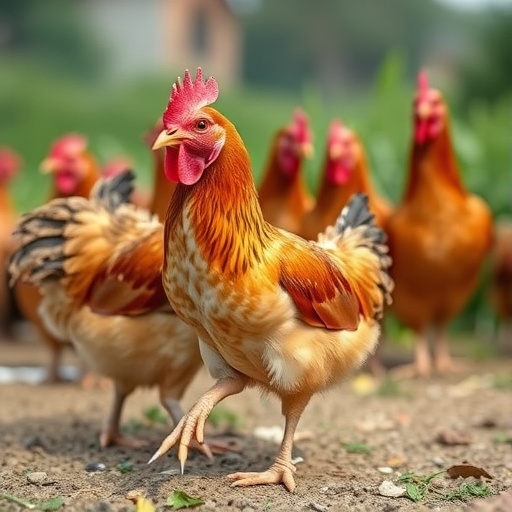
In an era marked by drastic climate changes and escalating global temperatures, heat stress has emerged as a critical challenge for animal agriculture, threatening both productivity and animal welfare. Chickens, as one of the most widely farmed animals worldwide, are particularly vulnerable to elevated temperatures. The ramifications of heat stress span a range of physiological and metabolic disruptions that can drastically reduce growth rates, feed efficiency, and reproductive performance. Addressing this issue at a genetic and molecular level presents a transformative approach to sustaining chicken production under warmer climates. A groundbreaking study recently published by Hosseinzadeh, Rafat, Javanmard, and colleagues delves into the complex genetic architecture underpinning heat stress resistance through whole genome analysis, charting a new course in poultry genomics and environmental adaptation.
The research taps into the power of genomic technologies to identify the genetic determinants linked to heat stress resilience in chickens. By sequencing and comparing the genomes of chicken populations exposed to varied thermal environments, the team isolated regions of the genome that have undergone natural or artificial selection for heat tolerance. These genomic loci encompass genes involved in critical cellular processes such as protein folding, oxidative stress responses, and cellular maintenance under thermal duress — molecular mechanisms essential for survival in high-temperature conditions. This integrative genomic approach offers unprecedented insights into the heritable components that can be targeted for breeding programs aiming to enhance heat resilience.
Heat stress in chickens induces a cascade of cellular-level reactions, beginning predominantly with the disruption of proteostasis—the delicate balance maintaining protein synthesis, folding, and degradation. Heat shock proteins (HSPs), which function as molecular chaperones, are upregulated to mitigate protein denaturation and aggregation. The study’s whole genome scans uncovered selection signatures in genes coding for specific HSP families, reflecting evolutionary pressures favoring alleles that confer enhanced chaperone activity. These genetic adaptations enable chickens to maintain cellular integrity and function during episodes of acute or chronic heat exposure, highlighting an intricate evolutionary link between environmental stress and genetic variation.
Beyond protein homeostasis, the oxidative stress pathway emerges as a pivotal factor in heat tolerance. Elevated temperatures accelerate the generation of reactive oxygen species (ROS), inflicting damage on lipids, DNA, and cellular membranes. The researchers identified selection signals in genes responsible for antioxidant defenses, such as superoxide dismutase and glutathione peroxidase enzymes, which counterbalance ROS accumulation. Modulation of this antioxidative network reflects a sophisticated genetic strategy to combat oxidative damage, preserving cellular vitality and mitigating the detrimental consequences of thermal stress on tissue structure and function.
The study also emphasizes the role of heat-induced inflammatory responses, a known contributor to compromised health during climatic stress. Allelic variants in immune regulatory genes showed signatures of positive selection, suggesting a genetic foundation for enhanced immunoprotection in heat-challenged birds. Balancing immune activation while avoiding chronic inflammation is critical to maintaining homeostasis under stress conditions, and this research sheds light on genotypic variants that enable effective immune modulation in hotter environments. Such findings not only deepen understanding of stress physiology but also hold promise for developing disease-resistant chicken lines better suited to future climates.
At the systemic level, heat stress precipitates disruptions in endocrine regulation, particularly involving hormones that orchestrate growth, metabolism, and reproduction. Through integrative genomic analyses, the research team pinpointed loci implicated in the regulation of heat-induced hormonal pathways, including those modulating corticosterone and thyroid hormone dynamics. These hormones mediate metabolic adjustments necessary for coping with thermal stress. Genomic adaptations in their regulatory networks likely facilitate homeostatic recalibrations, enabling birds to optimize energy expenditure and sustain physiological performance during prolonged exposure to elevated temperatures.
Of profound significance is the discovery of genetic variants influencing the cardiovascular and respiratory systems, which are frontline defense mechanisms against heat accumulation. Enhanced blood flow and effective respiratory cooling are vital physiological responses to dissipate excess body heat. Genes promoting vasodilation, thermal signal transduction, and pulmonary efficiency contained selective sweeps indicative of adaptation. These findings underscore a multifaceted genetic blueprint that orchestrates integrated physiological responses to buffer the detrimental effects of heat stress at the organismal level.
The methodology employed by Hosseinzadeh et al. harnessed sophisticated whole genome sequencing coupled with population genetic models to detect loci under selection pressure. By comparing diverse chicken breeds and wild populations inhabiting variable climatic zones, the researchers reconstructed evolutionary trajectories that highlight genomic hotspots associated with thermal adaptation. The robustness of this approach lies in its ability to detect subtle selection signatures embedded within the complex genomic landscape, illuminating the polygenic nature of heat resilience traits. This high-resolution genomic cartography opens new avenues for precision breeding strategies tailored to future environmental challenges.
Crucially, the study bridges the gap between genotype and phenotype by correlating identified genomic regions with physiological data characterizing heat tolerance. Phenotypic traits like body temperature regulation, feed conversion efficiency under heat stress, and survival rates were mapped alongside genomic variants. This integrative analytics framework enabled the authors to validate candidate genes and prioritize targets with functional relevance, moving beyond association to causation inference. Such comprehensive characterization bolsters the translational potential of genomic findings into actionable breeding protocols.
The implications of this research extend beyond academic inquiry—they herald a paradigm shift in poultry breeding under the looming specter of global warming. Traditional selection based predominantly on productivity metrics is swiftly becoming untenable as climate volatility imposes new constraints. Incorporating genomic insights into breeding pipelines empowers the poultry industry to proactively select for heat-resistant stock, safeguarding production yields while enhancing animal welfare. This proactive genomic stewardship is indispensable as heat stress episodes increase in intensity and frequency worldwide.
Moreover, the identification of genetic markers linked to heat tolerance provides tools for genomic selection, enabling rapid screening and deployment of superior genetic variants in breeding populations. Marker-assisted selection accelerates the propagation of beneficial alleles, dramatically shortening the timeframe required to establish heat-resilient chicken lines. This efficiency gains critical importance in the context of urgent climate adaptation needs, combining cutting-edge genomics with traditional breeding wisdom to forge resilient agricultural systems.
Socioeconomically, the capacity to breed heat-resistant chickens holds transformative potential for smallholder farmers and commercial enterprises alike, particularly in tropical and subtropical regions where heat stress undermines food security and livelihoods. By enhancing the robustness of poultry stocks, communities gain more reliable sources of animal protein and economic stability. The environmental sustainability of production systems also benefits as heat-resilient birds require fewer inputs to maintain productivity, reducing resource wastage and greenhouse gas emissions associated with stress-related inefficiencies.
From a scientific standpoint, this study reinforces the growing appreciation of the polygenic and multifactorial nature of adaptation to complex environmental stressors. The multifaceted genomic adaptations identified reflect coordinated evolutionary responses involving cellular stress management, immune regulation, and systemic physiology. This comprehensive framework can serve as a blueprint for similar investigations into thermal adaptation in other agriculturally important species or wild populations confronting climate extremes.
Importantly, the interdisciplinary collaboration involving genomics, physiology, bioinformatics, and evolutionary biology exemplifies a holistic approach to tackling climate-associated challenges in animal agriculture. Such integrative research endeavors are paramount for generating actionable knowledge that bridges fundamental science and practical application. The study by Hosseinzadeh and colleagues stands at this intersection, offering a model for future endeavors aimed at building climate resilience through precision animal breeding.
Looking forward, the data generated lays a foundation for functional genomics experiments to dissect gene-environment interactions governing heat tolerance. Gene editing technologies could potentially be harnessed to validate and fine-tune candidate gene functions, vastly expanding the genetic toolkit available for breeding programs. Furthermore, integrating genomic insights with emerging phenotyping technologies such as thermal imaging and behavioral monitoring may optimize selection schemes and management practices to further enhance resilience.
In conclusion, the meticulous whole genome analysis conducted by Hosseinzadeh, Rafat, Javanmard, et al. represents a landmark advancement in understanding the genetic foundations of heat stress resistance in chickens. Their findings illuminate a complex genomic landscape characterized by selection signatures across multiple pathways that collectively underpin adaptation to thermal stress. Beyond its scientific novelty, this research offers pragmatic solutions poised to revolutionize poultry breeding, ensuring sustainable productivity in the face of an increasingly warming world.
The urgency of climate action extends deeply into the realm of food production systems, where genetic innovations such as those presented here will be essential for building resilience and securing global nutrition. As the poultry sector grapples with mounting environmental pressures, the genomic insights uncovered by this study provide a beacon of hope and strategic direction to forge a future where animal agriculture thrives alongside a changing climate.
Cite Scienmag News
Juliet Wilcox. (April 7, 2026). Genome Analysis Reveals Chicken Heat Stress Resistance. Scienmag. https://scienmag.com/genome-analysis-reveals-chicken-heat-stress-resistance/
Juliet Wilcox. "Genome Analysis Reveals Chicken Heat Stress Resistance." Scienmag, 7 April 2026, https://scienmag.com/genome-analysis-reveals-chicken-heat-stress-resistance/. Accessed 5 September 2026.
Juliet Wilcox. "Genome Analysis Reveals Chicken Heat Stress Resistance." Scienmag. April 7, 2026. https://scienmag.com/genome-analysis-reveals-chicken-heat-stress-resistance/


