


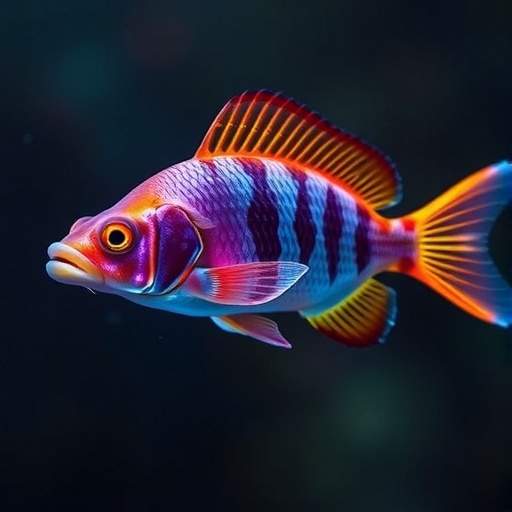
The bioluminescent fish Parapriacanthus ransonneti, colloquially known as the golden sweepers, inhabits the Pacific coast and captivates observers with its luminous displays. This species, typically measuring around 7 centimeters in length, forms expansive schools that light up underwater scenes, yet the genetic underpinning of this bioluminescence has long eluded scientific confirmation. Recent groundbreaking research utilizing state-of-the-art whole-genome sequencing technologies now reveals a remarkable biological phenomenon: this fish entirely lacks the luciferase gene, the critical enzyme responsible for light emission in most bioluminescent organisms. This discovery definitively establishes Parapriacanthus ransonneti as a kleptoprotein bioluminescent organism, adopting an unusual evolutionary strategy previously hypothesized but never conclusively demonstrated at the genomic level.
Bioluminescence, a complex biological process, traditionally involves organisms producing light through the enzymatic reaction catalyzed by luciferase proteins. These enzymes oxidize a substrate known as luciferin, leading to photon emission. The standard molecular biology dogma posits that an organism’s genome encodes all necessary biochemical pathways and enzymatic machinery required for such physiological traits. However, Parapriacanthus ransonneti subverts this principle by outsourcing bioluminescence to proteins acquired externally rather than synthesizing luciferase endogenously. This phenomenon aligns with the broader biological concept of kleptobiology, wherein organisms appropriate functional biomolecules from other species to fulfill their physiological needs.
Initial studies on Parapriacanthus ransonneti hinted at a symbiotic occurrence wherein the fish consumes bioluminescent ostracods—commonly known as sea fireflies—and repurposes their luciferase proteins to produce light. Nonetheless, the possibility of horizontal gene transfer— the integration of foreign genetic material into the fish’s genome—remained unexcluded due to the absence of complete genomic data. This is a vital distinction, as horizontal gene transfer could provide a permanent genetic capacity for luciferase production, fundamentally altering the understanding of the fish’s bioluminescent capabilities and evolutionary adaptations.
To address these gaps, researchers employed cutting-edge sequencing platforms to assemble one of the highest-quality draft genomes for a marine fish to date. This extensive genomic resource allowed for comprehensive scrutiny to detect any vestiges of luciferase gene sequences, including those typically found in bioluminescent ostracods. Through meticulous bioinformatics analyses, encompassing comparative genomics, gene annotation, and search for horizontally transferred elements, scientists reported a complete absence of luciferase-encoding genes within the Parapriacanthus ransonneti genome. Moreover, no genomic evidence supported the presence of any foreign genes acquired through horizontal transfer. These findings provide unambiguous proof that the fish’s genome does not encode the biochemical machinery required for bioluminescence.
The absence of luciferase genes in Parapriacanthus ransonneti solidifies its status as a prototypical example of kleptoproteinism, a rare and fascinating biological strategy wherein an organism maintains functional proteins obtained from its diet. This method enables the fish to emit bioluminescent light without the metabolic and genetic investment otherwise required for enzyme synthesis. The evolutionary implications are profound, revealing how complex traits like bioluminescence can be sustained through ecological interactions rather than conventional genetic inheritance.
Associate Professor Manabu Bessho-Uehara from the Frontier Research Institute for Interdisciplinary Sciences at Tohoku University, lead author of the study, emphasizes the significance of these results. According to Bessho-Uehara, Parapriacanthus ransonneti lacks the genetic “blueprint” for bioluminescence and instead strategically utilizes proteins derived directly from its prey. This insight challenges prevailing assumptions in molecular biology and evolutionary science regarding the exclusive reliance on endogenous gene expression for complex phenotypic traits.
Beyond these fundamental scientific revelations, the study uncovers previously unexplored dimensions of protein biology, particularly regarding the digestion, preservation, and functional retention of ingested proteins like luciferase. Normally, dietary proteins are broken down into amino acids during digestion, yet Parapriacanthus ransonneti preserves these luciferase enzymes intact and operational within its own cells. Understanding the molecular mechanisms enabling this extraordinary protein protection could revolutionize biomedical sciences, potentially inspiring novel drug delivery systems that maintain protein therapeutics active during gastrointestinal transit.
Moreover, this research opens intriguing new questions about the interaction between marine organisms and the ecological coevolution of predator-prey relationships. Parapriacanthus ransonneti’s reliance on bioluminescent ostracods invites further inquiry into how dietary sources influence physiological and behavioral adaptations. Does the fish selectively target specific ostracod species based on the efficiency of protein kleptoproteinism, and could this contribute to ecological niches defined by biochemical resource acquisition?
This pioneering genomic investigation into kleptoproteinism establishes a new frontier in evolutionary biology and molecular ecology. The clear genetic evidence confirms that phenotypic capabilities can arise from protein borrowing rather than genomic inheritance, suggesting that other marine or terrestrial organisms may employ similar strategies yet undiscovered. The implications for understanding evolutionary innovation, genetic plasticity, and ecological adaptation are vast, with frontiers in comparative genomics, molecular physiology, and environmental biology poised for transformative growth.
Published on April 1, 2026, in the reputable journal Scientific Reports, this study substantiates Parapriacanthus ransonneti as a compelling model for non-genetic biological innovation. As more research centers on kleptoproteinism and related strategies, the capacity for horizontal functional biomolecule acquisition may reshape fundamental concepts of heredity, adaptation, and survival in the natural world. The confluence of genomics, molecular biology, and ecology represented in this work exemplifies the integrative approach required to unravel complex biological systems.
Future directions raised by the study involve mechanistic characterization at the cellular and molecular levels elucidating how kleptoproteins like luciferase circumvent proteolytic degradation, maintain conformational integrity, and integrate into host biochemical pathways. These insights could also impact synthetic biology, guiding engineered systems that harness externally sourced proteins for novel functions without genetic modification. In summary, the evolutionary enigma of Parapriacanthus ransonneti’s bioluminescence challenges and expands the boundaries of classical biology, illuminating new paths for interdisciplinary scientific inquiry.
Cite Scienmag News
Juliet Wilcox. (April 6, 2026). Fish “Borrows” Glowing Protein: Genome Sequencing Uncovers Unique Survival Mechanism. Scienmag. https://scienmag.com/fish-borrows-glowing-protein-genome-sequencing-uncovers-unique-survival-mechanism/
Juliet Wilcox. "Fish “Borrows” Glowing Protein: Genome Sequencing Uncovers Unique Survival Mechanism." Scienmag, 6 April 2026, https://scienmag.com/fish-borrows-glowing-protein-genome-sequencing-uncovers-unique-survival-mechanism/. Accessed 4 September 2026.
Juliet Wilcox. "Fish “Borrows” Glowing Protein: Genome Sequencing Uncovers Unique Survival Mechanism." Scienmag. April 6, 2026. https://scienmag.com/fish-borrows-glowing-protein-genome-sequencing-uncovers-unique-survival-mechanism/


