


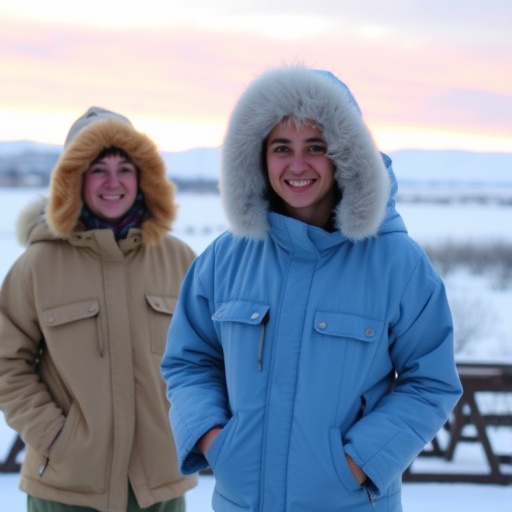
In the remote northern reaches of Quebec lies Nunavik, a vast expanse of Inuit territory where a stark health crisis persists: tuberculosis (TB) rates among Inuit residents are estimated to be 1000 times greater than those observed in non-foreign-born Quebeckers. This alarming disparity underscores entrenched systemic issues, notably the chronic underresourcing of local health care services, which compounds the burdens faced by Inuit communities grappling with this age-old yet persistent infectious disease. Recent research published in the Canadian Medical Association Journal delves deeply into this public health emergency, shedding light on the lived experiences of the Inuit and underscoring the urgent need for tailored, culturally informed responses.
This groundbreaking study adopts a community-based participatory approach, foregrounding Inuit voices and insights. Led by a predominantly Indigenous research team and conducted in partnership with Nunavik Inuit, the investigation involved in-depth qualitative interviews with 156 Nunavimmiut, or Inuit people from Nunavik. The demographic profile of participants was notably diverse, with 61% female and 37% under the age of 35, providing a representative cross-section of the community. Additionally, 21 non-Inuit health care workers were interviewed to gain a holistic understanding of the systemic challenges. Importantly, a substantial proportion of the interviews were conducted in Inuktitut, ensuring authenticity and linguistic accessibility.
Tuberculosis, caused by the bacterium Mycobacterium tuberculosis, continues to be a formidable public health challenge, particularly in Indigenous populations globally. Its transmission thrives in settings marked by overcrowding, limited healthcare infrastructure, and socio-economic disadvantage—all realities echoed in Nunavik. The Inuit participants expressed profound concern over the epidemic, articulating a collective aspiration for healthier communities ensured through Inuit-led control of the strategies deployed against tuberculosis. Their narratives illuminated the intertwined social, cultural, and systemic factors that exacerbate the epidemic, providing critical context often absent in predominantly Western-centric healthcare models.
The research elucidates a comprehensive array of hardships faced by Inuit afflicted with or at risk of TB. The prevailing healthcare framework remains program-centered rather than person-centered, mandating patients to leave their remote communities for diagnostic procedures, thereby disrupting familial and social networks. This displacement exacerbates emotional and practical burdens, especially given the protracted treatment regimens usually spanning six months or longer, often requiring isolation. Compounding these challenges, there is a scarcity of language-specific healthcare provisioning, creating communication barriers that hinder effective treatment adherence and trust in medical providers. Moreover, risks of involuntary police or judicial intervention during treatment further alienate patients.
The study’s authors call attention to the concept of self-determination as a vital cornerstone of effective TB eradication efforts. Inuit communities advocate for sovereign control over healthcare services and data, positing that only through autonomy can interventions truly resonate with local realities and cultural contexts. This paradigm shift from external, top-down healthcare directives to community-driven strategies aims to foster trust, reduce stigma, and enhance engagement with treatment protocols. It underscores the necessity for nuanced, culturally safe healthcare models adapted to the unique sociopolitical landscapes of Indigenous peoples.
Key findings emphasize the imperative of decentralizing tuberculosis services to minimize geographical and social displacement. Increased localization of diagnostic and treatment facilities within Inuit territories can significantly reduce barriers to care. Concurrently, widespread community screening initiatives tailored to community-specific epidemiological patterns are vital to early detection and interruption of transmission chains. Importantly, enhancing the Inuit health workforce through targeted training and hiring initiatives is crucial, not merely as a workforce expansion strategy but as a mechanism to embed cultural competency and trust within healthcare delivery.
Addressing stigma emerges as another pivotal theme. TB-related stigmatization perpetuates silence and reluctance to seek care, undermining public health efforts. The research underscores the necessity for Inuit-led cultural safety training programs for all healthcare workers operating in Nunavik, fostering an environment where patients feel respected and understood. Such training addresses both historical traumas and contemporary bias, fostering reconciliation and healing while improving clinical outcomes. This approach echoes broader movements within Indigenous health contexts globally, advocating for culturally resonant care models.
The study’s findings have already prompted actionable responses from Nunavik health authorities, who are recalibrating policies to better align with Inuit preferences and autonomy. However, the researchers emphasize that these localized initiatives require complementary systemic change, notably increased funding and resource allocation from provincial and federal governments. Without addressing the chronic underfunding that underpins the current crisis, sustainable progress remains elusive. The authors’ collective call to action demands urgent governmental response calibrated to the urgency and specificity of Inuit health realities.
Notably, a related commentary in the Canadian Medical Association Journal, authored by Dr. Pamela Orr of the University of Manitoba, highlights the ethical and reconciliatory dimensions of this research. Dr. Orr underscores the imperative for non-Indigenous researchers engaged with Indigenous communities to embrace reconciliation, which extends beyond acknowledgement of historical injustices to proactive partnership and policy advocacy. This study exemplifies such praxis by fostering mutuality, honoring Indigenous expertise, and aiming to translate findings into meaningful policy change. The work represents a model for Indigenous-centered health research with potent implications for addressing entrenched health inequities.
The study’s methodological rigor and community integration render its findings both credible and impactful. By prioritizing language accessibility and community participation, it moves beyond tokenistic engagement, instead cultivating genuine collaboration that honors Inuit knowledge and agency. This paradigm challenges conventional biomedical research models, urging the scientific community to reevaluate epistemological hierarchies and embrace pluralistic approaches to health knowledge creation. The integration of Indigenous methodologies is not merely an ethical imperative but a pragmatic one, critical for effective disease eradication.
Tuberculosis in Inuit Nunavik is emblematic of broader issues within Indigenous health, crystallizing the intersections of colonial legacy, systemic neglect, and cultural survival. The epidemic serves as a stark reminder that biomedical challenges cannot be disentangled from social determinants and political contexts. Sustainable public health improvements must engage Indigenous sovereignty, cultural safety, and localized capacity building as central pillars. This comprehensive, nuanced approach is foundational to ending the TB epidemic and advancing health equity for Inuit populations.
The research further invites reflection on how similar approaches might be implemented in other Indigenous and marginalized communities facing communicable diseases. It offers a compelling argument for the global health community to reorient towards decolonizing methodologies and community sovereignty. Such shifts are essential for dismantling persistent health disparities and fostering resilient, healthy communities. The study’s findings and recommendations thus resonate far beyond Nunavik, contributing to a growing canon of Indigenous-led health scholarship influencing global policy discourse.
In sum, the tuberculosis epidemic in Nunavik, Quebec, is not merely a biomedical crisis but a profound human rights and social justice challenge. The study underscores that ending this public health emergency demands urgent, systemic action grounded in Inuit leadership, cultural respect, and adequate resourcing. It offers a roadmap that prioritizes community autonomy, person-centered care, localized services, stigma reduction, and Indigenous health workforce empowerment. Addressing these dimensions holistically is critical to transforming the trajectory of tuberculosis in Nunavik and affirming the health and dignity of Inuit peoples.
Cite Scienmag News
Courtney Benton. (April 6, 2026). Inuit-Led Strategies Proposed to Combat High Tuberculosis Rates in Nunavik, Quebec. Scienmag. https://scienmag.com/inuit-led-strategies-proposed-to-combat-high-tuberculosis-rates-in-nunavik-quebec/
Courtney Benton. "Inuit-Led Strategies Proposed to Combat High Tuberculosis Rates in Nunavik, Quebec." Scienmag, 6 April 2026, https://scienmag.com/inuit-led-strategies-proposed-to-combat-high-tuberculosis-rates-in-nunavik-quebec/. Accessed 4 September 2026.
Courtney Benton. "Inuit-Led Strategies Proposed to Combat High Tuberculosis Rates in Nunavik, Quebec." Scienmag. April 6, 2026. https://scienmag.com/inuit-led-strategies-proposed-to-combat-high-tuberculosis-rates-in-nunavik-quebec/


