


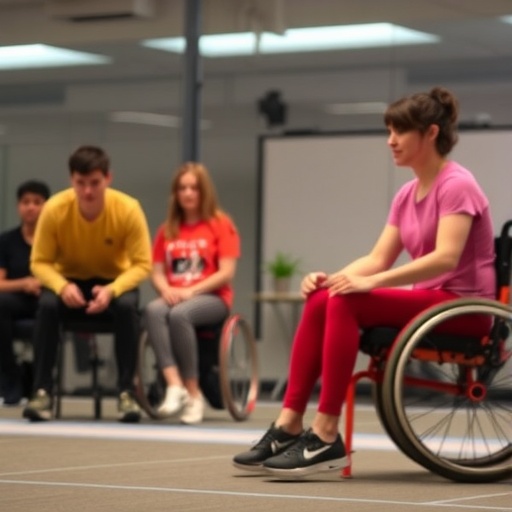
In a groundbreaking study set to reshape the narrative around physical disability and exercise, researchers S. Getu, M. Wondimu, and A. Alemu have opened new avenues of understanding into the self-efficacy of physically disabled students in Lemo district primary schools. Their work, soon to be published in Scientific Reports in 2026, confronts longstanding challenges faced by disabled youth in embracing physical activity, an area frequently overlooked in public health and educational policy dialogues.
At the heart of this pioneering research lies the concept of “exercise self-efficacy” – a person’s belief in their capacity to engage in physical exercise successfully. This psychological framework has profound implications, as it shapes motivation, persistence, and ultimately, health outcomes. For physically disabled children, whose opportunities and confidence in physical activities can be severely restricted, understanding and enhancing self-efficacy is crucial for improving quality of life and fostering independence.
The study meticulously surveyed a cohort of physically disabled primary school students within the Lemo district, a region typified by limited infrastructural support for disabled individuals. Utilizing validated scales to measure self-efficacy, the researchers examined not only the direct correlations among physical ability, environmental factors, and self-belief but also indirect effects stemming from social support systems, including family, teachers, and peers.
One of the most remarkable findings from the research reveals that the presence of tailored school programs and inclusive physical education curricula significantly bolsters students’ confidence in their exercise capabilities. These programs, designed with adaptive strategies, provide a critical buffer against feelings of alienation and helplessness that often accompany disabilities in traditional school settings. Children participating in these specialized programs reported markedly higher levels of enjoyment and voluntary participation in physical exercise.
The study also shed light on the socio-psychological dynamics impacting disabled students’ exercise behaviors. Notably, the researchers uncovered that peer encouragement and teacher attitudes played pivotal roles in enhancing exercise self-efficacy. Supportive interactions in the school environment can embolden disabled students to set realistic physical goals and engage more enthusiastically.
The lag in resources and infrastructure in many parts of the world often results in disabled children facing structural barriers to physical activity. This research underscores how even modest interventions, such as wheelchair-accessible playgrounds or specialized sports equipment, can dramatically elevate self-efficacy by enabling participation and reducing physical and emotional obstacles.
Moreover, the psychological mechanisms involved extend beyond self-confidence and encompass resilience and adaptability. The authors interpreted exercise self-efficacy not merely as a cognitive construct but as a dynamic interplay between mental resolve and physical capability, reinforced continually through positive experiences and social validation during exercise.
Importantly, the implications of this study reach far beyond the immediate physical health of the students. By fostering exercise self-efficacy, schools can also improve overall mental health outcomes, reduce incidences of depression and anxiety, and enhance social integration, thereby addressing the holistic well-being of disabled children.
The research further proposes that policymakers and educational authorities should prioritize capacity-building measures specifically aimed at empowerment rather than mere accommodation. This paradigm shift could recalibrate how support services and adaptive physical education are conceptualized and delivered, promoting agency and self-determination among disabled youth.
Another compelling revelation from the study is the variability in exercise self-efficacy across different types of disabilities and the tailored approaches necessary to meet diverse needs. For instance, children with mobility impairments require different motivational strategies and adaptive tools compared to those with sensory or cognitive disabilities, highlighting the need for nuanced program development.
In exploring technological advances, the study discusses emerging innovations such as virtual reality and wearable assistive devices that have the potential to enhance engagement and performance in physical exercise among disabled children. These technologies, coupled with psychological interventions, could revolutionize how exercise self-efficacy is cultivated in the future.
The study also advocates for the integration of self-efficacy building into broader therapeutic and rehabilitative programs. When combined with medical and psychological treatments, exercise self-efficacy enhancement could act as a catalyst for comprehensive recovery and long-term health maintenance, especially in low-resource settings like Lemo district.
Critically, the paper calls for more longitudinal research to track the sustained impacts of these adaptations on the lives of disabled children as they transition into adolescence and adulthood. Understanding the enduring nature of exercise self-efficacy and its ripple effects on lifelong health behaviors stands to inform practices at multiple societal levels.
The researchers’ dedication to ethical considerations in conducting sensitive research within vulnerable populations is also notable. They ensured participatory approaches and culturally appropriate methodologies, respecting the dignity and autonomy of the young participants, which is fundamental in producing valid and meaningful data.
Ultimately, this seminal contribution from Getu, Wondimu, and Alemu lays a robust foundation for future interdisciplinary efforts that link psychology, education, rehabilitation, and public health. Its viral potential lies in the universal relevance of empowerment and inclusion for disabled youth, inspiring educators, clinicians, and policymakers worldwide to act decisively.
As the global community intensifies its commitment to the United Nations Sustainable Development Goals, particularly those addressing health, education, and reduced inequalities, this research offers concrete evidence on the power of self-efficacy as a transformative tool. It challenges us to rethink existing paradigms and to realize a future where every child, regardless of physical ability, can thrive in physical activity and beyond.
Cite Scienmag News
Denise Maddox. (April 4, 2026). Exercise Self-Efficacy in Disabled Students: Lemo Study. Scienmag. https://scienmag.com/exercise-self-efficacy-in-disabled-students-lemo-study/
Denise Maddox. "Exercise Self-Efficacy in Disabled Students: Lemo Study." Scienmag, 4 April 2026, https://scienmag.com/exercise-self-efficacy-in-disabled-students-lemo-study/. Accessed 5 September 2026.
Denise Maddox. "Exercise Self-Efficacy in Disabled Students: Lemo Study." Scienmag. April 4, 2026. https://scienmag.com/exercise-self-efficacy-in-disabled-students-lemo-study/


