


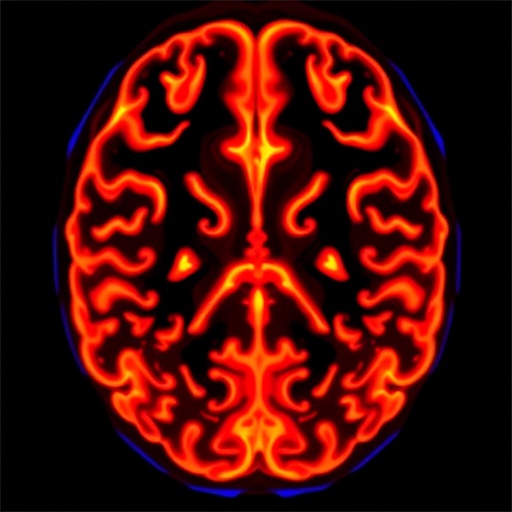
A groundbreaking advancement in the fight against glioblastoma, one of the most aggressive and deadly brain tumors, has emerged from the Biomedical Data Science Laboratory (BDSLab) at the Universitat Politècnica de València’s ITACA Institute. Leveraging the power of magnetic resonance imaging (MRI), the research team has introduced an innovative and objective technique to quantify tumor growth with unprecedented precision, offering new hope for personalized treatment approaches in neuro-oncology.
Glioblastoma’s hallmark — its aggressive infiltration into healthy brain tissue — has long posed a massive clinical challenge. Traditional imaging assessments focus primarily on gross volumetric increases or structural displacements caused by the tumor. However, these conventional methods fall short in capturing the complex biomechanical interactions between the growing tumor and the surrounding brain, leaving critical nuances about tumor behavior and aggressiveness obscured. The BDSLab team’s recent study, published in the renowned journal Medical Physics, addresses this critical gap head-on by introducing a novel biomarker termed the Dynamic Infiltration Rate, or DIR.
DIR represents a paradigm shift in how we measure and understand glioma progression. Unlike standard size-based metrics that merely measure tumor volume or positional changes, DIR synthesizes volumetric growth dynamics with the biomechanical impact exerted on contiguous brain tissue. This fusion of spatial-temporal growth patterns and mechanical tissue deformation establishes an intricate mapping of tumor behavior, differentiating proliferative tumors that compress brain structures from infiltrative tumors that expand stealthily without causing notable compression.
The method’s technical ingenuity lies in the comprehensive analysis of longitudinal MRI data. By comparing sequential scans, the research team generates sophisticated tissue compression maps, revealing how the tumor exerts physical pressure and infiltrates into healthy regions. These biomechanical maps are not simple visualizations but quantifiable signatures that provide a deeper understanding of the tumor’s biomechanical footprint within the neural landscape, enabling precise characterization that transcends volumetric assessments.
DIR’s ability to capture this duality of tumor growth and biomechanical influence equips clinicians and researchers with an innovative tool capable of prognostic stratification. The study demonstrated this by applying the method to both synthetic datasets and two independent international clinical cohorts of glioblastoma patients. Remarkably, patients with lower DIR scores exhibited an average survival time of approximately 35 weeks, whereas those with higher DIR values endured a significantly shorter survival span of around 16 weeks, underscoring the biomarker’s predictive robustness.
Such a stark prognostic distinction elevates DIR from a mere academic construct to a clinically actionable metric. Its reproducibility and non-invasive nature—hinged solely on MRI imaging datasets routinely employed in clinical practice—lay the foundation for integrating biomechanics and data science into routine neuro-oncological workflows. The potential implications for personalized medicine are profound; therapeutic interventions and patient monitoring protocols could be meticulously tailored to each tumor’s unique infiltration and mass effect profile, revolutionizing patient care.
Carles López Mateu, the study’s lead author, emphasizes that their approach ventures beyond traditional size-based metrics to capture the biological essence of tumor aggressiveness through biomechanical behavior. This insight paves the path toward a mechanobiology-informed understanding of brain tumor progression, which may also stimulate novel therapeutic targets aimed at mitigating mechanical stress-induced pathways within tumoral and peritumoral tissues.
Furthermore, the study’s cross-institutional collaboration with Oslo University Hospital signifies an essential step toward validating the methodology in diverse healthcare settings, bolstering the biomarker’s generalizability. Such international cooperation underscores the universal challenge glioblastoma poses and embodies a shared vision for advancing precision oncology globally.
From a technical standpoint, the DIR calculation involves sophisticated image registration techniques and biomechanical modeling to quantify tissue deformation. It integrates the tumor’s volumetric changes with spatial patterns of tissue compression, thus providing a composite index that encapsulates the infiltration dynamics and mechanical mass effects. This integrative model represents a significant innovation in neuroimaging analytics.
The significance of DIR is further elevated by its ability to stratify patients not only by survival outcomes but also by underlying tumor biology, enabling an unprecedented level of individualized prognosis. As such, patients and clinicians may benefit from risk-adjusted clinical pathways, stratified follow-up imaging intervals, and optimized therapeutic regimens informed by biomechanical tumor profiling.
Looking forward, the adoption of DIR and similar biomechanical biomarkers could catalyze a new era in oncological imaging centered on functional and mechanical insights, supplementing molecular and genetic information. Such multi-modal approaches hold the key to fully deciphering the heterogeneity and multifaceted nature of glioblastoma.
Importantly, the researchers highlight that their methodology’s reliance on standard MRI data ensures scalability and accessibility, facilitating its integration into existing clinical infrastructures without necessitating specialized imaging protocols. This ease of implementation is fundamental for widespread clinical adoption, accelerating the translation of this research breakthrough from bench to bedside.
In summary, the BDSLab team’s innovative DIR biomarker represents a powerful leap forward in glioma research and clinical practice. By marrying biomechanical insight with advanced imaging analytics, it bridges a long-standing gap in the assessment of tumor infiltration and growth, yielding critical prognostic information and laying a robust foundation for personalized therapeutic strategies that could ultimately improve patient outcomes in this devastating disease.
Keywords
Glioblastoma, Magnetic Resonance Imaging, Biomechanical Mapping, Tumor Infiltration, Dynamic Infiltration Rate, Neuro-oncology, Precision Medicine, Brain Tumor Growth, Prognostic Biomarker, Tissue Compression Mapping, Biomedical Engineering, Data Science
Cite Scienmag News
Nathaniel Bowman. (April 2, 2026). Novel Biomarker Enhances Assessment of Glioblastoma Aggressiveness. Scienmag. https://scienmag.com/novel-biomarker-enhances-assessment-of-glioblastoma-aggressiveness/
Nathaniel Bowman. "Novel Biomarker Enhances Assessment of Glioblastoma Aggressiveness." Scienmag, 2 April 2026, https://scienmag.com/novel-biomarker-enhances-assessment-of-glioblastoma-aggressiveness/. Accessed 3 September 2026.
Nathaniel Bowman. "Novel Biomarker Enhances Assessment of Glioblastoma Aggressiveness." Scienmag. April 2, 2026. https://scienmag.com/novel-biomarker-enhances-assessment-of-glioblastoma-aggressiveness/


