


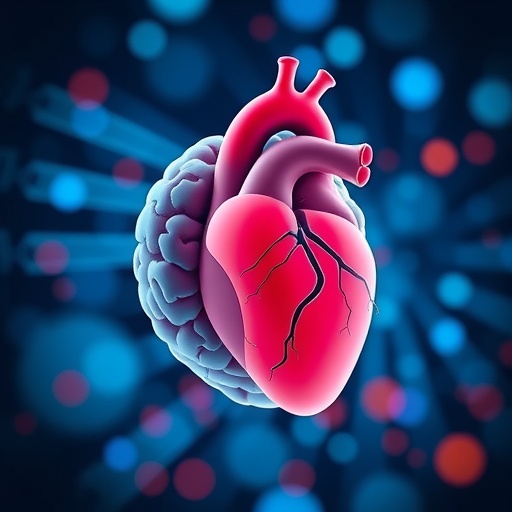
The intricate and dynamic dialogue between the brain and the heart has long fascinated scientists and clinicians alike, representing one of the most complex and vital bidirectional communication networks within the human body. Recent advances in neuroscience and cardiology have ushered in a new era of understanding, revealing that this brain–heart axis is not merely a simple relay of signals but a sophisticated interplay that shapes cognition, behavior, and systemic health. This evolving field illuminates how subtle disruptions can give rise to profound clinical syndromes, bridging the gap between neurological and cardiovascular diseases in ways previously unappreciated.
At the core of this interaction lies a finely tuned exchange mediated by neural circuits and humoral factors, which together adapt the body’s internal milieu in response to environmental demands. The central nervous system influences cardiac function through autonomic pathways, finely balancing sympathetic and parasympathetic outflows to regulate heart rate, rhythm, and contractility. Conversely, the heart communicates its status back to the brain via mechanosensitive and chemosensitive afferents, ensuring that cerebral centers are continuously informed of cardiovascular conditions. This mutual monitoring is essential for maintaining homeostasis and sustaining both organs’ optimal performance under varying physiological and pathological conditions.
Emerging research has underscored the pivotal role of this interaction in cognitive processes and emotional regulation. Heart rate variability (HRV), a measure of autonomic nervous system balance, has been linked to attentional control, emotional resilience, and executive function. The bidirectional brain–heart conversation shapes how we perceive stress, make decisions, and even regulate mood. Disruptions to these feedback loops can cascade into cognitive deficits or exacerbate psychiatric conditions, highlighting the profound influence of cardiac health on brain function.
Clinically, the consequences of impaired brain–heart communication manifest across a spectrum of disorders. Acute psychological stress, for example, can precipitate significant cardiac events, exemplified by Takotsubo syndrome—a transient form of cardiomyopathy often triggered by emotional or physical stressors. Characteristically, Takotsubo syndrome results from sudden surges in catecholamines, implicating heightened brain-mediated sympathetic activation as a culprit disrupting cardiac contractility. This syndrome provides a poignant illustration of how emotional centers in the brain can directly impact cardiac physiology, sometimes with life-threatening consequences.
Similarly, neurological insults such as acute ischemic stroke can provoke cardiac dysfunction, a phenomenon increasingly recognized as the stroke–heart syndrome. Following cerebral ischemia, autonomic dysregulation and inflammatory cascades may provoke arrhythmias, myocardial injury, and other cardiac abnormalities. These cardiac complications can adversely affect stroke outcomes, underscoring the necessity for integrated care approaches that address both neurological and cardiac aspects. The brain’s capacity to influence heart function extends far beyond neural control, involving complex neurohumoral pathways that impact myocardial metabolism and vascular tone.
On the flip side, chronic heart diseases, including heart failure and atrial fibrillation, have profound effects on brain health, often culminating in cognitive impairments and neurodegeneration. The reduced cardiac output and rhythm disturbances compromise cerebral perfusion and oxygen delivery, fostering an environment conducive to cognitive decline. Additionally, systemic inflammation and neurohormonal activation in cardiac pathology may contribute to blood–brain barrier disruption, further promoting neuronal injury and dysfunction. This reciprocal injury pathway highlights that protecting heart health is paramount not only for somatic well-being but also for preserving cognitive integrity.
Delving deeper into the mechanisms underlying brain–heart crosstalk, researchers have identified multiple neuronal correlates, ranging from brainstem autonomic nuclei to cortical and limbic structures implicated in emotional processing. These neural hubs integrate afferent cardiac signals with contextual environmental cues to orchestrate adaptive responses, balancing sympathetic excitatory and parasympathetic inhibitory influences. Neuroimaging studies employing functional MRI and PET scans have provided insights into the topography and dynamics of this network, revealing how perturbations in specific nodes correlate with clinical manifestations in both cardiac and neurological diseases.
Humoral mediators further complicate this conversation, involving an array of hormones, cytokines, and neurotransmitters that circulate systemically and influence both the heart and brain. Catecholamines, glucocorticoids, and inflammatory cytokines serve as molecular messengers that translate stress and injury signals into physiological adjustments. Their dysregulation in disease states can contribute to maladaptive remodeling in cardiac tissue and neuroinflammation in the brain, illustrating the biochemical underpinnings of brain–heart disease syndromes.
Methodologically, state-of-the-art approaches are advancing the study of brain–heart interactions. Techniques such as simultaneous electrophysiological recordings of cardiac and brain activity, real-time neurocardiogenic imaging, and integrative omics analyses are unraveling the multilayered complexity of this interface. Machine learning and computational modeling are being leveraged to predict individual susceptibility to brain–heart dysfunctions, paving the way for personalized medicine strategies targeting the neurocardiac axis.
Sex and gender differences add an additional dimension to this field, influencing vulnerability, clinical presentation, and outcomes of brain–heart disorders. Biological sex hormones modulate autonomic tone, inflammatory responses, and vascular reactivity, contributing to the observed disparities between males and females in conditions like Takotsubo syndrome and stroke–heart syndrome. Understanding these differences is crucial for tailoring diagnostics and therapeutics to better serve diverse patient populations while addressing systemic health inequities.
The clinical implications of these insights are vast and transformative. Recognizing the bidirectional brain–heart impact calls for integrated diagnostic protocols that simultaneously evaluate neurological and cardiac function in acute and chronic disease settings. For instance, neurocardiogenic monitoring post-stroke could identify patients at risk for cardiac complications, enabling preemptive interventions. Similarly, cognitive screening in patients with cardiovascular diseases may prompt early rehabilitation strategies aimed at mitigating neurodegeneration.
Furthermore, therapeutic innovations targeting the brain–heart nexus are on the horizon. Pharmacological agents modulating autonomic balance, anti-inflammatory compounds, and neuromodulation techniques such as vagal nerve stimulation hold promise for treating disorders rooted in disrupted brain–heart communication. Lifestyle modifications incorporating stress management and cardiovascular fitness could synergistically optimize this axis, serving as preventative measures to safeguard both cardiac and cognitive health.
Importantly, the bidirectional framework fosters a holistic view of patient care, dismantling the traditional siloed approach to cardiovascular and neurological disorders. It advocates for multidisciplinary collaboration among neurologists, cardiologists, psychiatrists, and rehabilitation specialists to address the multifaceted needs of patients grappling with intertwined brain–heart pathologies. This holistic model emphasizes that improving outcomes requires simultaneous attention to mental, neurological, and cardiovascular health.
Despite these advances, numerous challenges remain. Variability in individual brain–heart dynamics, influenced by genetics, environment, and comorbidities, complicates the translation of findings to clinical practice. Furthermore, the precise molecular and cellular pathways mediating this bidirectional relationship demand further elucidation through longitudinal and interventional studies. Future research must also delineate the temporal dynamics of brain–heart interactions during different physiological states and disease stages.
In summary, the dialogue between the brain and heart is a cornerstone of human biology with profound implications for health and disease. The evolving understanding of this bidirectional communication network reveals a sophisticated system where neural and humoral signals integrate to maintain homeostasis and adapt to stressors. Disruptions to this axis contribute to a spectrum of clinical syndromes spanning cardiology and neurology, underscoring the need for integrated research and clinical approaches. As science advances, harnessing insights into brain–heart interactions promises to revolutionize diagnosis, treatment, and prevention strategies, ultimately improving patient outcomes and quality of life.
Cite Scienmag News
Cassandra Pierce. (April 2, 2026). Brain-Heart Interactions: Health and Disease Insights. Scienmag. https://scienmag.com/brain-heart-interactions-health-and-disease-insights/
Cassandra Pierce. "Brain-Heart Interactions: Health and Disease Insights." Scienmag, 2 April 2026, https://scienmag.com/brain-heart-interactions-health-and-disease-insights/. Accessed 4 September 2026.
Cassandra Pierce. "Brain-Heart Interactions: Health and Disease Insights." Scienmag. April 2, 2026. https://scienmag.com/brain-heart-interactions-health-and-disease-insights/


