


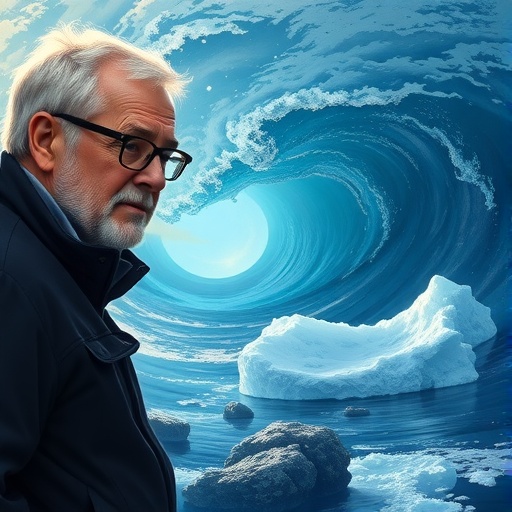
In a landmark recognition of oceanographic science, Carl Wunsch of the Massachusetts Institute of Technology (MIT) has been honored with the BBVA Foundation Frontiers of Knowledge Award in the Climate Change and Environmental Sciences category. This accolade acknowledges Wunsch’s seminal contributions to understanding the oceans’ pivotal role in regulating Earth’s climate and the methods he developed to quantify oceanic changes driven by global warming. His visionary work has not only enhanced scientific comprehension but also propelled the creation of an integrated global ocean observing system essential for climate change research.
Wunsch’s scientific journey began with a profound insight: the ocean is central to the Earth’s climate system. Early in his career, he realized that monitoring and understanding ocean dynamics required an unprecedented synthesis of data from various sources. To this end, he established innovative methodologies that marry satellite remote sensing with in situ measurements, encompassing temperature, salinity, and currents. These pioneering techniques permit precise assessments of ocean heat content, a critical parameter for detecting climate change impacts.
The necessity of an ocean observing system was starkly apparent before Wunsch’s interventions. Previously, oceanographic studies relied heavily on ship-based measurements, an approach limited by high costs, logistical complexity, and slow data collection. These constraints hampered the understanding of the ocean’s dynamic behaviors, leading to a somewhat static and incomplete view of ocean processes. Leveraging technological advancements in satellite altimetry and data processing, Wunsch forged a new observational strategy capable of capturing the ocean’s turbulent and rapidly changing character.
A defining moment in the evolution of global oceanography was Wunsch’s leadership in launching the World Ocean Circulation Experiment (WOCE) in 1990. This ambitious, international program aggregated data over 12 years through a constellation of satellites, oceanographic vessels, and sensor-equipped buoys, focusing especially on the Southern Ocean. The comprehensive datasets from WOCE revolutionized climate models by providing a detailed map of heat flux variations linked to ocean circulation and variability—fundamental drivers of climate change.
Wunsch’s foresight extended beyond WOCE to the integration of satellite altimetry into oceanographic research. Prior to his advocacy, the idea that satellites could measure sea surface height variations with centimeter precision was met with skepticism. The launch of the TOPEX/Poseidon mission in 1992 conclusively demonstrated that altimetric radar could track subtle undulations of the sea surface, revealing ocean currents and thermal expansions related to warming oceans. The mission’s success over a decade yielded critical insights into the global distribution of ocean heat and its seasonal fluctuations.
The integration of data from satellites with autonomous profiling floats became Wunsch’s next breakthrough. Beginning in 1998, the Argo program deployed nearly 4,000 robotic floats worldwide, which continuously measure temperature, salinity, and currents down to 2,000 meters depth. This global network, complementing satellite observations, provides real-time data indispensable for climate monitoring. The combined datasets reveal alarming trends in ocean warming and heat accumulation, serving as a foundation for predictive climate modeling.
The consequences of growing ocean heat content are profound. Wunsch’s analyses underscore the escalating risks associated with sea-level rise and increased frequency of severe weather events. Thermally expanded water contributes directly to rising sea levels, while enhanced oceanic energy fuels more intense hurricanes, floods, and droughts. The heterogeneity of sea-level rise, with certain regions experiencing accelerated changes, complicates mitigation and adaptation efforts, prompting urgent calls for expanded observation and modeling capabilities.
Central to Wunsch’s scientific philosophy is the imperative of global cooperation. Climate change is inherently transnational, and no single nation can adequately monitor or respond to ocean-related climate phenomena independently. Wunsch has consistently advocated for international projects that pool scientific resources and expertise, fostering collaborative networks that advance understanding and inform policy. His career exemplifies the power of collective science in addressing environmental challenges.
Wunsch’s academic foundation in mathematics provided the analytical rigor necessary for developing new oceanographic tools. Mentored by Henry Stommel, a pioneer in physical oceanography, Wunsch combined mathematical insight with practical ocean measurement techniques. His career reflects a steadfast commitment to innovation and interdisciplinarity, synthesizing numerical methods, satellite technology, and in situ data to transform ocean climate science fundamentally.
The complexity of ocean systems—characterized by turbulent circulations, intricate thermal dynamics, and profound depth variability—demanded the development of novel analytical frameworks. Wunsch’s work introduced advanced data assimilation techniques and inverse methods that enable scientists to infer unmeasured ocean properties from indirect observations. These approaches have greatly enhanced the fidelity of climate models by integrating heterogeneous datasets into coherent representations of ocean state.
Beyond his scientific achievements, Wunsch has played pivotal roles in shaping major oceanographic institutions and initiatives. He chaired NASA’s Altimetry Science Working Group and steered the WOCE International Steering Group, setting standards and priorities for ocean observation programs worldwide. His leadership has ensured sustained investment in ocean climate science infrastructure, underpinning ongoing research vital for assessing and mitigating climate change impacts.
The implications of Wunsch’s research resonate far beyond academia. Improved knowledge of ocean heat flux and circulation informs coastal management, disaster preparedness, and international climate negotiations. His contributions have directly influenced policy frameworks seeking to manage risks associated with sea-level rise and extreme weather. With oceans absorbing the majority of anthropogenic heat, accurate observation systems are critical tools in the global response to climate change.
Looking ahead, Wunsch emphasizes the need to enhance ocean observing capabilities further, incorporating emerging technologies and modeling techniques. Continued innovation in satellite sensors, autonomous platforms, and computational methods will be essential to refine predictions of oceanic changes and their climatic consequences. His work lays a foundation that future scientists and policymakers will build upon to safeguard environmental and societal wellbeing.
In sum, Carl Wunsch’s visionary leadership and scientific ingenuity have reshaped our understanding of how oceans modulate Earth’s climate. His pioneering efforts in establishing a global ocean observing system and developing analytical methodologies have provided indispensable tools for quantifying the impacts of global warming. The BBVA Foundation Frontiers of Knowledge Award pays tribute to a legacy that exemplifies the critical intersection of science, technology, and international collaboration in addressing the defining challenge of our time.
News Publication Date: [Not provided]
Web References: [Not provided]
References: [Not provided]
Cite Scienmag News
Russell Cooper. (April 1, 2026). Frontiers of Knowledge Award Honors Carl Wunsch for Groundbreaking Research on Global Warming’s Effects on the Oceans. Scienmag. https://scienmag.com/frontiers-of-knowledge-award-honors-carl-wunsch-for-groundbreaking-research-on-global-warmings-effects-on-the-oceans/
Russell Cooper. "Frontiers of Knowledge Award Honors Carl Wunsch for Groundbreaking Research on Global Warming’s Effects on the Oceans." Scienmag, 1 April 2026, https://scienmag.com/frontiers-of-knowledge-award-honors-carl-wunsch-for-groundbreaking-research-on-global-warmings-effects-on-the-oceans/. Accessed 3 September 2026.
Russell Cooper. "Frontiers of Knowledge Award Honors Carl Wunsch for Groundbreaking Research on Global Warming’s Effects on the Oceans." Scienmag. April 1, 2026. https://scienmag.com/frontiers-of-knowledge-award-honors-carl-wunsch-for-groundbreaking-research-on-global-warmings-effects-on-the-oceans/


