


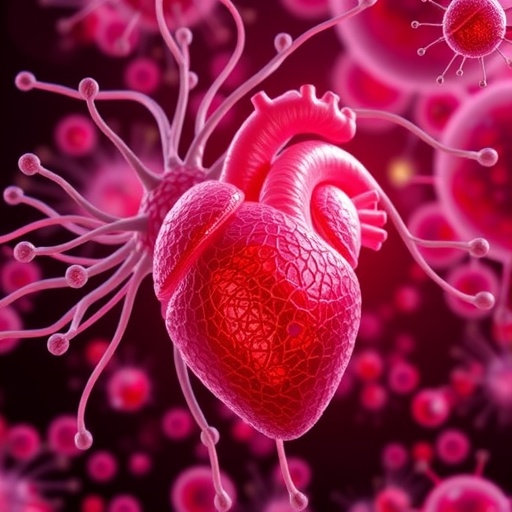
In a pioneering advance that could reshape our understanding of heart disease, recent research has unveiled a compelling and intricate role played by natural killer (NK) cells in myocardial infarction, commonly known as a heart attack. Traditionally recognized for their pivotal function in immune defense against tumors and viral infections, NK cells are now emerging as crucial regulators of cardiac cell fate and the broader immune response following cardiac injury. This breakthrough study, spearheaded by Cohen, Duval, Al-Rifai, and colleagues, reveals how NK cells not only accelerate cardiac cell death but also orchestrate myelopoiesis—the formation of myeloid cells—offering novel insight into the complex interplay between immune responses and heart tissue damage.
Myocardial infarction results from the sudden occlusion of coronary arteries, leading to ischemia and the death of cardiac muscle cells. While the immediate cause of heart tissue necrosis is widely understood, the subsequent immune reactions and inflammatory processes that follow remain an area of intense scientific investigation. This new research sheds light on the unexpected contribution of NK cells to these processes, redefining their role from mere immune effectors to active participants in tissue remodeling and immune cell production.
Using advanced cellular and molecular techniques, the researchers demonstrated that NK cells infiltrate the infarcted myocardium shortly after the ischemic event. Employing state-of-the-art flow cytometry and imaging modalities, they traced NK cell localization and activation states, finding that these immune cells become highly cytotoxic upon arrival. This heightened cytotoxicity facilitates direct cardiac cell death, a process previously attributed mainly to ischemia itself and secondary inflammatory mediators, thus marking a paradigm shift in our understanding of myocardial infarction pathophysiology.
Beyond their immediate cytotoxic actions, NK cells were found to trigger signals within the damaged heart tissue that influence the production and differentiation of myeloid cells in the bone marrow. Myelopoiesis, the process of generating monocytes, macrophages, and neutrophils, is a cornerstone of the post-infarction inflammatory cascade crucial for tissue repair. The study uncovered that NK cells release specific cytokines and chemokines that modulate hematopoietic stem and progenitor cells, effectively ramping up the production of myeloid cells that subsequently migrate to the heart to participate in healing.
The functional impact of NK cells in this context is two-fold and finely balanced. On one hand, their promotion of cardiac cell death exacerbates the initial injury, potentially increasing infarct size and compromising heart function. On the other hand, their ability to regulate myelopoiesis and shape the inflammatory milieu sets the stage for tissue clearance and repair, highlighting a dualistic role that complicates both prognosis and therapeutic targeting.
Mechanistically, the study highlights several key pathways underpinning NK cell-mediated effects. Engagement of activating receptors on NK cells by ligands expressed on stressed or dying cardiomyocytes leads to the release of perforin and granzymes—potent cytolytic molecules that induce apoptosis in cardiac cells. Concurrently, NK cells secrete interferon-gamma (IFN-γ) and granulocyte-macrophage colony-stimulating factor (GM-CSF), potent cytokines that stimulate myeloid progenitors in the bone marrow. This dual signaling axis represents a nexus where immune cytotoxicity converges with hematopoietic regulation.
Importantly, animal models genetically engineered to lack NK cells or possess impaired NK cell functionality exhibited reduced cardiac cell death and altered myelopoiesis patterns post-myocardial infarction. These phenotypes underscored the centrality of NK cells in driving the observed pathological and hematopoietic changes. Moreover, clinical specimens from human patients with acute myocardial infarction showed increased NK cell infiltration in infarcted regions, affirming the translational relevance of these findings.
The implications of this research extend far beyond basic cardiovascular immunology. Therapeutically, selectively modulating NK cell functions could represent a novel strategy for mitigating cardiac injury after myocardial infarction. Interventions designed to temper the cytotoxic activity of NK cells, while preserving or even enhancing their regulatory influence on myelopoiesis, might foster an environment conducive to optimal repair without worsening tissue necrosis.
However, the dualistic nature of NK cell activities presents challenges for drug development. Therapies that blunt NK cell cytotoxicity risk dampening beneficial immune surveillance functions, potentially increasing susceptibility to infections or malignancies. Conversely, augmenting NK cell-driven hematopoietic signals without controlling cytotoxic effects could exacerbate inflammation and tissue damage. Thus, precision medicine approaches tailored to individual immune profiles may be necessary to harness NK cells for cardiac benefit.
This innovative study also prompts a reevaluation of the broader immune response landscape in myocardial infarction. It encourages further investigations into how other innate lymphoid cells and adaptive immune components interface with NK cells and cardiac tissue. Understanding these cellular crosstalks may unlock comprehensive strategies to modulate the post-infarction immune milieu synergistically.
Long-term, these insights could fuel the development of biomolecular diagnostics capable of assessing NK cell activity and myeloid cell dynamics in patients presenting with acute coronary syndromes. Such diagnostics would enable risk stratification and guide precision interventions, potentially improving outcomes for millions affected by heart attacks worldwide.
Moreover, the identification of distinct molecular markers associated with NK cell-mediated cytotoxicity and myelopoietic regulation could pave the way for biomarker-driven clinical trials. These trials would test targeted agents designed to recalibrate immune responses in the delicate post-infarction window when the risk of heart failure and adverse remodeling is highest.
In summary, the work by Cohen, Duval, Al-Rifai, and their team represents a landmark contribution to cardiovascular immunology, illuminating the pivotal and previously underappreciated role of NK cells in myocardial infarction. By bridging cardiac biology with immunohematopoiesis, this research opens an exciting frontier for therapeutic innovation and deepens our mechanistic comprehension of heart injury and repair processes. Future explorations will undoubtedly capitalize on these findings to refine intervention paradigms and improve patient prognoses.
As the scientific community digests these revelations, the broader implications for inflammatory cardiovascular diseases and immune modulation therapies come sharply into focus. NK cells, long celebrated for their role in cancer and infection defense, now emerge as influential arbiters in heart disease, promising to transform how clinicians and researchers approach one of the planet’s leading causes of mortality.
The journey from molecular insights to clinical applications will be complex and requires multidisciplinary collaboration among immunologists, cardiologists, hematologists, and pharmacologists. Yet, the potential reward—in lives saved and heart function preserved—makes this endeavor profoundly worthwhile and emblematic of the power of translational science at its best.
Cite Scienmag News
Ophelia Keating. (April 1, 2026). NK Cells Drive Heart Damage, Control Blood Cell Production. Scienmag. https://scienmag.com/nk-cells-drive-heart-damage-control-blood-cell-production/
Ophelia Keating. "NK Cells Drive Heart Damage, Control Blood Cell Production." Scienmag, 1 April 2026, https://scienmag.com/nk-cells-drive-heart-damage-control-blood-cell-production/. Accessed 4 September 2026.
Ophelia Keating. "NK Cells Drive Heart Damage, Control Blood Cell Production." Scienmag. April 1, 2026. https://scienmag.com/nk-cells-drive-heart-damage-control-blood-cell-production/


