


In a groundbreaking advancement that may redefine therapeutic strategies for bleeding disorders, researchers have engineered a recombinant haemostatic protein capable of functionally substituting platelet activity in thrombocytopenic subjects. This innovation marks a significant leap forward in the field of hemostasis, offering a promising alternative for patients suffering from conditions characterized by an insufficient platelet count or dysfunctional platelet activity. By finely tuning the protein to target multiple pathways critical to clot formation, the study showcases the therapeutic potential of biomolecular design in restoring hemostatic balance.
The research, conducted on male murine models with induced thrombocytopenia, reveals that the recombinant protein engages three distinct but complementary haemostatic mechanisms to compensate for deficient platelet function. These mechanisms collectively replicate the complex physiology of normal platelet-induced coagulation processes, including adhesion to vascular injury sites, activation and aggregation, and the orchestration of fibrin mesh formation. The tripartite modality enhances the safety profile by minimizing the risks typically associated with platelet transfusions or pharmacological platelet activators.
One of the remarkable features of the recombinant protein is its ability to facilitate vascular adhesion similarly to endogenous platelets by interacting with exposed subendothelial matrix proteins such as collagen and von Willebrand factor. This targeted adhesion is crucial for the initial localization and stabilization of the protein at sites of vascular injury, which represents the first step in the haemostatic cascade. Unlike traditional platelet transfusions, the recombinant construct demonstrates an engineered specificity that reduces off-target interactions and potential for thrombosis in uninjured vessels.
Following adhesion, the protein exhibits an activation capability mimicking platelet shape change and secretion of procoagulant factors. This activation induces a localized inflammatory and coagulation environment necessary for recruiting additional haemostatic elements. The recombinant molecule’s design includes activatable domains that respond to changes in calcium concentration and shear stress within the injured microenvironment, paralleling endogenous platelet activation biomechanics.
Moreover, the protein enhances fibrin polymerization by providing a scaffold-like function that promotes thrombin generation and fibrin mesh formation. This stable fibrin network is vital for the consolidation of the initial platelet plug and the eventual cessation of bleeding. By integrating these multiple functionalities into a single recombinant molecule, the study introduces a multifaceted therapeutic agent that addresses the inherent limitations of current platelet substitute therapies, such as short shelf life, immunogenicity, and limited efficacy in thrombocytopenic patients.
The innovative approach to recombinant protein engineering was underpinned by advanced structural biology techniques and high-throughput screening to optimize binding affinities and activation thresholds. Molecular dynamics simulations and cryo-electron microscopy provided insights into the conformational states associated with protein activation and interaction with coagulation partners. These detailed structural characterizations informed iterative protein redesigns, culminating in a molecule with enhanced stability and functional versatility under physiological conditions.
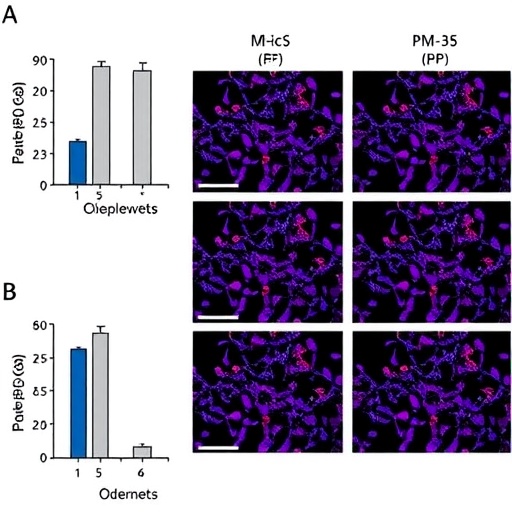
In vivo experiments demonstrated that administration of the recombinant haemostatic protein in thrombocytopenic mice substantially reduced bleeding times and improved survival rates compared to untreated controls. Hemorrhagic challenge tests showed robust clot formation, and histological analyses confirmed the effective recruitment and stabilization of the recombinant proteins at injury sites. Importantly, no significant prothrombotic complications or off-target activation events were observed, supporting a favorable therapeutic index for future clinical applications.
The therapeutic implications extend beyond thrombocytopenia treatment, offering potential utility in diverse conditions where platelet functionality is compromised, such as certain genetic platelet disorders, autoimmune platelet destruction, or therapeutic platelet depletion during intensive chemotherapy. Furthermore, this technology may pave the way for personalized haemostatic agents tailored to the specific coagulation deficits of individual patients, optimizing outcomes while mitigating side effects.
Translating this technology into clinical practice will require addressing manufacturing scalability and regulatory aspects, given the complex nature of recombinant protein therapeutics. However, the robust preclinical data provide a compelling rationale for advancing to human clinical trials. If successful, this recombinant haemostatic protein could transform current paradigms of bleeding management in hematology and surgery, offering a standardized, off-the-shelf solution to a historically challenging clinical problem.
The study also underscored the potential for synthetic biology and protein engineering to create multifunctional therapeutics capable of orchestrating biological phenomena traditionally managed by complex cellular systems. This paradigm shift from cell-based to protein-based therapies may revolutionize the treatment of coagulation disorders and inspire analogous strategies in other fields such as immune modulation and tissue repair.
Further research is warranted to explore the longevity and immunogenic profile of the recombinant protein in larger and more diverse animal models. Long-term safety studies will be critical to assess potential antibody formation and any unforeseen effects on systemic hemostatic balance. Parallel development of biomarkers to monitor therapeutic efficacy and adverse events will be essential for clinical translation.
Another exciting avenue is integrating this haemostatic protein with emerging drug delivery platforms, such as nanoparticle carriers or hydrogels, to enhance localized delivery and sustained action at bleeding sites. Such combination therapeutics could further refine control over coagulation processes, particularly in complex clinical scenarios involving diffuse hemorrhage or surgical interventions.
The paper, published in Nature Communications, represents an intersection of molecular engineering, hematology, and translational medicine. The authors highlight the interdisciplinary collaboration that enabled the convergent expertise in protein design, animal modeling, and coagulation biology—a synergy that was critical to overcoming the multifaceted challenges inherent to replicating platelet functionality synthetically.
In conclusion, the recombinant haemostatic protein exemplifies a new frontier in hemostatic therapy, merging sophisticated protein engineering with a deep understanding of vascular biology to offer a viable therapeutic for platelet function substitution. This innovation stands poised to address unmet clinical needs in bleeding management, potentially reducing dependence on donor-derived platelets and improving patient outcomes worldwide. The future of hemostasis is now being reimagined through the lens of synthetic molecular design, heralding a new era where precision-engineered proteins can stand in for complex cellular machines.
Cite Scienmag News
Ophelia Keating. (April 1, 2026). Recombinant Protein Restores Platelet Function in Mice. Scienmag. https://scienmag.com/recombinant-protein-restores-platelet-function-in-mice/
Ophelia Keating. "Recombinant Protein Restores Platelet Function in Mice." Scienmag, 1 April 2026, https://scienmag.com/recombinant-protein-restores-platelet-function-in-mice/. Accessed 4 September 2026.
Ophelia Keating. "Recombinant Protein Restores Platelet Function in Mice." Scienmag. April 1, 2026. https://scienmag.com/recombinant-protein-restores-platelet-function-in-mice/


