


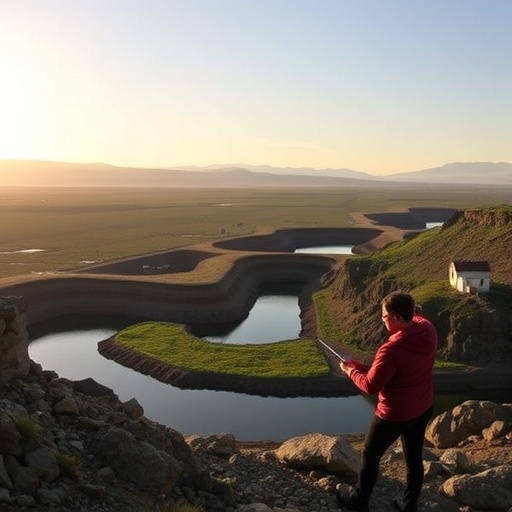
In a transformative move aligned with the European Union’s Critical Raw Materials Act, an ambitious scientific collaboration between Chile and Germany is pioneering novel, environmentally conscious methods to extract lithium and other critical raw materials from brine reservoirs. This partnership goes beyond traditional methods, emphasizing sustainability, energy efficiency, and respect for local ecosystems and communities. The initiative is deeply rooted in the unique geological and chemical conditions of Chile’s Atacama Desert, a globally significant lithium source, while also looking forward to potential applications within Europe, particularly Germany.
The EU’s recent legislation mandates member states to bolster domestic supply chains for critical materials essential to the green transition and digital technologies. At least ten percent of these raw materials must be sourced internally in the future, but realistically, countries like Germany will continue to rely heavily on imports. Chile emerges as a strategic partner due to its vast lithium reserves and established mining infrastructure. The bilateral alliance has been formalized through the German-Chilean partnership on raw materials and energy, headquartered in Santiago de Chile, aiming to foster knowledge exchange and joint research programs that promote sustainable resource utilization.
Conventional lithium extraction in the Atacama Desert predominantly employs solar evaporation ponds where lithium-rich brines undergo prolonged evaporation, concentrating lithium salts over months or even years. This technology, while energy-light, occupies extensive surface areas of fragile salt flats and often extracts only roughly half of the dissolved lithium content. Such methods present significant environmental challenges, including disturbance of salt lake ecosystems and interference with indigenous lands, feeding into global criticism of traditional mining practices. The BRIDGE initiative—short for the German-Chilean Institute for Element Extraction from Brines and Integrated Geological Reservoir Modeling—proposes a radical departure from these paradigms.
BRIDGE pioneers direct lithium extraction (DLE) techniques designed to circumvent the slow, expansive evaporation process. These emerging methods involve selective sorbents or ion-exchange materials that chemically capture lithium ions directly from brine solutions. By functioning as highly selective chemical “filters,” these materials isolate lithium with minimal loss and can operate in more controlled, compact industrial setups. An essential aspect of this approach is the reinjection of treated brines back into subterranean reservoirs, maintaining hydrological equilibrium and mitigating ecological disruptions often caused by brine depletion.
The current multi-week research campaign in the Atacama Desert involves integrated geological and chemical investigations by a team of Chilean and German scientists. Their work entails systematic sampling of salt lakes and subsurface volcanic reservoirs, followed by comprehensive isotopic and elemental analyses to map the full spectrum of critical elements dissolved in the brines. This thorough characterization not only informs optimal extraction strategies but could also identify additional economically valuable elements such as potassium, boron, or magnesium. Understanding the intricate geochemical variations across different brine systems is key to tailoring separation technologies for maximum efficiency.
Furthermore, the project’s holistic approach incorporates insights into the geological reservoirs themselves, integrating knowledge of hydrogeology, mineralogy, and fluid dynamics. The geothermal heat naturally stored within these reservoirs offers a pioneering energy source that could power extraction processes sustainably, dramatically reducing the carbon footprint relative to conventional energy-intensive mining operations. This geothermally-driven extraction paradigm symbolizes a promising fusion of renewable energy and raw material sourcing aligned with the climate resilience goals of both Chile and Germany.
Engagement with indigenous and local communities within the Atacama region underpins the research ethos of the BRIDGE initiative. Transparent communication, participatory decision-making, and respect for cultural practices are fundamental to securing social license and avoiding the historical conflicts that have marred many mining projects globally. The initiative envisions the benefits of this science and technology not only in terms of raw material yields but also through enhanced water management, geothermal energy exploitation, and potentially the provision of safe drinking water derived from processed geothermal fluids, thereby creating multifaceted socio-economic value.
The implications of the Chilean-German collaboration extend well beyond Latin America’s deserts. Germany, and Europe broadly, stand to gain not only from technological transfer but also from geoscientific insights applicable to lesser-known lithium and critical metal reservoirs within their own territories. The research presents an opportunity to map and exploit local fluid reservoirs more effectively, accelerating Europe’s strategic independence in raw materials supply chains while driving innovation in low-impact extraction technologies suitable for sensitive environments.
BRIDGE stands at the confluence of applied geosciences, materials science, and sustainable energy engineering. It brings together eminent institutions, including the Karlsruhe Institute of Technology (KIT), the Federal Institute for Geosciences and Natural Resources, and Chile’s Servicio Nacional de Geología y Minería (SERNAGEOMIN). The German Federal Ministry of Research, Technology and Space currently supports the initiative, recognizing its potential to revolutionize resource extraction paradigms and contribute substantially to the green energy transition.
Science behind BRIDGE emphasizes rigorous reservoir modeling and field validation. Researchers use high-resolution geochemical assays combined with isotopic tracing techniques to understand fluid origins, mixing dynamics, and mineral saturation states. This knowledge informs the selection and optimization of selective extraction materials while monitoring potential geochemical feedbacks from reinjecting processed brines, ensuring long-term environmental stability. The integration of real-time sensor data and advanced computational modeling heralds a new era of smart, adaptive resource management.
The social and environmental dimensions of this work cannot be overstated. By shifting from extensive pond evaporation to compact, direct extraction processes that recycle brines and harness geothermal power, the initiative targets a significant reduction in land disturbance, freshwater usage, and greenhouse gas emissions associated with lithium production. This aligns the raw materials sector with global commitments to biodiversity conservation and climate neutrality, turning resource extraction into a model of ecological stewardship rather than exploitation.
As the initiative progresses, it sets the stage for subsequent pilot projects, technology scale-up, and commercial deployment, both in Chile’s lithium-rich basins and potentially in promising European sites. It exemplifies a new frontier in critical materials science, where cross-continental cooperation fosters innovation that respects both planetary boundaries and the rights of indigenous peoples. This research not only addresses immediate material supply challenges but also charts a pathway toward a more sustainable industrial future globally.
The synergy of geothermal energy, advanced materials for selective ion capture, and a comprehensive understanding of fluid systems in volcanic and salt lake reservoirs reflects the transformative potential of interdisciplinary science. By harnessing these capabilities, BRIDGE is poised to reshape the lithium and critical materials sectors, reducing ecological footprints, optimizing energy use, and enhancing social acceptance in one of the world’s most delicate mining frontiers. As the global demand for green technologies expands, this initiative offers a blueprint for responsible, innovative resource extraction that could reverberate worldwide.
News Publication Date: Not provided
Web References:
https://geothermics.agw.kit.edu/english/869.php
http://www.energy.kit.edu/index.php
Cite Scienmag News
Violet Maxwell. (March 31, 2026). German-Chilean Collaboration Advances Sustainable Methods for Eco-Friendly Resource Extraction. Scienmag. https://scienmag.com/german-chilean-collaboration-advances-sustainable-methods-for-eco-friendly-resource-extraction/
Violet Maxwell. "German-Chilean Collaboration Advances Sustainable Methods for Eco-Friendly Resource Extraction." Scienmag, 31 March 2026, https://scienmag.com/german-chilean-collaboration-advances-sustainable-methods-for-eco-friendly-resource-extraction/. Accessed 3 September 2026.
Violet Maxwell. "German-Chilean Collaboration Advances Sustainable Methods for Eco-Friendly Resource Extraction." Scienmag. March 31, 2026. https://scienmag.com/german-chilean-collaboration-advances-sustainable-methods-for-eco-friendly-resource-extraction/


