


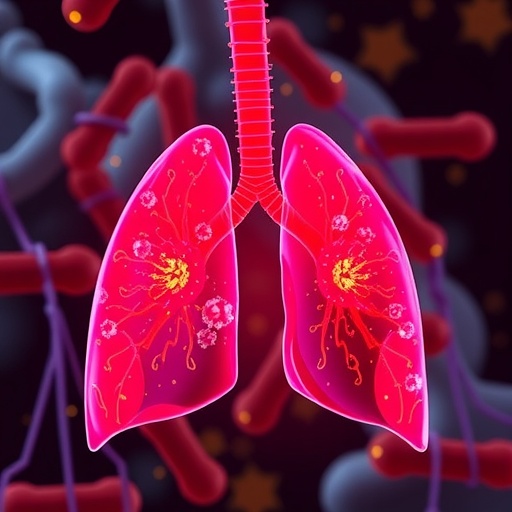
In a groundbreaking discovery poised to reshape our understanding of respiratory infections, a team of researchers has illuminated the critical role pulmonary fibroblasts play in defending the lung against the fungal pathogen Aspergillus fumigatus. This research reveals an intricate interplay between tissue-resident cells and the immune system, advancing our knowledge of host-pathogen dynamics and lung homeostasis maintenance during infection.
Pulmonary fibroblasts, traditionally viewed primarily as structural cells responsible for synthesizing extracellular matrix components, have emerged from obscurity as key immunomodulatory players. The study demonstrates that during Aspergillus fumigatus infection—a major cause of invasive pulmonary aspergillosis particularly in immunocompromised individuals—these fibroblasts become activated and orchestrate a finely tuned response that balances defense with tissue integrity. Unlike the conventional view that emphasizes immune cells such as macrophages, neutrophils, and dendritic cells in fighting fungal infections, this research reveals that fibroblasts actively contribute to shaping the immune landscape in the infected lung.
At the cellular and molecular levels, fibroblast activation involves significant shifts in gene expression, leading to the secretion of a diverse repertoire of cytokines and growth factors. These molecules not only stimulate immune cells and enhance their antifungal capabilities but also promote tissue remodeling processes essential for repairing the damage wrought by fungal invasion and immune collateral effects. This dual role positions pulmonary fibroblasts as critical mediators capable of modulating inflammation and fostering regeneration simultaneously. It is a paradigm shift from viewing fibroblasts as mere passive scaffolds to recognizing them as dynamic effectors in pulmonary defense.
The study’s deep transcriptomic analysis highlighted upregulation of genes linked to immune signaling pathways, including chemokines that recruit neutrophils and monocytes to the infection site. Moreover, fibroblasts were found to produce key matrix metalloproteinases (MMPs) and tissue inhibitors of metalloproteinases (TIMPs), which participate in extracellular matrix remodeling. Fine-tuning this matrix turnover is essential to prevent excessive fibrosis, which can lead to long-lasting pulmonary dysfunction. This suggests fibroblasts act as architects of the infection microenvironment, sculpting not only cellular infiltration but also the structural terrain upon which immune battles are waged.
Crucially, the authors observed that fibroblast activation enhances lung defense not merely by amplifying immune cell recruitment but also by modulating immune cell phenotypes toward a more effective antifungal response. This includes promoting differentiation of macrophages into phenotypes capable of fungal clearance without exacerbating destructive inflammation. Such immunomodulation minimizes tissue damage, a common consequence of excessive immune activation during fungal infections, thereby preserving lung function and expediting recovery.
This research paves new avenues for therapeutic innovation. Targeting the fibroblast activation pathways could represent a novel strategy to bolster the host’s antifungal arsenal, especially in patients susceptible to invasive aspergillosis due to immunosuppression. By harnessing or mimicking fibroblast-derived signals, it may be possible to enhance immune efficacy while mitigating the harmful consequences of overactive inflammation and fibrosis. This dual approach could significantly improve outcomes in fungal pneumonia treatment.
Infection by Aspergillus fumigatus involves intricate challenges for the host’s respiratory system. The fungus’s spore size allows for deep penetration into alveolar spaces, where it germinates and establishes infections often difficult to combat. The revelation that fibroblasts, a resident cell type, are activated and assume immunomodulatory and reparative roles highlights the lung’s intrinsic capacity to self-organize a complex defense beyond traditional immune cells. It shifts the focus from solely external immune cell recruitment to endogenous tissue responses as pivotal determinants of infection control.
The findings also underscore the importance of tissue remodeling dynamics during infection. Excessive extracellular matrix deposition can lead to fibrotic scarring, which compromises respiratory mechanics and gas exchange. Conversely, insufficient remodeling may fail to restore structural integrity, leaving tissue vulnerable to ongoing damage. Pulmonary fibroblasts thus appear to calibrate these processes carefully, fostering a protective yet flexible lung microenvironment that can both resist fungal invasion and recover from tissue injury.
Mechanistically, the study implicates several signaling pathways that converge on fibroblast activation. Transforming growth factor-beta (TGF-β), a known regulator of fibrosis and immune responses, was elevated during infection and appears to coordinate fibroblast responses. Additionally, pro-inflammatory cytokines such as interleukin-1 (IL-1) and tumor necrosis factor-alpha (TNF-α) synergize to drive fibroblast activation, suggesting that these cells are highly responsive to cytokine milieu shifts dictated by infectious stress. This responsiveness enables fibroblasts to integrate systemic inflammatory cues with local tissue remodeling requirements.
The integration of advanced techniques including single-cell RNA sequencing allowed the researchers to dissect the heterogeneity of fibroblast responses within the infected lung. Different fibroblast subpopulations exhibited distinct profiles, some leaning more strongly toward immunomodulation, others biased toward extracellular matrix production. This heterogeneity may allow a division of labor within fibroblast populations, optimizing defense while minimizing detrimental fibrosis. Such complexity in resident cell populations adds an important layer to the regulatory network controlling pulmonary immune responses.
The impact of the study extends beyond fungal infections. It invites a reassessment of fibroblast function across a broad array of pulmonary diseases, including bacterial pneumonia, chronic obstructive pulmonary disease (COPD), and idiopathic pulmonary fibrosis (IPF). Understanding fibroblast activation pathways may uncover conserved mechanisms that can be exploited for therapeutic benefit in diverse contexts marked by infection, inflammation, or tissue damage. These insights could ultimately underpin novel strategies to modulate lung immunity and repair processes more effectively.
Furthermore, the study’s elucidation of fibroblast-mediated immunomodulation supports emerging concepts of tissue-resident cells as active participants in immunity. It reveals the lung as an organ where immunity and tissue homeostasis are deeply interconnected and shaped by local cellular interactions, rather than a mere battleground dominated by infiltrating immune cells. Such complexity challenges traditional views and opens fertile ground for research into tissue-specific immune regulation.
As the scientific community grapples with the global burden of fungal infections—often overshadowed by bacterial and viral diseases—this research provides a timely contribution highlighting host factors critical for defense. Aspergillus fumigatus remains a significant threat to immunocompromised patients worldwide, often resulting in life-threatening invasive aspergillosis. Enhancing knowledge of the lung’s innate capabilities through fibroblast activation could inform the development of adjunctive therapies aimed at strengthening natural resistance in vulnerable populations.
In conclusion, the pioneering work of Guirao-Abad and colleagues offers a comprehensive and nuanced picture of pulmonary fibroblast activation during Aspergillus fumigatus infection. Their findings advance our understanding of lung tissue biology, immune modulation, and tissue remodeling processes integral to effective host defense. This could usher in a new era of therapeutic strategies targeting not only immune cells but also tissue-resident stromal elements to optimize outcomes in pulmonary infections and beyond.
Cite Scienmag News
Kristina Jarvis. (March 31, 2026). Pulmonary Fibroblasts Boost Lung Defense Against Aspergillus. Scienmag. https://scienmag.com/pulmonary-fibroblasts-boost-lung-defense-against-aspergillus/
Kristina Jarvis. "Pulmonary Fibroblasts Boost Lung Defense Against Aspergillus." Scienmag, 31 March 2026, https://scienmag.com/pulmonary-fibroblasts-boost-lung-defense-against-aspergillus/. Accessed 4 September 2026.
Kristina Jarvis. "Pulmonary Fibroblasts Boost Lung Defense Against Aspergillus." Scienmag. March 31, 2026. https://scienmag.com/pulmonary-fibroblasts-boost-lung-defense-against-aspergillus/


