


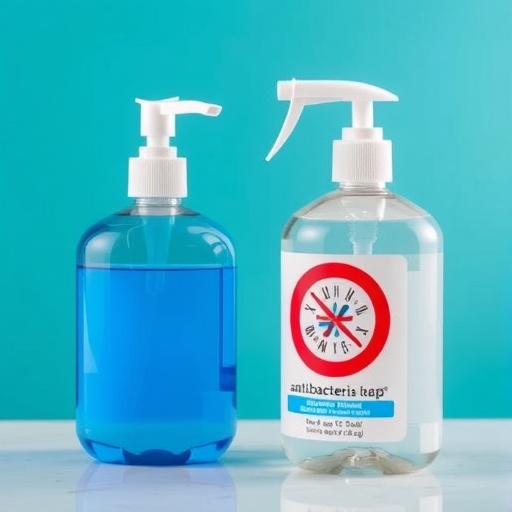
An escalating global health crisis lies hidden in plain sight—embedded in the everyday antibacterial products that millions of households routinely use. An international consortium of scientists is sounding alarms over the widespread misuse of biocidal compounds in consumer products, warning that such usage is quietly fueling the rise of antimicrobial resistance (AMR). Their recent viewpoint, published in the acclaimed journal Environmental Science & Technology, adds a critical new dimension to the global fight against superbugs, revealing how everyday disinfectants and antimicrobial soaps may be a silent catalyst in promoting resistant bacteria while offering negligible health benefits.
For decades, the global response to AMR has rightly concentrated on antibiotic misuse in clinical settings and agricultural practices. However, this new research reframes the narrative by exposing how chemical biocides, particularly quaternary ammonium compounds (QACs) and chloroxylenol—ubiquitous ingredients in household products—play a consequential role in driving bacterial resistance. These compounds commonly surface in antibacterial hand soaps, disinfecting wipes and sprays, sanitizing laundry additives, plastics, textiles, and numerous personal care formulations, where their amplified deployment during the COVID-19 pandemic has further entrenched their presence in the human environment.
The principal danger, according to senior author Miriam Diamond of the University of Toronto, is that biocides from everyday household products inevitably drain through sinks and toilets into wastewater treatment plants and natural ecosystems. There, their continuous environmental presence creates ideal selective pressures that encourage bacteria to evolve mechanisms not only to withstand these chemicals but to develop cross-resistance to vital antibiotic medications. This environmental incubation of resistance challenges conventional AMR strategies that often overlook the pathways through which consumer product biocides enter and interact with microbial populations.
Biocides function as antimicrobial agents targeting bacteria, viruses, and fungi, but their indiscriminate use can ironically fuel bacterial adaptation. Lab and field studies consolidated by the research team reveal that environmental concentrations of QACs and similar compounds enable resistant bacterial strains to survive, proliferate, and exchange genetic material encoding resistance traits. These genetic transfers frequently encompass resistance to multiple antibiotics, cementing a dangerous cycle whereby commensal environmental bacteria can evolve into reservoirs of antibiotic resistance genes, ready to infect humans or animals with diminished treatment options.
The hidden threat extends beyond bacterial survival; the research underscores that persistent biocide exposure induces lasting molecular and genetic changes within microbial communities. Horizontal gene transfer—the process by which bacteria share and propagate resistance genes—is notably potentiated in biocide-contaminated environments. Over time, these changes disturb microbial community dynamics, allowing resistant strains to dominate and significantly undermining the efficacy of widely used antibiotics. The implications for global health are grave, as antibiotic-resistant infections already claim over one million lives annually and threaten to become a leading cause of death by 2050.
Crucially, this emerging evidence confronts the long-held assumption that antibacterial household products confer superior protection against everyday pathogens. Major health authorities such as the U.S. Food and Drug Administration (FDA), the Centers for Disease Control and Prevention (CDC), and the World Health Organization (WHO) have consistently recommended plain soap and water for routine handwashing and domestic hygiene. Despite these endorsements, the aggressive marketing and pandemic-driven surge in antibacterial product usage have obscured public understanding, perpetuating myths of added health benefits where none reliably exist.
The research team’s analysis stresses an urgent need to broaden global AMR mitigation frameworks to explicitly target consumer product biocides. By integrating these chemical agents into international AMR action plans, regulators can establish clear reduction targets augmented by systematic environmental monitoring. Such policies would acknowledge the chemical contamination pathways that amplify resistance evolution, ultimately contributing to a more holistic and robust global response to AMR that encompasses both clinical and environmental reservoirs.
Governments are encouraged to implement restrictions on antimicrobial ingredients in household products lacking demonstrable efficacy. These regulatory measures, combined with concerted public awareness initiatives, could dismantle the pervasive misconceptions fueling excessive biocide use. Educational campaigns designed to highlight the scientifically verified sufficiency of basic hygienic practices would empower consumers to make informed choices that support AMR reduction objectives.
Rebecca Fuoco, the study’s lead author and Director of Science Communications at the Green Science Policy Institute, emphasizes that tackling unnecessary biocide deployment represents a low-hanging fruit opportunity in the fight against AMR. Phasing out ineffective antibacterial additives in consumer products promises to curtail chemical pollution, protect ecological and human health, and slow the dissemination of multidrug-resistant pathogens, thereby preserving antibiotic effectiveness for critical medical needs.
From an environmental science perspective, the continuous discharge of biocides into wastewater spurs selective pressure hotspots where resistance genes thrive and multiply. Wastewater treatment systems, not originally designed to eliminate these persistent chemicals, inadvertently become reservoirs and conduits for resistant microbes, which then disseminate into rivers, soils, and ultimately into the broader biosphere. This highlights the interconnectedness between human hygiene practices, chemical pollution, and microbial evolutionary dynamics.
The extensive interdisciplinary collaboration underpinning this research demonstrates the power of cross-sectoral scientific inquiry. By bridging expertise in microbiology, environmental toxicology, public health, and policy analysis across institutions in the U.S., Canada, Brazil, and Switzerland, the research collective delivers comprehensive evidence-based recommendations that transcend conventional AMR paradigms. Their work signals a pivotal reframing of resistance mitigation strategies necessary for sustainable global health security.
In conclusion, this groundbreaking viewpoint advocates for an urgent paradigm shift in antimicrobial resistance prevention: one that recognizes the overlooked yet significant contribution of biocidal compounds in everyday consumer products. By curbing the overuse of these chemicals through evidence-driven regulation and societal education, humanity can reclaim critical ground in the battle against superbugs. The stakes could not be higher, as the rising tide of AMR threatens ecosystems, undermines therapeutic arsenals, and endangers future generations’ health worldwide.
Cite Scienmag News
Kristina Jarvis. (March 31, 2026). Scientists Caution: Antibacterial Soaps and Wipes May Accelerate Antimicrobial Resistance. Scienmag. https://scienmag.com/scientists-caution-antibacterial-soaps-and-wipes-may-accelerate-antimicrobial-resistance/
Kristina Jarvis. "Scientists Caution: Antibacterial Soaps and Wipes May Accelerate Antimicrobial Resistance." Scienmag, 31 March 2026, https://scienmag.com/scientists-caution-antibacterial-soaps-and-wipes-may-accelerate-antimicrobial-resistance/. Accessed 4 September 2026.
Kristina Jarvis. "Scientists Caution: Antibacterial Soaps and Wipes May Accelerate Antimicrobial Resistance." Scienmag. March 31, 2026. https://scienmag.com/scientists-caution-antibacterial-soaps-and-wipes-may-accelerate-antimicrobial-resistance/


