


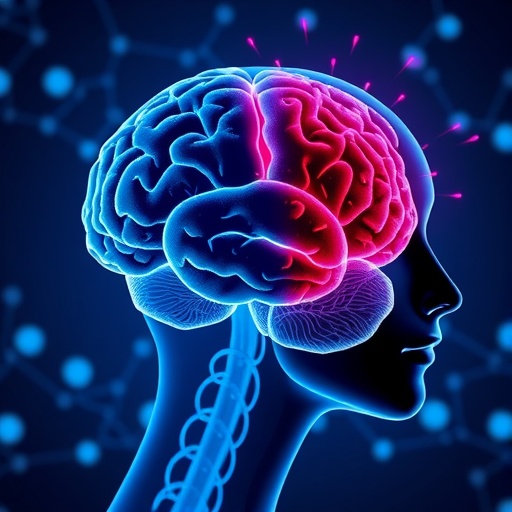
In a groundbreaking revelation set to challenge long-standing psychiatric paradigms, a recent study published in Brain Medicine unveils a profound physiological underpinning to what has been traditionally labeled as treatment-resistant depression. This meticulous research, conducted over six years and spanning three clinical practices across Philadelphia, Memphis, and New York City, exposes the critical role of autonomic nervous system dysfunction in perpetuating depressive symptoms. It suggests that before diagnosing depression as intractable, clinicians must rigorously evaluate the intricate balance between the parasympathetic and sympathetic branches of the autonomic nervous system—an insight that could transform therapeutic strategies for millions.
Consider the human body as a complex hydraulic system, where cerebral perfusion—the blood flow supplying the brain—is paramount. Imagine that the water main feeding this system is partially closed; faucets sputter, the garden wilts, and the entire household suffers despite piecemeal repairs to individual faucets. Analogously, many patients bearing the diagnosis of depression have undergone multiple pharmaceutical regimens—SSRIs, SNRIs, atypical antipsychotics—yet symptom relief eludes them because the root systemic dysfunction remains unaddressed. This groundbreaking study identifies autonomic dysregulation as this systemic issue, where impaired blood flow to the brain mimics or even fuels depressive symptomatology.
The researchers followed a substantial cohort of 8,128 patients with documented autonomic dysfunction, nearly 2,200 of whom had histories of depression or analogous symptoms. This cohort was not typical in its symptom complexity; individuals reported an average of over twenty autonomic symptoms including severe fatigue, cognitive fog, orthostatic lightheadedness, non-restorative sleep, hormone irregularities, chronic pain, and sensory sensitivity. Intriguingly, every patient displayed measurable dysfunction in the sympathetic and parasympathetic nervous systems, revealing a near-universal physiological compromise underlying their psychiatric presentations.
Two primary autonomic dysfunctions emerged as key contributors to this phenomenon. Alpha-sympathetic withdrawal, observed in approximately 80% of the depressive subgroup, leads to blood pooling in lower limbs upon standing, essentially starving the brain of necessary perfusion. Concurrently, parasympathetic excess triggers inappropriate vasodilation—blood vessels relax when they should constrict—forcing the heart to labor intensively to maintain cerebral blood flow, a process that is further complicated by hormonal fluctuations in women. A third compensatory anomaly, beta-sympathetic excess, manifests as heightened cardiac output striving to overcome gravity’s challenge. Collectively, these dysfunctions culminate in chronic cerebral hypoperfusion, underpinning many cognitive and mood impairments.
What has thwarted prior recognition of these abnormalities is the prevailing limitation of conventional autonomic monitoring technology. Traditional methods aggregate total autonomic activity, making inferences about each branch by approximation. This is akin to differentiating instruments in a duet by hearing them through a single speaker—an approach imbued with ambiguity. The novel precision in this study arises from Parallel and Serial (P&S) Monitoring, a technique incorporating respiratory signals alongside heart rate variability to distinctly isolate parasympathetic and sympathetic contributions. This independent measurement grants clinicians unprecedented insight into autonomic imbalances, enabling targeted interventions rather than blind pharmacological escalation.
Adhering to a “low-and-slow” treatment philosophy grounded in intricate physiological understanding, the investigators employed low-dose pharmacotherapy and adjunct non-pharmacological measures to restore autonomic equilibrium. Low-dose Midodrine was utilized to counter alpha-sympathetic withdrawal by vasoconstriction, while low-dose Nortriptyline addressed parasympathetic excess. For patient subsets intolerant of these agents, R-alpha-lipoic acid supplemented mitochondrial and nerve recovery, and a gentle walking regimen designed for astronaut rehabilitation from zero-gravity conditions addressed parasympathetic issues. This strategic pacing respects the nervous system’s fragile capacity for repair and debunks the misconception that higher medication dosages invariably yield better outcomes.
Remarkably, significant symptomatic improvements were observable within months. Sleep disturbances, a pivotal factor in neuropsychiatric well-being, improved in over 77% of patients as early as three months into treatment. Over nine months, reductions in fatigue, brain fog, and a broad range of autonomic symptoms were robust, with a third of patients recovering to minimal symptom counts. The study asserts that these improvements owed less to direct treatment of depression’s subjective symptomatology and more to correction of the underlying autonomic derangements generating those symptoms. This reframing of depression from a strictly psychiatric entity to a physiological syndrome is both paradigm-shifting and clinically hopeful.
Notably, nearly half the cohort had suffered long-COVID syndromes, a condition now increasingly recognized for provoking pervasive autonomic disruption. Other prevalent comorbidities included orthostatic hypotension, hypertension, and type 2 diabetes—conditions often considered discrete but here revealed as intertwined through their shared influence on autonomic regulation and cerebral perfusion. These findings underscore the necessity of nuanced cardiovascular assessment in presumed psychiatric populations, as mismanagement of compensatory hypertension may inadvertently exacerbate cerebral hypoxia.
The pathway to full autonomic recovery and symptomatic relief is protracted and demands patience—qualities often at odds with modern clinical practice’s emphasis on rapid pharmacologic adjustment. Recovery timelines posited by the study range from 15 to 24 months, with vulnerability to relapse amidst stress or illness. Crucially, patient adherence was notably high, attributed to early gains in sleep quality and a transparent therapeutic alliance grounded in belief and hope. This psychosocial dimension of treatment engagement serves as a reminder that accurate diagnosis and science-based explanations can renew patient trust and perseverance.
While the study provides compelling observational evidence, the authors acknowledge limitations including lack of randomized control groups, potential referral biases, and the use of autonomic symptom scales rather than standardized psychiatric inventories. They advocate for future controlled trials incorporating blinded, crossover designs and established psychiatric metrics to rigorously validate these insights. Nevertheless, this research represents a clarion call to reevaluate diagnostic conventions and integrate comprehensive autonomic monitoring into psychiatric evaluation, particularly for those deemed treatment-resistant.
This work is a clarion invitation to bridge disciplinary silos—cardiology, neurology, psychiatry, and autonomic medicine—to converge on a holistic understanding of depressive symptomatology. The metaphor is poignant: the mind’s whispered pleas cannot be correctly interpreted if the body’s signals roar unchecked. Treatment-resistant depression may often be the mislabeling of a misdiagnosed physiological crisis, and in addressing this crisis, clinicians may unveil a horizon of renewed hope for millions.
Prominent authors, including Dr. Joe Colombo and Dr. Michele T. Pato, advocate for the urgent integration of autonomic screening in psychiatric practice. Their findings suggest a profound revision to how we conceptualize and treat mental health disorders, where restoring bodily homeostasis becomes the foundational step upon which effective psychiatric care can be built. Rather than defaulting to escalating medications that further tax an already strained autonomic system, personalized, physiology-guided therapies can target the root causes disguised beneath psychological distress.
In sum, this pioneering study redefines treatment-resistant depression as a potentially reversible syndrome of autonomic dysfunction marked by parasympathetic excess and sympathetic withdrawal, resulting in impaired cerebral blood flow. The promise it holds extends beyond symptom relief to a transformative shift in the clinical approach to mental illness—underscoring the imperative to listen to the body’s signals before seeking to read the mind’s.
News Publication Date: 31-Mar-2026
References:
Pato MT, DePace NL, Weintraub MI, Murray GL, Lill R, Munoz R et al. Is it really treatment-resistant depression? Parasympathetic and sympathetic dysfunction as a treatable contributor to depressive symptoms. Brain Medicine 2026. DOI: 10.61373/bm026r.0024. Epub 2026 Mar 30.
Cite Scienmag News
Glenn Wilkins. (March 31, 2026). How Autonomic Dysfunction Starves the Brain: A Hidden Cause Behind Treatment-Resistant Depression. Scienmag. https://scienmag.com/how-autonomic-dysfunction-starves-the-brain-a-hidden-cause-behind-treatment-resistant-depression/
Glenn Wilkins. "How Autonomic Dysfunction Starves the Brain: A Hidden Cause Behind Treatment-Resistant Depression." Scienmag, 31 March 2026, https://scienmag.com/how-autonomic-dysfunction-starves-the-brain-a-hidden-cause-behind-treatment-resistant-depression/. Accessed 4 September 2026.
Glenn Wilkins. "How Autonomic Dysfunction Starves the Brain: A Hidden Cause Behind Treatment-Resistant Depression." Scienmag. March 31, 2026. https://scienmag.com/how-autonomic-dysfunction-starves-the-brain-a-hidden-cause-behind-treatment-resistant-depression/


