


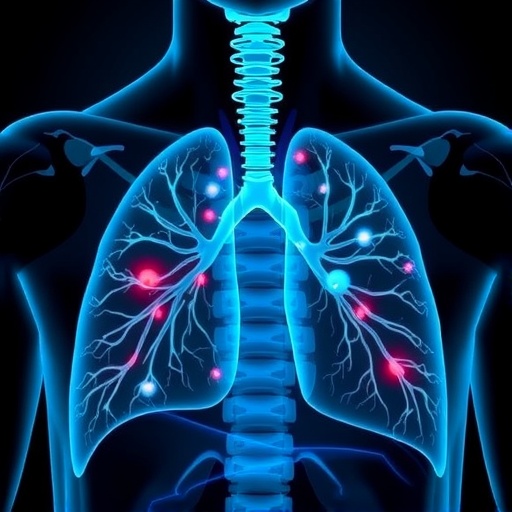
Pulmonary fibrosis, a relentless and often fatal lung disease characterized by progressive scarring of lung tissue, has long perplexed researchers due to its stubborn persistence and resistance to treatment. Central to this enigmatic condition is the behavior of fibroblasts—specialized cells responsible for tissue repair and scar formation. Under normal circumstances, fibroblasts undergo programmed cell death once their reparative task is complete, thereby resolving the injury and restoring lung function. However, in pulmonary fibrosis, these cells defy death, accumulating and perpetuating the scarring process that compromises respiratory capacity. Recent groundbreaking research conducted by scientists at National Jewish Health has illuminated a pivotal molecular mechanism fueling this cellular defiance: the protein BCL-2.
This transformative study, published in the prestigious journal Nature Communications, identifies BCL-2 as a key survival factor enabling fibrotic fibroblasts to escape apoptosis, the body’s intrinsic cell death pathway. Elevated levels of BCL-2 in these fibroblasts create a sanctuary against cell death signals, allowing these otherwise transient cells to persist indefinitely within lung tissue. This persistence drives the relentless deposition of extracellular matrix proteins, thickening and stiffening the lung architecture, and ultimately impairing gas exchange. The discovery of BCL-2’s role marks a critical advance in our understanding of the cellular processes underpinning idiopathic pulmonary fibrosis (IPF) and other fibrotic lung diseases.
By utilizing sophisticated preclinical models that mimic human pulmonary fibrosis, the research team was able to manipulate BCL-2 expression conditionally within fibroblasts. These models revealed that when BCL-2 was overexpressed, fibroblasts became resistant to apoptosis, establishing a chronic fibrotic environment. Conversely, therapeutically targeting BCL-2 using selective inhibitors reactivated apoptosis pathways, effectively clearing the pathological fibroblast population. This therapeutic intervention not only halted the progression of fibrosis but also allowed partial restoration of normal lung structure and function, evident through improved oxygenation metrics and reduced fibrotic tissue burden.
An intriguing aspect of this study is the association drawn between BCL-2 expressing fibroblasts and cellular senescence, a state of permanent cell cycle arrest accompanied by pro-inflammatory and pro-fibrotic signaling. Senescent cells contribute to chronic disease by secreting factors that exacerbate tissue damage and remodeling. The researchers demonstrated that BCL-2 is intricately linked to the emergence of senescence in fibroblasts, suggesting a dual pathological role for BCL-2: it sustains fibroblast survival and fosters a senescent phenotype that perpetuates the fibrotic cascade. Analysis of human lung tissue from patients with pulmonary fibrosis confirmed the presence of fibroblasts co-expressing BCL-2 and senescence markers, underscoring the clinical relevance of these findings.
The study was led by David Riches, PhD, head of the Division of Cell Biology at National Jewish Health, whose team employed a multidisciplinary approach combining cell biology, molecular genetics, and in vivo experimentation. Their work underscores that targeting pro-survival pathways in fibroblasts can dismantle the cellular foundations of fibrosis. Elizabeth Redente, PhD, a professor of medicine and the first author of the paper, emphasized the translational potential of these findings. “BCL-2 inhibition addresses not only the survival of pathogenic fibroblasts but disrupts the fundamental biology sustaining disease progression,” she stated, highlighting the promise of moving these insights from bench to bedside.
The therapeutic implications extend beyond simply halting fibrosis; reactivation of apoptosis in fibrotic fibroblasts may rejuvenate lung tissue by enabling endogenous repair mechanisms to take hold. This approach stands in contrast to current treatments that mainly slow disease progression without reversing established scar tissue. By restoring the dynamic equilibrium between cell death and survival, BCL-2 targeted therapies could usher in a new era of regenerative treatment strategies for patients suffering from debilitating lung fibrosis.
Mechanistically, BCL-2 belongs to the B-cell lymphoma 2 family of proteins, known for their role in regulating mitochondrial apoptosis pathways. By binding and inhibiting pro-apoptotic factors, BCL-2 preserves mitochondrial integrity and prevents the release of cytochrome c, a central event in the initiation of programmed cell death. The overexpression of BCL-2 in fibroblasts skews this delicate balance towards survival, thwarting the endogenous checkpoints designed to eliminate damaged or excessive cells during tissue repair.
The research team employed advanced fluorescence microscopy, gene expression profiling, and flow cytometry analyses to delineate the cellular phenotypes and apoptotic status of fibroblasts within fibrotic lungs. Their robust methodology confirmed that BCL-2 overexpression directly correlates with fibroblast resistance to apoptosis. Importantly, pharmacological inhibition of BCL-2 with clinically relevant inhibitors reinstated apoptotic signaling cascades. These observations offer a compelling molecular target that could be leveraged in future clinical trials aimed at reversing fibrosis.
Furthermore, this study offers insight into the interplay between senescence and apoptosis resistance, a duality that exacerbates chronic fibrotic pathology. Senescent fibroblasts produce a potent secretome encompassing inflammatory cytokines, growth factors, and matrix remodeling enzymes, which collectively orchestrate a pro-fibrotic microenvironment. BCL-2 mediated survival ensures these harmful cells remain in the tissue, prolonging disease duration and severity. Interrupting this cycle may diminish the pathological milieu and offer lasting therapeutic benefit.
The broader impact of this research lies in its potential to transform clinical approaches to pulmonary fibrosis, a disease that currently lacks effective cures and where lung transplantation remains the only definitive treatment. The identification of BCL-2 as a driver of fibrosis and senescence reorients the focus toward apoptosis modulation as a viable strategy. National Jewish Health’s dedication to respiratory medicine and pioneering research has paved the way for these innovative therapies that promise to improve quality of life for countless patients worldwide.
In conclusion, this pivotal study uncovers the centrality of BCL-2 in sustaining the pathogenic fibroblast population within fibrotic lungs, linking cellular survival pathways to persistent tissue scarring and dysfunction. Through rigorous experimentation, the researchers demonstrate that targeted inhibition of BCL-2 not only induces fibroblast apoptosis but also mitigates cellular senescence, thereby reversing key aspects of pulmonary fibrosis in preclinical models. These findings illuminate new therapeutic avenues and provide hope for advancing treatments capable of arresting and potentially reversing this devastating disease.
News Publication Date: 28-Feb-2026
Web References:
References:
- Original research article in Nature Communications (2026) by researchers at National Jewish Health.
Cite Scienmag News
Ophelia Keating. (March 30, 2026). Breakthrough Study Uncovers Promising Pathway to Reverse Pulmonary Fibrosis. Scienmag. https://scienmag.com/breakthrough-study-uncovers-promising-pathway-to-reverse-pulmonary-fibrosis/
Ophelia Keating. "Breakthrough Study Uncovers Promising Pathway to Reverse Pulmonary Fibrosis." Scienmag, 30 March 2026, https://scienmag.com/breakthrough-study-uncovers-promising-pathway-to-reverse-pulmonary-fibrosis/. Accessed 3 September 2026.
Ophelia Keating. "Breakthrough Study Uncovers Promising Pathway to Reverse Pulmonary Fibrosis." Scienmag. March 30, 2026. https://scienmag.com/breakthrough-study-uncovers-promising-pathway-to-reverse-pulmonary-fibrosis/


