


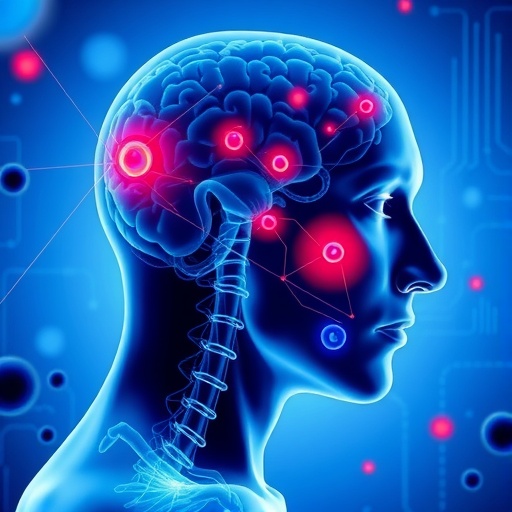
In a groundbreaking study poised to reshape our understanding of chronic pain mechanisms, researchers have identified a pivotal role for neuroimmune interferon signaling in the persistence of arthritis-induced pain. This discovery unravels the intricate dialogue between the nervous and immune systems that sustains the debilitating pain associated with arthritis, offering promising novel avenues for therapeutic intervention.
Arthritis, a heterogeneous group of disorders characterized by joint inflammation and pain, profoundly impairs quality of life worldwide. Despite advances in managing inflammation and joint damage, the chronic pain accompanying arthritis frequently remains refractory to current treatments. This unmet clinical challenge underscores the urgent need to elucidate the molecular and cellular underpinnings of arthritis pain. The latest research by Staurengo-Ferrari, Wong, and Chiu provides compelling evidence that neuroimmune cross-talk via interferon signaling is a critical driver maintaining arthritis pain.
Interferons, classically recognized for their antiviral properties and immunomodulatory functions, have emerged as central players at the neuroimmune interface. The study harnesses state-of-the-art genetic and pharmacological tools to delineate how type I interferons released within the joint milieu influence sensory neurons to perpetuate nociceptive signaling. These molecular signals effectively transform transient inflammatory pain into a chronic pathological state by sustaining heightened neuronal excitability and pain sensitivity.
Using sophisticated murine models of arthritis, the investigators demonstrated that immune cells infiltrating affected joints secrete type I interferons that engage receptors on nearby sensory neurons. This receptor activation triggers intracellular cascades augmenting the expression of pain-related ion channels and neurotransmitters, thereby amplifying pain signals relayed to the central nervous system. Importantly, blockade of interferon receptors on sensory neurons significantly attenuated mechanical and thermal hypersensitivity, highlighting the therapeutic potential of targeting this pathway.
The team employed advanced immunohistochemical and in vivo imaging techniques to precisely localize interferon production and receptor engagement within the arthritic joint microenvironment. They found that interferon signaling is not merely incidental but an essential component of the neuroimmune network sustaining pain. This finding challenges the conventional paradigm that attributes arthritis pain primarily to peripheral joint inflammation or central sensitization alone, instead emphasizing the bidirectional crosstalk that fine-tunes nociceptive pathways.
Crucially, the study reveals that the interferon-mediated neuroimmune axis persists even after resolution of overt joint inflammation, providing a mechanistic explanation for the chronicity and recurrence of arthritis pain despite anti-inflammatory therapy. This insight may clarify why many patients experience pain flare-ups independent of measurable inflammation, illuminating new biomarkers to predict and monitor disease trajectories.
The molecular characterization of this neuroimmune interaction uncovered key downstream signaling effectors within sensory neurons, including members of the JAK-STAT pathway, which govern gene transcription related to neuronal excitability. Pharmacological inhibition of these signaling nodes yielded robust analgesic effects in experimental arthritis, substantiating their viability as drug targets. These findings provide a compelling rationale for repurposing JAK inhibitors, currently used for inflammatory control, as dual-action agents to also alleviate pain.
Beyond arthritis, the identification of interferon signals as modulators of pain pathways may have broader implications for other chronic pain syndromes with an inflammatory component. Diseases such as neuropathic pain, fibromyalgia, and multiple sclerosis might share similar neuroimmune mechanisms that could be exploited for novel analgesic strategies. This work thus expands the horizon of pain neuroscience, integrating immunology to foster a holistic therapeutic approach.
The investigative team conducted translational analyses on human synovial tissue samples from patients with rheumatoid arthritis, affirming elevated interferon signaling and receptor expression in joint sensory neurons. This validation bridges preclinical findings to human pathology, enhancing the translational impact and accelerating drug development pipelines oriented towards neuroimmune modulation.
As chronic arthritis pain exacts a tremendous socioeconomic toll and severely diminishes patients’ emotional and physical well-being, the elucidation of interferon-driven neuroimmune circuits offers renewed hope. Targeting these molecular mediators promises more effective pain relief without the adverse effects associated with opioids or long-term anti-inflammatories, thereby revolutionizing pain management paradigms.
With the advent of biologics and small molecules specifically disrupting neuroimmune interferon pathways, precision medicine tailored to pain phenotypes becomes feasible. Combining interferon-targeted approaches with existing anti-inflammatory and immunomodulatory treatments could synergistically improve clinical outcomes, reduce disease progression, and ultimately transform the therapeutic landscape.
This pioneering work signifies a profound leap in decoding the neuroimmune orchestration of chronic pain. By spotlighting interferon signals as sustained modulators of nociceptor function in arthritis, the research paves the way toward innovative interventions that address the root causes of pain rather than merely its symptoms. The integration of immunology, neurobiology, and clinical science exemplifies the multidisciplinary approach essential for conquering complex diseases like arthritis.
Future research endeavors will undoubtedly focus on refining the temporal dynamics of interferon signaling throughout disease stages, identifying patient subgroups most likely to benefit from targeted therapies, and exploring potential side effects of systemic modulation. Longitudinal clinical trials will be critical to validate safety, efficacy, and durability of novel neuroimmune-targeted analgesics derived from these mechanistic insights.
As this exciting field progresses, the promise of finally offering robust and lasting pain relief to millions afflicted with arthritis inches closer to reality. The discovery of neuroimmune interferon signals as central to sustaining arthritis pain heralds a new era of therapeutic innovation that unites fundamental biology with urgent clinical need.
In conclusion, the landmark study by Staurengo-Ferrari, Wong, and Chiu redefines the pathophysiological framework of arthritis pain by unveiling the indispensable role of neuroimmune interferon communication. Their work not only enriches scientific understanding but also ignites optimism for transformative pain therapies. It is a quintessential example of how dissecting molecular dialogues at the nervous system-immune system interface can yield breakthroughs with profound human impact.
Cite Scienmag News
Ophelia Keating. (March 30, 2026). Neuroimmune Interferons Drive Persistent Arthritis Pain. Scienmag. https://scienmag.com/neuroimmune-interferons-drive-persistent-arthritis-pain/
Ophelia Keating. "Neuroimmune Interferons Drive Persistent Arthritis Pain." Scienmag, 30 March 2026, https://scienmag.com/neuroimmune-interferons-drive-persistent-arthritis-pain/. Accessed 3 September 2026.
Ophelia Keating. "Neuroimmune Interferons Drive Persistent Arthritis Pain." Scienmag. March 30, 2026. https://scienmag.com/neuroimmune-interferons-drive-persistent-arthritis-pain/


