


Higher education systems stand at a crossroads, confronting a profound identity crisis intensified by the global ascendance of the Anglo-American Research University model. This dominant paradigm has faced mounting critique for its immersion in neoliberal values, where education is commodified into economic outputs, students are perceived as consumers, and institutional prestige is gauged predominantly by rankings rather than the holistic cultivation of human potential. Concurrently, two seismic forces—accelerating artificial intelligence developments and the mass expansion of higher education participation—are irrevocably altering the terrain upon which universities operate. Since the 1990s, global participation in tertiary education has nearly tripled, leaping from approximately 14% to 40%, heralding unprecedented challenges and opportunities for educational institutions worldwide.
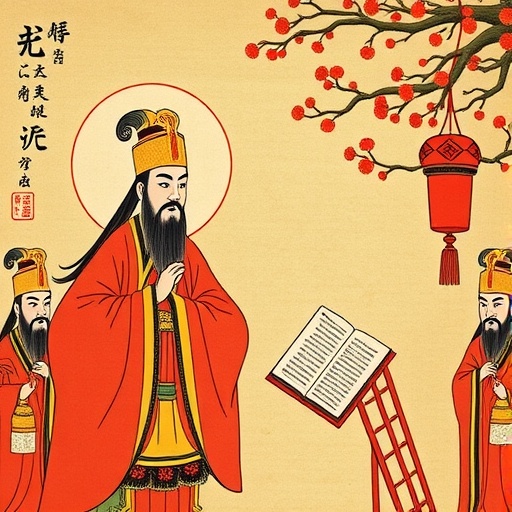
In this evolving context, Catherine Yuan Gao from Southern University of Science and Technology and Rui Yang of The University of Hong Kong provide a provocative reexamination of higher education’s purpose, drawing inspiration from ancient philosophy. In their recent study published on March 17, 2026, they revisit Confucius’s foundational texts, primarily The Analects, to extract a conceptual framework centered on two entwined virtues: Junzi (君子)—the archetype of the ideal individual—and Tianxia (天下)—the vision of social order. Their work positions higher education as the pivotal bridge linking personal cultivation to societal harmony, thereby offering an innovative philosophical lens to rethink the objectives of modern universities.
At the heart of this Confucian lens is Junzi, the exemplary individual whose moral development transcends self-interest and manifests as unwavering dedication to collective welfare. The ideal Confucian person is not a solitary island but one deeply enmeshed in a network of relational roles—be it as a filial son, a loyal brother, a trusted friend, a responsible subordinate, or a righteous ruler. Each role requires the embodiment of specific virtues, such as filial piety (Xiao 孝), trustworthiness (Xin 信), and altruistic love (Airen 爱人). The central guiding principle for the Junzi is Ren (仁), often translated as humanity or benevolence, which simultaneously serves as an inner aspiration and a social practice. Confucius eloquently captures this duality in The Analects (7:30), remarking, “Is Ren truly distant? No sooner do I desire it than it becomes attainable.”
Complementing the individual ideal is the construct of Tianxia youdao—a manifestation of a well-ordered and harmonious society where every person’s position and corresponding responsibilities are clear and embraced. Unlike modern structures reliant predominantly on legalist coercion or bureaucratic enforcement, Confucian social order hinges on Li (礼)—the system of rites and propriety—and fundamentally on De (德), the moral virtue inherent in leadership. In this paradigm, rulers command not by force but through their embodying virtue, which naturally inspires subjects to emulate meritocratic and ethical conduct, fostering a self-regenerating cycle of moral governance.
The authors employ a “Confucius pragmatic paradigm” to interpret The Analects, emphasizing the contextual and situational force of Confucian wisdom. This methodology regards each saying or teaching not merely as abstract theory but as a speech act where the speaker’s intention carries as much weight as literal content, foregrounding the participatory nature of moral learning. Through this prism, Confucius’s vision epitomizes self-cultivation (Xiushen 修身) as a lifelong endeavor that blurs the divide between personal and civic responsibilities. Higher education, therefore, is reframed as an ethically charged, relational practice that transcends rote knowledge acquisition to cultivate virtuous character in service of societal well-being.
Four hallmark distinctions elevate Confucian educational thought far beyond prevailing Western higher education models. First, it is profoundly relational: rather than championing rugged individualism, Confucianism asserts that education fundamentally originates in relationships and aims to enhance social connectedness. Second, it is inherently pragmatic and contextual: teachings are not static ideals but adaptive, action-oriented, and embedded in real-world situations that fuse knowledge with practical ethics, encapsulating the principle of “unity of knowledge and action.” Third, it calls inward, motivating self-discipline through intrinsic aspirations rather than external sanctions, closely echoing the 19th-century German ideal of Bildung, which underscores self-cultivation and moral development. Finally, the framework is unified and coherent, weaving individual transformation and social harmony into an indissoluble pursuit, as Confucius acknowledged, “My way is to thread it all together as one” (The Analects, 4:15).
While acknowledging Confucius’s ideals were shaped in a specific socio-political milieu—the Spring and Autumn period—where education was an elite privilege and practical knowledge such as agricultural skills were underemphasized, Gao and Yang contend that these historical constraints do not diminish the contemporary applicability of the framework. Indeed, the global surge in tertiary education creates an unprecedentedly informed populace, presenting a unique moment to reconsider the criteria by which higher education evaluates its aims. Meanwhile, AI is poised to transform labor markets and knowledge creation, circumscribing outdated models and demanding fresh educational paradigms that crucially acknowledge relational and ethical dimensions.
The implications of this Confucian revival are formidable. The traditional neoliberal university, with its narrowed focus on competition, market efficiency, and individual achievement, is ill-prepared to address the fragmentation and interdependence defining today’s global landscape. The study advocates for a radical reimagining of higher education, one that cultivates ethical persons who perceive themselves as relational agents embedded within a broader societal fabric, committed not only to personal advancement but to global solidarity and mutual flourishing.
By resurrecting and recontextualizing Confucius’s teachings, Gao and Yang’s research carves out a vital intellectual space for reconsidering educational goals amidst technological upheaval and social complexity. The enduring wisdom of Junzi and Tianxia calls educators and policymakers to transcend ephemeral economic metrics and embrace a vision wherein education is a lifelong, relational journey aimed at forging virtuous individuals who, collectively, realize a just and well-ordered society. Within this framework, higher education returns to its ethical roots, navigating the fraught terrains of the AI age with renewed moral clarity and humanistic purpose.
In sum, the study compels a paradigmatic shift: universities must evolve from factories of credentialing into thriving ecosystems that cultivate wisdom, compassion, and civic responsibility. The Confucian ideal situates education as a continuous, dynamic process—a process deeply contextualized, pragmatically enacted, motivated by inner calling, and integrally linked to the flourishing of Tianxia. This paradigm provides not only a counterpoint to dominant Western models but also a blueprint to guide higher education through the uncharted future.
Gao and Yang’s scholarship marks a significant intervention by bridging classical philosophy with pressing modern realities. In an era when technological prowess often eclipses ethical considerations, their work reminds us that the essence of education lies not in isolated cognition but in the relational cultivation of humanity. It encourages a re-engagement with moral purpose, relational responsibility, and social harmony as indispensable foundations for the universities of tomorrow.
Their call to reimagine higher education through this Confucian prism arrives at a critical juncture, offering an antidote to the prevailing crisis of meaning within academia. As AI transforms knowledge and labor, as educational access expands exponentially, and as global challenges call for collective wisdom, the ideals of Junzi and Tianxia provide a lasting compass for governing the objectives of higher education in the 21st century and beyond.
News Publication Date: 17-Mar-2026
Web References: 10.1177/20965311261421645
References: Gao, C.Y., & Yang, R. (2026). Governing the Objectives of Higher Education: A Revisit of Confucius’ Dual Imaginaries of the Ideal Man (Junzi) and Social Order (Tianxia). ECNU Review of Education. DOI: 10.1177/20965311261421645
Cite Scienmag News
Courtney Benton. (March 30, 2026). Study Challenges Neo-Liberal Higher Education Model by Revisiting Confucius’ Dual Ideals of the Ideal Individual and Social Order. Scienmag. https://scienmag.com/study-challenges-neo-liberal-higher-education-model-by-revisiting-confucius-dual-ideals-of-the-ideal-individual-and-social-order/
Courtney Benton. "Study Challenges Neo-Liberal Higher Education Model by Revisiting Confucius’ Dual Ideals of the Ideal Individual and Social Order." Scienmag, 30 March 2026, https://scienmag.com/study-challenges-neo-liberal-higher-education-model-by-revisiting-confucius-dual-ideals-of-the-ideal-individual-and-social-order/. Accessed 4 September 2026.
Courtney Benton. "Study Challenges Neo-Liberal Higher Education Model by Revisiting Confucius’ Dual Ideals of the Ideal Individual and Social Order." Scienmag. March 30, 2026. https://scienmag.com/study-challenges-neo-liberal-higher-education-model-by-revisiting-confucius-dual-ideals-of-the-ideal-individual-and-social-order/


