


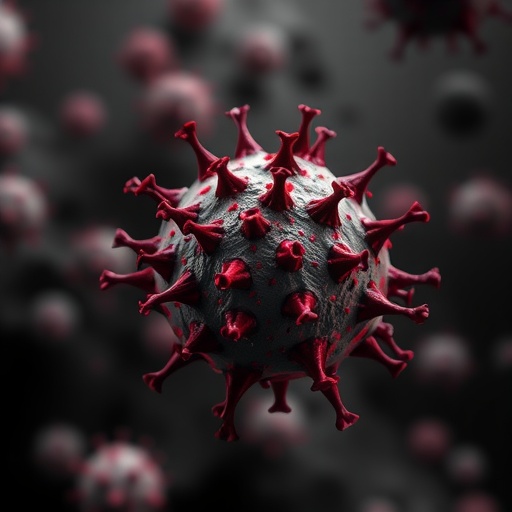
In a groundbreaking investigation that illuminates the multifaceted nature of SARS-CoV-2 variants, Gao and colleagues have unveiled a novel mechanism by which the Omicron variant exacerbates immune dysregulation. Their study, published in Cell Death Discovery in 2026, probes deep into the viral nuances responsible for the distinct pathophysiology associated with Omicron infections. By dissecting the interplay between viral evolution and immune cell fate, this research reveals a striking pathway: the intensification of bystander T-cell apoptosis mediated by the GDF15–BCL2L13 axis, offering pivotal insight into how Omicron affects host immunity beyond direct viral cytopathic effects.
The scientific community has long grappled with understanding how SARS-CoV-2 variants differ not only in transmissibility but also in their immunological footprints. Omicron, notorious for its extensive spike mutations, initially seemed paradoxical—while highly transmissible, it often exhibited milder clinical courses in many patients compared to earlier strains. However, this new research challenges the simplistic view of Omicron’s attenuated pathogenicity by demonstrating that its influence on T-cell survival is far from benign. Instead, Omicron actively promotes apoptosis, particularly in T-cell populations uninfected by the virus, a process known as bystander apoptosis.
The researchers employed a blend of sophisticated molecular techniques, including single-cell RNA sequencing and mechanistic apoptosis assays, to unravel this immune conundrum. They first noted elevated expression of Growth Differentiation Factor 15 (GDF15), a cytokine intricately linked with cellular stress responses. GDF15 was found to be significantly upregulated in immune cells during Omicron infection, acting as a potent pro-apoptotic signal that instigates downstream pathways leading to T-cell death. This cytokine surge was not a mere epiphenomenon but played a causal role in the depletion of vital immune cells.
Further mechanistic investigation pinpointed BCL2L13, a lesser-known member of the BCL-2 family, as a key molecular effector downstream of GDF15 signaling. BCL2L13 acts as a mitochondrial apoptotic facilitator, promoting membrane permeabilization and cytochrome c release, critical steps in activating caspase-mediated cell death programs. Gao et al. showed that the GDF15-induced upregulation of BCL2L13 in bystander T cells was central to the elevated apoptosis observed, effectively linking extracellular stress signaling to the intrinsic mitochondrial death pathway.
This virus-induced apoptotic cascade signifies a profound shift in our understanding of SARS-CoV-2’s immune evasion strategies. Unlike direct cytotoxicity arising from viral replication within infected cells, the Omicron variant’s modulation of the GDF15–BCL2L13 axis selectively targets uninfected T cells, eroding the overall lymphocyte pool crucial for mounting effective antiviral responses. The bystander nature of this process underscores a stealthy viral tactic that could explain some of the immune exhaustion and delayed recovery reported in patients despite low viral loads.
Moreover, the study contextualizes these findings within variant-specific immunopathology. When comparing Omicron to its predecessors, notably the ancestral Wuhan strain and the Delta variant, the differential induction of GDF15 and subsequent T-cell apoptosis was striking. The data suggest evolutionary pressure may have favored an immune evasion strategy through apoptosis of bystander T cells rather than overt cytopathic effects, a notion that aligns with Omicron’s high transmissibility paired with altered clinical disease profiles.
Importantly, Gao et al. corroborated their molecular findings with clinical observations. Peripheral blood samples from patients infected with Omicron displayed not only elevated levels of circulating GDF15 but also a marked decrease in peripheral CD8+ and CD4+ T lymphocytes exhibiting apoptotic markers. This clinical-immunological correlation substantiates the pathological relevance of their in vitro and animal model findings, reinforcing the concept that immune cell attrition contributes to disease dynamics.
The implications of this discovery extend beyond academic insights. Therapeutically, targeting the GDF15–BCL2L13 apoptotic nexus may offer a novel intervention point to preserve T-cell viability during infection, potentially enhancing immune competence and improving outcomes. Pharmacological agents capable of modulating GDF15 signaling or inhibiting BCL2L13 function could form the basis of adjunctive therapies designed to mitigate immune depletion in COVID-19, particularly for high-risk populations exhibiting severe disease.
Additionally, this research stimulates a reevaluation of vaccine strategies and immunomodulatory approaches. Understanding that Omicron employs a distinctive pathway to weaken bystander immunity could influence the design of next-generation vaccines or boosters aimed at counteracting immune cell apoptosis. Protecting T cell subsets from virus-induced attrition may be key to fostering durable and robust immunity, especially as variant-driven immune escape continues to challenge existing countermeasures.
The study’s integrative approach—combining advanced immunological assays, patient data, and molecular biology—highlights the necessity of dissecting viral-host interactions at a granular level. By transcending the traditional view that viral pathogenicity solely hinges on replication efficiency or spike protein mutations, Gao and colleagues shed light on subtle immunoregulatory mechanisms that significantly impact disease progression and host resilience.
Moreover, the identification of the GDF15–BCL2L13 axis as a driver of bystander T-cell death invites further exploration of its role in other viral infections and inflammatory conditions. Given GDF15’s established involvement in cellular stress and metabolic regulation, it is conceivable that this pathway could represent a common node exploited by diverse pathogens to subvert immune function, offering a broader paradigm for understanding immune dysregulation.
As the global community continues to navigate successive waves of COVID-19, this discovery serves as a critical reminder that viral evolution encompasses more than surface mutations—it also reshapes the immune battlefield in intricate and unexpected ways. The precise modulation of apoptosis pathways by Omicron exemplifies the virus’s adaptive fitness and presents new challenges and opportunities for medical science.
In summary, Gao et al.’s 2026 study provides compelling evidence that the Omicron variant intensifies bystander T-cell apoptosis via a distinct molecular circuit involving GDF15 and BCL2L13. This finding enriches our comprehension of SARS-CoV-2 variant-specific pathology and unveils a novel dimension of viral immune modulation. As efforts to combat COVID-19 evolve, integrating such mechanistic insights will be vital for developing more effective therapies and vaccines apt to counter the virus’s ever-shifting arsenal.
Cite Scienmag News
Kristina Jarvis. (March 28, 2026). Omicron Drives Bystander T-Cell Death Mechanism. Scienmag. https://scienmag.com/omicron-drives-bystander-t-cell-death-mechanism/
Kristina Jarvis. "Omicron Drives Bystander T-Cell Death Mechanism." Scienmag, 28 March 2026, https://scienmag.com/omicron-drives-bystander-t-cell-death-mechanism/. Accessed 4 September 2026.
Kristina Jarvis. "Omicron Drives Bystander T-Cell Death Mechanism." Scienmag. March 28, 2026. https://scienmag.com/omicron-drives-bystander-t-cell-death-mechanism/


