


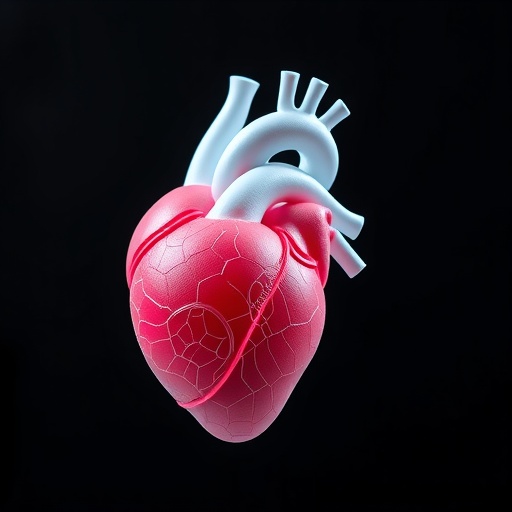
Over the last twenty years, the landscape of cardiovascular treatment has undergone a profound transformation, catalyzed primarily by the development and widespread adoption of stent technologies. Stents—tiny, tube-like scaffolds inserted into arteries or heart valves—have proven pivotal in managing coronary artery disease (CAD) and valvular heart disease, two of the most pervasive and life-threatening cardiac conditions worldwide. This evolution in cardiovascular therapy reflects an intersection of advances in materials science, biomedical engineering, and manufacturing techniques, which cumulatively aim not only to restore blood flow and cardiac function but also to reduce complications and tailor treatments to individual patients’ unique anatomies. Among the most promising frontiers is the potential application of 3D printing in stent fabrication, a technological leap that promises to redefine customization, functionality, and integration into complex cardiovascular systems.
Coronary artery disease, characterized by the narrowing or blockage of coronary arteries due to plaque buildup, remains a leading cause of mortality globally. The introduction of coronary stents has revolutionized percutaneous coronary interventions by providing mechanical support to the artery walls after angioplasty, dramatically reducing restenosis rates. Traditionally, these stents have been metallic—from bare-metal stents (BMS) to drug-eluting stents (DES) that slowly release medication to inhibit tissue growth that could reblock arteries. Despite their widespread use and documented efficacy, metallic stents carry inherent limitations such as chronic inflammation, late stent thrombosis, and permanent alteration of arterial biomechanics, which frequently necessitate prolonged antiplatelet therapy.
Addressing these challenges, polymeric stents emerged, designed primarily to be biodegradable, gradually resorbing into the body after serving their temporary scaffolding role. These bioresorbable stents, usually fabricated from polymers like polylactic acid (PLA) or polycaprolactone (PCL), aim to preserve natural vessel behavior post-implantation by dissolving once the artery stabilizes. However, polymeric stents have faced hurdles such as limited radial strength compared to metallic counterparts and unpredictable degradation profiles, occasionally leading to restenosis or scaffold collapse before complete artery healing. Advanced polymeric formulations and stent designs are actively being explored to overcome these limitations, contextualizing their place within the broader stent technology landscape.
Meanwhile, valvular heart disease presents a different clinical challenge, involving malfunctioning heart valves often necessitating replacement or repair. Traditionally, valve replacement has relied on mechanical or bioprosthetic valves delivered via open-heart surgery or transcatheter techniques. However, innovative stents designed specifically for valvular applications—namely valve stents—offer minimally invasive solutions by serving as frameworks to support native or prosthetic valve leaflets. Metallic and biodegradable polymeric stents developed for this purpose must balance structural integrity with biocompatibility to ensure optimal valve function and longevity, all while adapting to the dynamic cardiac environment and high mechanical stress encountered during each cardiac cycle.
One of the major restraints in the conventional manufacturing of both coronary and valvular stents lies in their standardized geometries and materials, which often limit the precise fit and functionality essential for patients with complex or atypical cardiac anatomies. This is where the advent of 3D printing—also known as additive manufacturing—introduces a paradigm shift. By enabling layer-by-layer fabrication of stent structures with unprecedented geometric complexity and customizable mechanical properties, 3D printing promises individualized therapy tailored directly to patient-specific vascular and valvular anatomy. This level of customization holds the promise to improve clinical outcomes, reduce procedural risks, and potentially extend stent longevity.
Various 3D printing techniques are being investigated for stent fabrication, each with distinct strengths and limitations. Selective laser melting (SLM) and electron beam melting (EBM) allow for precise metal stent manufacturing with controlled porosity and mechanical characteristics but can involve high thermal stresses impacting material properties. On the other hand, extrusion-based methods such as fused deposition modeling (FDM) and stereolithography (SLA) facilitate the creation of complex polymeric stents with tunable degradation rates by precisely controlling polymer chemistry and scaffold architecture. Despite the technical promise, challenges remain in achieving the necessary resolution, reproducibility, and biocompatibility in 3D printed stents to meet rigorous clinical standards.
Regulatory pathways pose another formidable challenge in the translation of 3D-printed cardiovascular devices from bench to bedside. Medical device agencies must evaluate not only the safety and efficacy of the stents themselves but also the manufacturing process, which in the case of 3D printing, is markedly different from traditional mass production. Issues such as batch-to-batch variability, sterilization protocols, and long-term biostability must be rigorously addressed. The current regulatory framework, originally designed for conventional manufacturing methods, is evolving to accommodate the unique characteristics of additive manufacturing, emphasizing the need for standardized testing methodologies and robust quality controls.
In clinical application, 3D printing enables the possibility to fabricate stents that align perfectly with the variable diameters, lengths, and curvature inherent in individual patient vascular anatomy, something particularly critical for patients with congenital abnormalities or complex disease presentations. Moreover, the integration of biodegradable polymers with 3D printing facilitates the design of stents with controlled degradation kinetics, allowing for scaffolds that not only mechanically support the vessel but also gradually vanish, minimizing long-term foreign body reactions.
Beyond customization, 3D printing introduces multifunctionality into stent technologies. For instance, stents can be embedded with sensors or drug reservoirs, enabling real-time monitoring of physiological parameters or targeted delivery of therapeutics. This multifunctionality promises to transition stents from passive mechanical devices to active biomedical tools that can dynamically interact with the biological environment, potentially revolutionizing post-implantation management and improving patient outcomes.
From a materials science perspective, the fusion of novel biomaterials with 3D printing technology advances the frontiers of stent fabrication. Bioinks composed of biodegradable polymers blended with bioactive agents, or metal alloys enhanced for corrosion resistance and biocompatibility, are under exploration. The ability to finely tune scaffold porosity and microarchitecture through additive manufacturing allows bespoke control over mechanical strength, endothelialization potential, and inflammation response. This integrated approach enhances the precision of stent performance tailored to the pathophysiological demands of CAD or valvular diseases.
The impact of 3D printing extends beyond the patient-specific stent geometry; it transforms the entire procedural workflow. Preoperative imaging—converted into digital models—can be directly leveraged to fabricate the stent, ensuring a seamless alignment between diagnostic and therapeutic phases. This synergy not only truncates the intervention time but also fosters safer and more effective implantations, particularly in anatomically challenging cases where traditional stents may fail to conform to vessel irregularities.
Despite the considerable promise, widespread adoption of 3D printing for cardiovascular stents still faces significant technical and clinical challenges. These include the need for high-resolution printers capable of manufacturing at the microscale required for tiny stents, biocompatible materials compatible with printing processes, and long-term studies proving efficacy and safety in human patients. Moreover, cost-effectiveness and production scalability remain pivotal factors influencing clinical translation.
As research efforts intensify and multidisciplinary collaborations flourish, the horizon for 3D-printed cardiovascular stents appears profoundly transformative. Incorporating patient-specific customization, programmable degradation, multifunctional integration, and streamlined regulatory pathways, this technology is poised to redefine standards of care for coronary and valvular heart diseases. The synthesis of innovations in biomaterials, additive manufacturing, and clinical sciences heralds a new era wherein stents are no longer one-size-fits-all but sophisticated, personalized, and adaptive devices.
The integration of 3D printing also opens avenues for iterative design and rapid prototyping. Engineers and clinicians can work closely to continuously refine stent structures based on immediate feedback from clinical outcomes or biomechanical simulations. This agile development model accelerates innovation cycles and may lead to the discovery of novel stent architectures that optimize flow dynamics, mechanical resilience, and tissue compatibility far beyond current capabilities.
In conclusion, cardiovascular stent technologies stand at the threshold of a bold new era driven by 3D printing. From the molecular engineering of biodegradable polymers to the precision crafting of metallic alloys, the merging of additive manufacturing with cardiovascular therapeutics carries the promise of personalized and multifunctional stents that improve patient prognosis and quality of life. The challenges that remain—technical, regulatory, and clinical—underscore the critical importance of sustained research, tailored clinical trials, and adaptive policymaking. Together, these efforts could soon make 3D-printed coronary and valvular stents standard-of-care devices that embody the future of cardiac medicine.
Cite Scienmag News
Denise Maddox. (March 27, 2026). 3D Printing Revolutionizes Cardiovascular Stent Technology. Scienmag. https://scienmag.com/3d-printing-revolutionizes-cardiovascular-stent-technology/
Denise Maddox. "3D Printing Revolutionizes Cardiovascular Stent Technology." Scienmag, 27 March 2026, https://scienmag.com/3d-printing-revolutionizes-cardiovascular-stent-technology/. Accessed 3 September 2026.
Denise Maddox. "3D Printing Revolutionizes Cardiovascular Stent Technology." Scienmag. March 27, 2026. https://scienmag.com/3d-printing-revolutionizes-cardiovascular-stent-technology/


